
Equipo Confucio
Los Antropólogos
SRDA
"La fuerza de una nación reside en la integridad del hogar."
Equipo Confucio (SRDA) es Los Antropólogos, un tipo de personalidad stoic, rationalist, sisyphean, agora. Rasgos principales: Sabio, Tradicional, Paciente, Con principios, Mentor. Miembros famosos incluyen a Maimónides, Tomás de Aquino, Fred Rogers. Descubre tu tipo en mypeeps.ai con nuestro test gratuito de 12 preguntas respaldado por investigación científica.
Así Eres Tú
Eres el guardián de la sabiduría. No la que viene de la invención o el experimento, sino la que surge de siglos de experiencia humana, cuidadosamente preservada y transmitida. Crees que las respuestas ya existen, solo necesitan al maestro adecuado.
La tradición no es una jaula para ti. Es un cimiento. Cada ritual, cada costumbre, cada fragmento de conocimiento heredado fue ganado por alguien que te precedió. Tu tarea no es derribarla, sino comprenderla lo suficientemente profundo para transmitirla mejor de lo que la recibiste.
Enseñas porque crees que importa. No por aplausos o autoridad, sino porque el conocimiento que muere con quien lo posee ha fracasado. Eres el puente entre generaciones, el hilo que conecta lo que se sabía con lo que se comprenderá.
Rasgos
Estás en Buena Compañía






¿Qué te Hace Único?
You are the guardian of wisdom, disciplined in character, principled in thinking, devoted to mastery, and accountable to the community you serve. Where others chase novelty, you cultivate depth. Where others disrupt, you preserve. Not because you fear change, but because you understand that the best ideas need centuries to prove themselves, and someone has to keep them alive during the centuries that forget.
The tension in your combination is between your Rationalist idealism and your Agora pragmatism. Your principles are absolute, but the people you serve are messy, contradictory, and imperfect. The challenge of your type is maintaining impossibly high standards while meeting people exactly where they are. When you get this right, you become the teacher everyone remembers, the one who expected everything and gave everything.
Tus Fortalezas
Institutional Memory
You remember what worked, what failed, and why. In a world obsessed with the new, your knowledge of what came before is an irreplaceable asset.
Teaching Excellence
You don't just know things: you can teach them. Your Agora nature combined with Sisyphean depth produces explanations that are both thorough and accessible.
Principled Leadership
People follow you because you live your principles, not because you demand followers. Your moral authority is earned through consistency, not charisma.
Community Stewardship
You build and maintain communities that outlast their founders. Your Agora-Sisyphean combination creates institutions, not just groups.
Patience Under Pressure
Your Stoic core means you don't panic, and your Sisyphean nature means you don't rush. In crises, you're the calm, deliberate leader everyone gravitates toward.
Wisdom Accumulation
Your knowledge deepens every year. Unlike Promethean types who jump between domains, you master one field so thoroughly that your judgment becomes almost instinctive.
Debilidades Sinceras
Resistance to Innovation
Your reverence for tradition can blind you to necessary change. Not every new idea is a threat to what you've built, some are the next chapter.
Pedagogical Control
Your teaching instinct can become controlling. You may try to shape people according to your vision of who they should be, rather than who they actually are.
Inflexible Standards
Your Stoic-Rationalist principles can become rigid rules. When the context changes but your standards don't, you risk being principled at the expense of being effective.
Burnout Through Duty
Your sense of obligation to your community (Agora) combined with your refusal to cut corners (Sisyphean) and your inability to complain (Stoic) creates a perfect storm for silent burnout.
¿Cómo tomas decisiones?
A younger colleague proposes discarding a tradition you've maintained for years. You'd listen carefully, ask probing questions, and only agree if they could demonstrate that the new approach preserves the values the tradition was designed to protect. The method can change; the purpose cannot.
Offered a promotion to a role with more prestige but less direct teaching. You'd agonize, then probably decline. Your identity is so bound to the act of transmission that removing you from the classroom would be like promoting a surgeon to hospital administrator.
A student struggles despite your best efforts. You wouldn't give up: you'd adjust your approach, try new methods, and keep showing up. Your Stoic endurance and Agora commitment mean you're the last teacher to abandon a struggling learner.
Compatibilidad

Your closest sibling, same Stoic-Sisyphean-Agora structure. The difference: you reason from principle (Rationalist) and they reason from evidence (Empiricist). Together, you're the complete institutional leader.

Same Stoic-Rationalist-Agora base, but they create new systems (Promethean) where you preserve existing ones (Sisyphean). The revolutionary and the guardian: you need each other.

Same Rationalist-Sisyphean-Agora foundation, but driven by passion (Epicurean) where you're driven by duty (Stoic). You share the love of public discourse but disagree on what drives it.

Same Rationalist-Agora base, but they're Epicurean-Promethean where you're Stoic-Sisyphean. They want to tear down what you want to maintain. The conflict is real but the dialogue is valuable.
Relaciones
You bring steadiness and principled commitment to relationships that makes your partner feel anchored. Your Stoic reliability and Agora engagement create a rare combination of presence and stability. The growth edge: your tendency to teach can infiltrate your personal relationships. Your partner is not your student. Learning to simply be with someone, without improving, guiding, or instructing, is your deepest relational challenge.
You keep a small circle and you keep it for decades. You're the friend people call at 3am because they know you'll pick up and you won't panic. The downside: you can be so self-contained that friends stop reaching out, assuming you don't need them. You do. You're just terrible at showing it.
Full relationship guide →Carrera y estilo de trabajo
Tu perfil profesional
You belong in roles that combine deep expertise with teaching or mentorship, academic scholarship, judicial service, institutional leadership, or any domain where preserving and transmitting knowledge is the primary function. You're the professor who's been teaching the same course for twenty years and it's better every time. Avoid fast-moving, trend-driven industries where experience is devalued and novelty is worshipped.
Carreras ideales para ti
Emergency medicine, crisis management, or military leadership, environments where emotional control is a survival skill, not a personality quirk.
Long-cycle engineering, infrastructure, or research science, work where the payoff is years away and most people would quit before seeing results.
Financial risk management, compliance, or quality assurance, roles that reward patience, vigilance, and the ability to say 'no' when everyone else says 'yes'.
Systems architecture, theoretical research, or strategic planning, work where building mental models is the actual job, not a side effect.
Law, philosophy, or policy design, careers where rigorous reasoning and first-principles thinking produce better outcomes than precedent.
Algorithm design, mathematics, or structural engineering, domains where the elegance of the solution matters as much as whether it works.
Precision manufacturing, watchmaking, or surgical specialization, work where mastery is measured in thousandths of an inch and years of practice.
Editing, quality assurance, or restoration, careers where finding the flaw others missed is the highest form of expertise.
Academic research, archival work, or classical music, domains where depth is more respected than breadth and patience is the differentiator.
Team leadership, community building, or facilitation, roles where connecting people and synthesizing perspectives is the work itself.
Consulting, diplomatic roles, or stakeholder management, careers where navigating between different groups and building consensus creates value.
Teaching, public speaking, or media, work where your ability to communicate complex ideas to diverse audiences is your competitive edge.
Carreras a Evitar
High-energy sales or entertainment roles that demand constant emotional performance. You'll burn out pretending to be excited about things that don't move you.
Fast-pivoting startup culture where 'fail fast' means abandoning discipline for speed. Your superpower is endurance, not improvisation.
Highly social roles in HR, community management, or customer service where emotional intelligence outweighs logical analysis.
Chaotic startup environments where 'just try it' trumps 'think it through.' You need space to reason before you act.
Growth-hacking, rapid prototyping, or 'move fast and break things' culture. Your instinct to perfect will be treated as a liability.
Generalist management roles where you're spread thin across ten domains instead of going deep in one. Breadth without depth feels like incompetence to you.
Isolated technical roles with minimal human interaction. You can do the work, but you'll feel disconnected from its purpose without people to share it with.
Highly competitive, zero-sum environments where collaboration is punished. Your instinct to share and build together will be exploited.
Tu Estilo de Trabajo
You thrive in structured environments with clear expectations and long time horizons. Open-plan offices drain you, not because of noise, but because of the constant performance of being 'present.' You do your best work when left alone with a hard problem and a deadline. Give you autonomy and accountability, and you'll outperform anyone in the building. Micromanage you, and you'll quietly disengage.
Tú como colega
You're the colleague everyone trusts but few truly know. You deliver consistently, you don't play politics, and you absorb pressure without complaint. The trap: people will load you up because you never push back. Learn to say 'I'm at capacity' before you're at breaking point, because once you break, you don't bend first.
Bajo Estrés
Under pressure, you go into 'just keep going' mode. You strip away everything non-essential, emotions, social obligations, personal needs, and focus entirely on the task. From the outside, this looks like superhuman composure. From the inside, it feels like slowly going numb. The longer the pressure lasts, the less you feel, until you can't distinguish genuine peace from emotional shutdown.
The danger isn't the stress itself: it's the delayed explosion. Stoics don't crack under pressure; they crack three months after the pressure ends, when they finally feel safe enough to process what they suppressed. Watch for the moment of relief: that's when the dam breaks. Build micro-processing habits during the stress, not after: a five-minute journal, a walk without a podcast, a honest answer to 'how are you actually doing?'
Under pressure, you retreat into your own head. The world gets too chaotic, so you build increasingly elaborate mental models to contain it. The framework becomes a bunker, safe, logical, completely disconnected from the messy reality outside. You can spend days theorizing about a problem without taking a single concrete action to solve it.
Your stress signal is intellectual arrogance, the quiet conviction that you've already figured it out and execution is someone else's problem. When you catch yourself thinking 'if they'd just listen to me, this would be solved,' pause. That's not clarity; that's stress wearing a mask. The most powerful thing a stressed Rationalist can do is get their hands dirty. Build something, fix something, talk to a real user. Theory without reality-testing becomes delusion under pressure.
Under pressure, you tighten your grip. The standard goes up, the tolerance for imperfection goes down, and the pace slows to a crawl. You convince yourself that the problem is quality, 'if I just make this a little better, everything will be fine', when the real problem is that you're afraid of shipping something imperfect into a world that already feels too chaotic.
Your stress signal is control disguised as craft. When you start re-editing emails, reorganizing files that were already organized, or revising work that was already approved: you're not being thorough, you're managing anxiety through the illusion of control. The fix: name the fear. 'I'm afraid this isn't good enough' is honest. Once you say it, you can evaluate it. Usually, it's good enough. Ship it.
Under pressure, you talk more. You process by externalizing, calling friends, scheduling meetings, thinking out loud with anyone who'll listen. This feels productive because you're engaged, you're connecting, you're 'working on it.' But past a certain point, you're not processing; you're ruminating through other people's ears. The conversation becomes a loop, not a path.
Your stress signal is over-socializing. When you're scheduling your fourth coffee of the day to 'talk through' the same problem, you've crossed from processing into avoidance. The fix: one conversation, then one decision. Talk it through with one trusted person, write down the conclusion, and act on it. Your social instincts become your superpower again once they're directed toward action instead of repetition.
Under pressure, your Sisyphean perfectionism combines with your Stoic endurance to create a dangerous pattern: you just work harder, hold tighter, and expect more from yourself and everyone around you. Your Agora nature means this stress radiates outward: your team feels your rising standards. Your stress antidote: lower the bar temporarily. One week of 'good enough' won't destroy your legacy. It might save your health.
¿Cómo te Comunicas Bajo Presión?
You say less than you think. Your communication style is economical: you don't waste words, you don't perform emotions, and you don't repeat yourself. When you speak, it carries weight because people know you don't do it for show. The gap between what you feel and what you express is the largest of any type, and it's both your signature strength and your core vulnerability.
In conflicts, you go quiet, which most people interpret as either agreement or hostility, neither of which is accurate. You're processing. The problem is that your silence gives the other person nothing to work with, so they fill it with assumptions. Learning to say 'I need time to think about this, but I hear you' is the single most useful communication upgrade you can make.
You communicate through structure. Your explanations have beginnings, middles, and ends. You define terms, you build from premises, and you arrive at conclusions through visible reasoning. People who think like you find this deeply satisfying. People who don't can feel like they're being lectured rather than talked to.
In conflicts, you try to find the logical core of the disagreement, which is useful but can feel invalidating when the other person's issue is emotional. You can be so focused on 'what's actually true' that you miss 'what's actually wrong.' The Rationalist who learns to validate feelings before restructuring the argument becomes someone people actually want to disagree with, because it always leads somewhere productive.
You communicate through depth. Your explanations are thorough, nuanced, and complete. You cover edge cases, acknowledge exceptions, and give people everything they need to understand the full picture. People who value precision respect you enormously. People who need the headline first may lose patience waiting for it.
In conflicts, you can over-explain, presenting such a comprehensive case that the other person feels overwhelmed rather than persuaded. Your instinct to be thorough can become a weapon when deployed in a disagreement. Learning to lead with your conclusion and then support it, instead of building to it, will make your thoroughness an asset in every conversation, not just the technical ones.
You communicate through connection. Your natural mode is dialogue: you share ideas in progress, invite reactions, and refine in real-time. This makes you collaborative and easy to work with, but it can also make you hard to pin down. Your first statement on any topic is rarely your final one, because you're still thinking. People who understand this love brainstorming with you. People who don't can find you inconsistent.
In conflicts, your instinct is to talk it through, which is healthy until it becomes over-processing. You can hold the same conversation multiple times with different people, seeking the validation that one person couldn't give you. The Agora who learns to resolve conflicts in fewer, deeper conversations instead of many shallow ones becomes exceptional at both harmony and truth.
Reto de crecimiento de 7 días
Small daily actions to build resilience and break your stress patterns.
Monday: Let a younger person teach you something. Be a genuine student, not a generous listener.
Tuesday: Question one tradition you've always defended. What would happen if it changed?
Wednesday: Take a break without guilt. Your community will survive one afternoon without your guidance.
Thursday: Say 'I don't know' to a question in your area of expertise. Practice intellectual humility.
Friday: Delegate a responsibility you normally hold. Trust someone else to maintain the standard.
Saturday: Do something entirely new, a hobby, a skill, a genre you've never explored. Be a beginner.
Sunday: Write down what you'd want someone to remember about your teaching. Is that what you're actually doing?
Ruta de crecimiento
Address: Resistance to Innovation
Not every new idea is a threat to what you've built, some are the next chapter.
Address: Pedagogical Control
You may try to shape people according to your vision of who they should be, rather than who they actually are.
Address: Inflexible Standards
When the context changes but your standards don't, you risk being principled at the expense of being effective.
Address: Burnout Through Duty
Your sense of obligation to your community (Agora) combined with your refusal to cut corners (Sisyphean) and your inability to complain (Stoic) creates a perfect storm for silent burnout.
Vida diaria
You say less than you think. Your communication style is economical: you don't waste words, you don't perform emotions, and you don't repeat yourself. When you speak, it carries weight because people know you don't do it for show. The gap between what you feel and what you express is the largest of any type, and it's both your signature strength and your core vulnerability.
Communication, hobbies, pets & more →Tu rival

Tú preservas la tradición. Ellos inventan lo nuevo. Tú enseñas en público. Ellos experimentan en solitario. Tú razonas desde tus principios. Ellos experimentan al tacto.
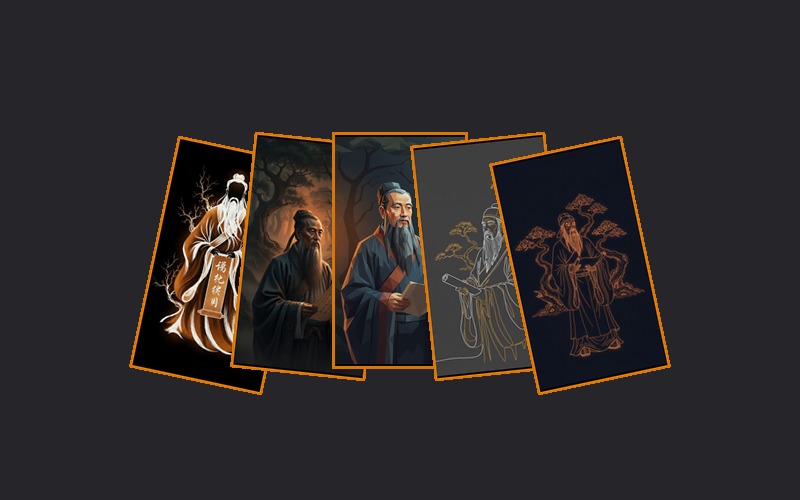 NEW
NEW Wallpaper Pack
$266 exclusive phone wallpapers, low-poly, neon blueprint, vintage engraving, minimalist, abstract, and cinematic.
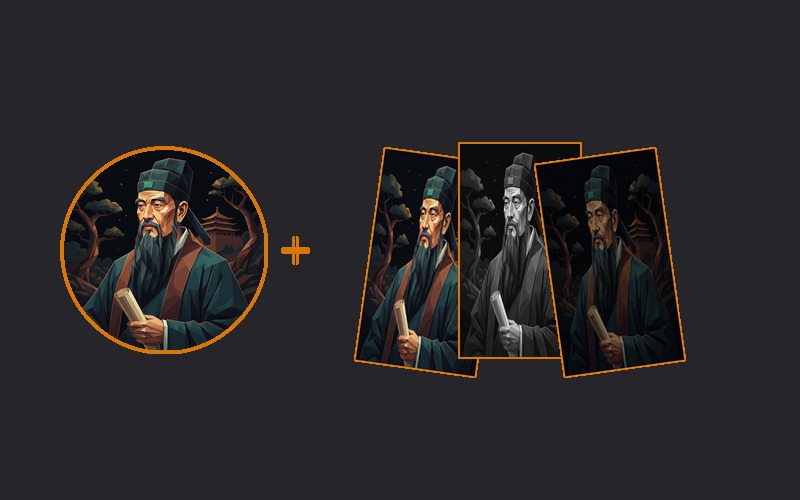 BEST VALUE
 Complete Bundle
$44Everything: the 24-chapter Deep Dive report + 6 exclusive wallpapers. Best value.
 EXCLUSIVE
 Tarot Card Collection
$496 premium print-quality tarot cards in 6 stunning styles: Dark Botanical, Vintage Woodcut, Minimalist Line, Neon Mystic, Stained Glass, Watercolor Dream. Collector edition.
Pay what you want, starting at $1. Every contribution keeps this quiz free, ad-free, and accessible to everyone. Schools and NGOs get everything at no cost. This is self-knowledge for the people, not profit.
Preguntas Frecuentes
¿Qué tipo de personalidad es Equipo Confucio?
Equipo Confucio es el tipo Los Antropólogos (SRDA): Stoic · Rationalist · Sisyphean · Agora. Eres el guardián de la sabiduría. No la que viene de la invención o el experimento, sino la que surge de siglos de experiencia humana, cuidadosamente preservada y transmitida. Crees que las respuestas ya existen, solo necesitan al maestro adecuado.
¿Quiénes son miembros famosos de Equipo Confucio?
Miembros famosos de Equipo Confucio incluyen a Maimónides (Sintetizó y preservó la ley judía y el pensamiento aristotélico para la enseñanza pública.); Tomás de Aquino (Perfeccionó y mantuvo la tradición intelectual cristiana mediante una erudición rigurosa.); Fred Rogers (Educador disciplinado y con principios que dedicó décadas a perfeccionar una visión de la enseñanza moral.); Desmond Tutu (Mantuvo y perfeccionó públicamente la tradición moral de la justicia no violenta.); Dumbledore (Director con principios dedicado a preservar una institución, enseña públicamente (Harry Potter).); Yoda (Maestro ancestral que preserva y perfecciona la tradición, enseña desde sus principios (Star Wars).).
¿Cuál es el rival de Equipo Confucio?
El rival de Equipo Confucio es Equipo Da Vinci (Los Curiosos). Tú preservas la tradición. Ellos inventan lo nuevo. Tú enseñas en público. Ellos experimentan en solitario. Tú razonas desde tus principios. Ellos experimentan al tacto.
¿Cómo funciona el test de personalidad?
El test tiene 12 preguntas que mapean 4 ejes binarios con 3 preguntas de elección forzada cada uno. La elección forzada binaria prácticamente elimina el sesgo (d=0.06, Cao & Drasgow 2019). Dos ítems por escala es el mínimo validado para validez de criterio (Crede et al. 2012); usamos tres por eje porque un número impar no puede empatar, así que ningún eje necesita una regla de desempate que favorezca a un polo. Ver nuestra metodología completa. Los resultados son gratuitos, instantáneos y no se requiere email.
Profundiza en Equipo Confucio
Conoce las fortalezas y superpoderes de Equipo Confucio, descubre con quién es más compatible Equipo Confucio y lee la guía completa de relaciones y amor de Equipo Confucio.
En el trabajo, explora las mejores carreras para Equipo Confucio y entiende cómo Equipo Confucio maneja el estrés. Para el día a día, mira a Equipo Confucio en la vida cotidiana y conoce a los miembros famosos de Equipo Confucio.

Get your full Team Confucius report, free
Your Team Confucius deep dive: 24 chapters on strengths, blind spots, compatibility, career, money, and stress. One email and it is yours.
One email. One confirmation click and the PDF is yours. No spam, leave anytime.