
Equipo Franklin
Los Constructores de Sistemas
EXPA
"Una inversión en conocimiento paga el mejor interés."
Equipo Franklin (EXPA) es Los Constructores de Sistemas, un tipo de personalidad epicurean, empiricist, promethean, agora. Rasgos principales: Sociable, Inventivo, Práctico, Ingenioso, Generoso. Miembros famosos incluyen a Elon Musk, Richard Branson, Steve Irwin. Descubre tu tipo en mypeeps.ai con nuestro test gratuito de 12 preguntas respaldado por investigación científica.
Así Eres Tú
Eres la persona que entra a una habitación, ve un problema del que todos se quejan, construye una solución antes del postre y, de alguna manera, convence a todos de ayudarte a escalarla para la mañana. No solo tienes ideas, tienes implementaciones.
La vida es demasiado corta para la teoría que no se materializa. Tú experimentas, tú iteras, pones las cosas frente a personas reales y observas qué sucede. Tu taller tiene ventanas: quieres que el mundo vea lo que estás construyendo y, lo que es más importante, quieres que lo usen.
Amas a las personas casi tanto como amas construir cosas. Esa es tu ventaja injusta. Donde los inventores solitarios crean tecnología, tú creas movimientos. El servicio postal, la biblioteca de préstamo, el departamento de bomberos: estas no son invenciones. Son comunidades construidas alrededor de soluciones.
Rasgos
Estás en Buena Compañía






¿Qué te Hace Único?
You are the builder who builds with people. Your Epicurean core means you do the work because you love it, and your warmth is infectious. Your Empiricist wiring means every idea gets tested against reality before you bet on it. Your Promethean drive means you're always building the next thing. And your Agora nature means you don't just build things: you build communities around things.
The tension in your combination is between your need to create (Promethean) and your need to connect (Agora). You want to be in the workshop AND in the town square. When this resolves well, you become the person who invents the solution and convinces a thousand people to adopt it before lunch. When it resolves poorly, you become the person who starts a movement, gets distracted by a new invention, and leaves both unfinished.
Tus Fortalezas
Community Builder
You don't just create products: you create movements. Your ability to rally people around a shared purpose is your defining superpower.
Practical Optimism
Your Empiricist grounding prevents your optimism from becoming delusional. You believe things can be better AND you insist on evidence that they will be.
Infectious Energy
Your Epicurean warmth combined with Promethean vision makes people want to be part of whatever you're building. You're a natural magnet for talent and enthusiasm.
Rapid Prototyping
Your Empiricist-Promethean combination means you build, test, and iterate faster than almost anyone. You'd rather have a ugly prototype than a beautiful plan.
Social Intelligence
Your Agora nature gives you an intuitive understanding of group dynamics, stakeholder management, and the art of getting people aligned.
Joyful Productivity
You actually enjoy the work. This isn't discipline: it's passion channeled through practicality. Your output is sustained because the fuel is genuine.
Debilidades Sinceras
Overcommitment
Your enthusiasm for both projects (Promethean) and people (Agora) means you say yes to everything. Your calendar is a war zone and your to-do list is a novel.
Depth Deficit
You spread yourself across so many projects and relationships that none gets your full attention. Your breadth is impressive; your depth is sometimes lacking.
Follow-Through Gaps
Starting things is your superpower; finishing them is your kryptonite. You're three inventions ahead of your execution capacity at all times.
Burnout Blindness
Your Epicurean passion makes you feel invincible until you're suddenly not. You don't see burnout coming because you confuse excitement with energy.
¿Cómo tomas decisiones?
Two projects need your attention: one that's almost finished, one that's brand new and exciting. You'd start the new one, then halfway through, realize the old one is still waiting, and scramble to finish both simultaneously. This pattern is your life.
A community member proposes an idea you know won't work. Rather than dismissing it, you'd help them prototype it quickly, let the evidence speak, and redirect their energy toward something better. You never waste enthusiasm.
Offered a role with more money but less creative freedom, you'd negotiate. If negotiation failed, you'd take the creative freedom. Money is nice; building things you love is non-negotiable.
Compatibilidad

Same Epicurean-Empiricist-Promethean core, but they work privately where you work publicly. You can bring their inventions to the world.

Same Empiricist-Promethean-Agora structure but driven by duty (Stoic) where you're driven by passion (Epicurean). Together, you're discipline plus delight.

Same Epicurean-Empiricist-Agora warmth, but they refine (Sisyphean) where you create (Promethean). They polish what you build.

Same Epicurean-Empiricist-Promethean core, but they work in solitude. You can amplify their discoveries and build communities around their insights.
Relaciones
You're the partner who makes things happen, trips, renovations, adventures, surprise dinners. Your Epicurean warmth and Agora engagement make you delightful to be around. The challenge: you can be so busy building the next experience that you forget to be present in the current one. Your partner doesn't always need a plan, sometimes they just need you to sit down.
You're the friend who remembers birthdays, plans adventures, and makes people feel special. You collect friends easily because your energy is magnetic. The downside: you can spread yourself thin, maintaining fifty friendships at surface level instead of ten at depth. The friendships that sustain you long-term are the ones where you can be tired and boring and still loved.
Full relationship guide →Carrera y estilo de trabajo
Tu perfil profesional
You belong in entrepreneurship, product management, civic leadership, or any role where building things and building consensus are the same job. You're the person who launches the startup, creates the community, and somehow keeps both running on caffeine and charm. Avoid purely technical roles with no human contact, and avoid purely social roles with no tangible output. You need both.
Carreras ideales para ti
Creative direction, brand strategy, or UX design, roles where emotional authenticity and taste drive outcomes, not just data.
Teaching, coaching, or mentorship, work where your contagious enthusiasm becomes someone else's breakthrough. Your energy is a force multiplier.
Entrepreneurship, content creation, or product innovation, environments where passion sustains you through the grind better than a paycheck ever could.
Data science, lab research, or investigative journalism, work where truth is found through observation, not assertion.
Product management, operations, or process improvement, roles where 'what actually happened' matters more than 'what should have happened.'
Trades, craftsmanship, or hands-on engineering, careers where competence is measured by outcomes, not credentials.
R&D, invention, or early-stage startups, environments where creating something that doesn't exist yet is the entire point.
Creative arts, game design, or speculative architecture, work where imagination is the primary tool and constraints are suggestions.
Venture capital, trend forecasting, or innovation consulting, roles that reward spotting what's next before anyone else does.
Team leadership, community building, or facilitation, roles where connecting people and synthesizing perspectives is the work itself.
Consulting, diplomatic roles, or stakeholder management, careers where navigating between different groups and building consensus creates value.
Teaching, public speaking, or media, work where your ability to communicate complex ideas to diverse audiences is your competitive edge.
Carreras a Evitar
Highly procedural roles in compliance, accounting, or bureaucratic institutions. The repetition will deaden the thing that makes you exceptional.
Toxic hustle culture that confuses burnout with dedication. You need to love the work, 'just push through' isn't in your operating system.
Pure strategy consulting or think-tank roles where ideas never get tested against reality. You'll feel like you're playing pretend.
Visionary leadership positions that demand you sell a future nobody can prove yet. You struggle to champion ideas before the evidence exists.
Maintenance engineering, operations, or support roles where the goal is keeping existing systems running. You'll feel like you're dying slowly.
Heavily regulated industries (banking, healthcare compliance) where innovation requires 18 months of approvals. Your pace and their pace will never align.
Isolated technical roles with minimal human interaction. You can do the work, but you'll feel disconnected from its purpose without people to share it with.
Highly competitive, zero-sum environments where collaboration is punished. Your instinct to share and build together will be exploited.
Tu Estilo de Trabajo
You need meaning in your work, not just a mission statement, actual, daily meaning. You perform best when you believe in what you're building and the people you're building it with. Flexibility matters more to you than hierarchy. You'll take a pay cut to work on something that matters. The danger is chasing novelty when the current work gets hard, build checkpoints that force you to finish before you pivot.
Tú como colega
You're the colleague who raises morale and makes the team actually want to show up. Your enthusiasm is contagious and your emotional intelligence catches problems before they become crises. The trap: you may avoid necessary conflict because it threatens the positive atmosphere you've built. Sometimes the most caring thing is the hard conversation.
Bajo Estrés
Under pressure, you seek escape through stimulation. New projects, new environments, new conversations, anything to replace the heavy feeling with something lighter. This isn't laziness; it's your nervous system's way of self-regulating. The problem is that the thing causing the stress is still there when you come back, and now it's bigger because you've been away.
Your stress recovery superpower is that you're actually good at asking for help, better than most types. Use it. The Epicurean who reaches out to their support system during a crisis recovers faster than the one who tries to distract their way through it. Your emotional honesty is an asset, not a vulnerability. The people who love you want to help, let them.
Under pressure, you default to data collection. When you don't know what to do, you gather more information, another analysis, another spreadsheet, another round of research. This feels productive, but past a certain point, you're not learning; you're stalling. The discomfort of acting on incomplete information is your biggest stress trigger, and the only cure is practice.
Your stress signal is overwork disguised as thoroughness. When you're staying late to 'double-check the numbers' for the third time, you're not being diligent: you're anxious. The fix: set decision deadlines before you start the research. 'I will decide by Friday with whatever I have.' Then actually do it. Your track record of good decisions on imperfect data is better than you think.
Under pressure, you start new things. Project A is stuck? Begin project B. Project B hits a wall? Sketch out project C. Each pivot feels like progress because you're moving, generating, creating, but your energy is fragmenting into smaller and smaller pieces. The pile of 80%-finished work grows while nothing actually ships.
Your stress signal is hyperactivity that produces nothing. You're busy, frantically, impressively busy, but if someone asked what you completed this week, you'd struggle to name one thing. The fix is brutal and simple: pick one thing, finish it, then move on. Write it on a sticky note. Look at it every hour. The Promethean who learns to finish under pressure is more dangerous than any competitor.
Under pressure, you talk more. You process by externalizing, calling friends, scheduling meetings, thinking out loud with anyone who'll listen. This feels productive because you're engaged, you're connecting, you're 'working on it.' But past a certain point, you're not processing; you're ruminating through other people's ears. The conversation becomes a loop, not a path.
Your stress signal is over-socializing. When you're scheduling your fourth coffee of the day to 'talk through' the same problem, you've crossed from processing into avoidance. The fix: one conversation, then one decision. Talk it through with one trusted person, write down the conclusion, and act on it. Your social instincts become your superpower again once they're directed toward action instead of repetition.
Under pressure, your Agora side seeks more social input while your Promethean side starts more projects. The result: you're simultaneously overcommitted to people and overcommitted to ideas. Your stress antidote: cancel something. One meeting, one project, one commitment. Create space by subtraction, not addition.
¿Cómo te Comunicas Bajo Presión?
You communicate with your whole self, words, tone, facial expressions, energy. People don't just hear what you're saying; they feel it. This makes you compelling, persuasive, and easy to connect with. You build rapport faster than almost any other type because your emotional transparency signals safety. People trust you quickly because they can see what you're feeling.
In conflicts, you lead with emotion, which is both your gift and your risk. Your honesty cuts through pretense, but it can also escalate situations that needed a cooler approach. The Epicurean who learns to express emotion without being driven by it becomes an extraordinary communicator. Feel everything; say what matters; filter through purpose, not impulse.
You communicate through evidence. 'Here's what happened,' 'Here's what I observed,' 'Let me show you the data.' Your communication style builds credibility through specificity: you don't make vague claims, you bring receipts. People who value precision love working with you. People who value feeling heard can find you frustrating.
In conflicts, you instinctively reach for facts, which works brilliantly when the conflict is about what happened, and terribly when the conflict is about how someone felt. Learning to say 'I understand why that upset you' before 'but here's what the data shows' will transform your most difficult conversations. Lead with acknowledgment, then bring the evidence.
You communicate through vision. Your natural mode is painting a picture of what could exist, the future, the possibility, the 'imagine if.' This makes you inspiring and sometimes infuriating. People follow your vision when they believe it's achievable, and tune out when it feels like fantasy. The line between the two is details, the more specific you can be, the more persuasive you become.
In conflicts, you tend to leap past the current problem to the solution, which can feel dismissive to someone who needs the current problem acknowledged. 'Okay but here's what we should do instead' can land as 'your feelings about this don't matter.' Slow down. Acknowledge the present before you paint the future.
You communicate through connection. Your natural mode is dialogue: you share ideas in progress, invite reactions, and refine in real-time. This makes you collaborative and easy to work with, but it can also make you hard to pin down. Your first statement on any topic is rarely your final one, because you're still thinking. People who understand this love brainstorming with you. People who don't can find you inconsistent.
In conflicts, your instinct is to talk it through, which is healthy until it becomes over-processing. You can hold the same conversation multiple times with different people, seeking the validation that one person couldn't give you. The Agora who learns to resolve conflicts in fewer, deeper conversations instead of many shallow ones becomes exceptional at both harmony and truth.
Reto de crecimiento de 7 días
Small daily actions to build resilience and break your stress patterns.
Monday: Before starting anything new, finish one thing from last week. Complete the loop.
Tuesday: Say 'no' to one request. Practice protecting your capacity.
Wednesday: Spend two hours alone, no calls, no messages, no collaboration. Think without input.
Thursday: Deep-dive into one project for a full afternoon. No switching. Practice depth.
Friday: Cancel one commitment that doesn't spark joy or produce results. Subtract.
Saturday: Be present with people without building anything. No agendas, no projects, just connection.
Sunday: Assess honestly: are you excited or exhausted? If you can't tell, you're probably exhausted.
Ruta de crecimiento
Address: Overcommitment
Your calendar is a war zone and your to-do list is a novel.
Address: Depth Deficit
Your breadth is impressive; your depth is sometimes lacking.
Address: Follow-Through Gaps
You're three inventions ahead of your execution capacity at all times.
Address: Burnout Blindness
You don't see burnout coming because you confuse excitement with energy.
Vida diaria
You communicate with your whole self, words, tone, facial expressions, energy. People don't just hear what you're saying; they feel it. This makes you compelling, persuasive, and easy to connect with. You build rapport faster than almost any other type because your emotional transparency signals safety. People trust you quickly because they can see what you're feeling.
Communication, hobbies, pets & more →Tu rival

Tú materializas e iteras. Ellos refinan sin cesar. Tú reúnes multitudes. Ellos se retiran para perfeccionar. Tú experimentas públicamente. Ellos razonan en silencio.
 NEW
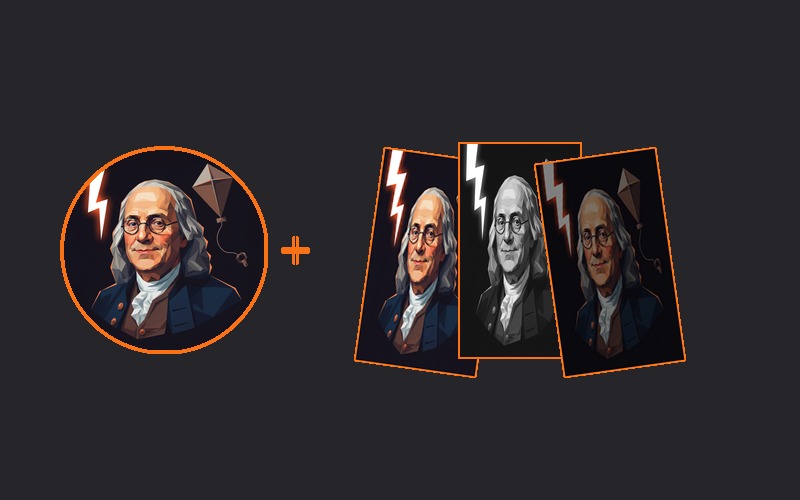
NEW Wallpaper Pack
$266 exclusive phone wallpapers, low-poly, neon blueprint, vintage engraving, minimalist, abstract, and cinematic.
 BEST VALUE
 Complete Bundle
$44Everything: the 24-chapter Deep Dive report + 6 exclusive wallpapers. Best value.
 EXCLUSIVE
 Tarot Card Collection
$496 premium print-quality tarot cards in 6 stunning styles: Dark Botanical, Vintage Woodcut, Minimalist Line, Neon Mystic, Stained Glass, Watercolor Dream. Collector edition.
Pay what you want, starting at $1. Every contribution keeps this quiz free, ad-free, and accessible to everyone. Schools and NGOs get everything at no cost. This is self-knowledge for the people, not profit.
Preguntas Frecuentes
¿Qué tipo de personalidad es Equipo Franklin?
Equipo Franklin es el tipo Los Constructores de Sistemas (EXPA): Epicurean · Empiricist · Promethean · Agora. Eres la persona que entra a una habitación, ve un problema del que todos se quejan, construye una solución antes del postre y, de alguna manera, convence a todos de ayudarte a escalarla para la mañana. No solo tienes ideas, tienes implementaciones.
¿Quiénes son miembros famosos de Equipo Franklin?
Miembros famosos de Equipo Franklin incluyen a Elon Musk (Personalidad con una fuerza vital que construye y prueba cohetes, crea nuevas industrias); Richard Branson (Aventurero-emprendedor jovial que prueba ideas haciendo, construye empresas públicamente); Steve Irwin (Naturalista exuberante y práctico que fue pionero en los medios de conservación de la vida silvestre); Bill Nye (Experimentador público entusiasta que hace la ciencia accesible, ama a la multitud); El Doctor (Alegre, experimenta con todo, inventa soluciones sobre la marcha, profundamente involucrado (Doctor Who)); Jamie Oliver (Entusiasta, aprende haciendo, creó nuevos enfoques para la cultura y educación alimentaria).
¿Cuál es el rival de Equipo Franklin?
El rival de Equipo Franklin es Equipo Wittgenstein (Los Cazadores de Tesoros). Tú materializas e iteras. Ellos refinan sin cesar. Tú reúnes multitudes. Ellos se retiran para perfeccionar. Tú experimentas públicamente. Ellos razonan en silencio.
¿Cómo funciona el test de personalidad?
El test tiene 12 preguntas que mapean 4 ejes binarios con 3 preguntas de elección forzada cada uno. La elección forzada binaria prácticamente elimina el sesgo (d=0.06, Cao & Drasgow 2019). Dos ítems por escala es el mínimo validado para validez de criterio (Crede et al. 2012); usamos tres por eje porque un número impar no puede empatar, así que ningún eje necesita una regla de desempate que favorezca a un polo. Ver nuestra metodología completa. Los resultados son gratuitos, instantáneos y no se requiere email.
Profundiza en Equipo Franklin
Conoce las fortalezas y superpoderes de Equipo Franklin, descubre con quién es más compatible Equipo Franklin y lee la guía completa de relaciones y amor de Equipo Franklin.
En el trabajo, explora las mejores carreras para Equipo Franklin y entiende cómo Equipo Franklin maneja el estrés. Para el día a día, mira a Equipo Franklin en la vida cotidiana y conoce a los miembros famosos de Equipo Franklin.

Get your full Team Franklin report, free
Your Team Franklin deep dive: 24 chapters on strengths, blind spots, compatibility, career, money, and stress. One email and it is yours.
One email. One confirmation click and the PDF is yours. No spam, leave anytime.