
Equipo Hemingway
Los Realistas
EXDI
"Todo lo que tienes que hacer es escribir una frase verdadera. Escribe la frase más verdadera que conozcas."
Equipo Hemingway (EXDI) es Los Realistas, un tipo de personalidad epicurean, empiricist, sisyphean, solitary. Rasgos principales: Contemplativo, Sensorial, Autoanalítico, Retraído, De corazón estoico. Miembros famosos incluyen a Marcel Proust, Henry David Thoreau, Oliver Sacks. Descubre tu tipo en mypeeps.ai con nuestro test gratuito de 12 preguntas respaldado por investigación científica.
Así Eres Tú
Te alejaste del ruido no porque le tengas miedo, sino porque escuchaste algo más interesante en el silencio. Tu vida es tu investigación. Cada cicatriz, cada resaca, cada desamor: material en bruto. No teorizas sobre la experiencia. La vives y luego la destilas hasta encontrar lo que es verdad.
No persigues la novedad. Refinas la observación. El mismo bar, el mismo río, las mismas preguntas, pero cada vez ves algo nuevo. Despojas el adorno hasta que solo queda lo honesto. Esa compresión es tu arte.
La gente confunde tu retiro con indiferencia. No entienden que sentir profundamente es exactamente la razón por la que necesitas la soledad. Procesas el mundo a través del contacto directo: lo pruebas, lo combates, lo amas, y luego te retiras para darle sentido a lo que encontraste. Profundidad sobre amplitud, siempre.
Rasgos
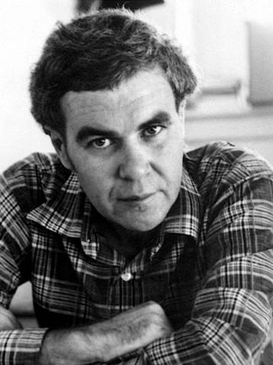
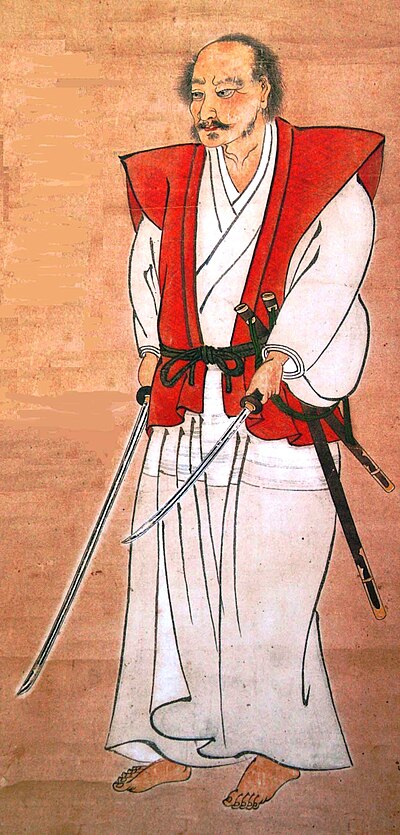
Estás en Buena Compañía




¿Qué te Hace Único?
You are the distiller, passionate about experience, devoted to observation, obsessive about refinement, and processing it all in magnificent solitude. Your Epicurean core means you live fully, tasting, feeling, risking, because the raw material of your work is your own life. Your Empiricist wiring means you trust only what you've personally observed. Your Sisyphean drive means you refine that observation until only the essential truth remains. And your Solitary nature means the refinement happens in private, where no one can rush you.
The tension in your combination is between living (Epicurean) and refining (Sisyphean). You need experience to have material, but you need solitude to process it. Too much living and you never distill. Too much refining and you run out of raw material. The masters of your type alternate, periods of intense engagement with the world followed by extended withdrawal to make sense of it all.
Tus Fortalezas
Experiential Depth
Your work has a truthfulness that comes from having lived it. You don't write about what you've read: you write about what you've felt, tasted, survived.
Ruthless Editing
You can strip away everything unnecessary until only the essential remains. Your Sisyphean refinement produces work of extraordinary clarity and impact.
Sensory Precision
Your Empiricist-Epicurean combination gives you extraordinary attention to sensory detail. You notice what others overlook because you're present in the moment, not in your head.
Emotional Authenticity
Your work resonates because it comes from genuine feeling, not performance. People trust your voice because it's earned, not constructed.
Self-Contained Creativity
You don't need a team, a studio, or an audience to produce your best work. You need a quiet room, your accumulated experience, and time.
Courage of Honest Observation
You write what you see, not what people want to hear. Your commitment to truth makes your work uncomfortable and indispensable.
Debilidades Sinceras
Isolation Spiral
Your Solitary-Sisyphean combination can become a trap. The withdrawal deepens, the refinement never ends, and the world moves on without you.
Emotional Overwhelm
Your Epicurean openness to experience means you feel everything at full volume. Without your Solitary recovery time, the input overwhelms your processing capacity.
Avoidance Through Craft
You can use the refinement process as a way to avoid the emotions embedded in your work. Editing becomes a form of emotional regulation, not artistic improvement.
Self-Destructive Intensity
Your need for raw experience can lead you toward situations that provide material at the cost of your wellbeing. Not every scar needs to be earned.
¿Cómo tomas decisiones?
Offered feedback on your work-in-progress, you'd resist. Deeply. Showing unfinished work feels like showing an open wound. If someone insisted, you'd share the least personal section first and watch their face like a hawk.
An editor asks you to cut your favorite paragraph, the one you've refined for weeks. You'd fight for it, then reluctantly cut it, then discover they were right. The willingness to kill your darlings is your secret weapon.
A crisis erupts in your personal life. You wouldn't reach out: you'd retreat, process it alone, and eventually produce something about it. Your coping mechanism is your craft.
Compatibilidad

Same Epicurean-Empiricist-Solitary foundation, but they create (Promethean) where you refine (Sisyphean). You start from the same raw material but end in different places.

Same Epicurean-Sisyphean-Solitary core, but they reason (Rationalist) where you observe (Empiricist). You share the same devotion to craft from different angles.

Same Epicurean-Empiricist-Sisyphean foundation, but they engage socially (Agora) where you withdraw. They can bring warmth and audience to your work.

Same Sisyphean-Solitary perfectionist core, but driven by different fuels, your passion vs. their duty. You understand each other's obsession.
Relaciones
You love intensely but need space to process that intensity. Your Epicurean warmth draws people in; your Solitary withdrawal confuses them. You're the partner who plans the perfect weekend away, then needs Monday alone to recover. The growth edge: your partner doesn't need the refined version of your feelings: they need the raw version. Say what you feel before you've edited it.
You're the friend who remembers birthdays, plans adventures, and makes people feel special. You collect friends easily because your energy is magnetic. The downside: you can spread yourself thin, maintaining fifty friendships at surface level instead of ten at depth. The friendships that sustain you long-term are the ones where you can be tired and boring and still loved.
Full relationship guide →Carrera y estilo de trabajo
Tu perfil profesional
You belong in crafts that transform personal experience into refined output, writing, photography, documentary filmmaking, fine cuisine, winemaking, or artisanal craftsmanship. Any work where the quality comes from having lived it, observed it carefully, and stripped it down to what's true. Avoid careers that require you to produce rapidly, work in open teams, or create from abstraction rather than experience.
Carreras ideales para ti
Creative direction, brand strategy, or UX design, roles where emotional authenticity and taste drive outcomes, not just data.
Teaching, coaching, or mentorship, work where your contagious enthusiasm becomes someone else's breakthrough. Your energy is a force multiplier.
Entrepreneurship, content creation, or product innovation, environments where passion sustains you through the grind better than a paycheck ever could.
Data science, lab research, or investigative journalism, work where truth is found through observation, not assertion.
Product management, operations, or process improvement, roles where 'what actually happened' matters more than 'what should have happened.'
Trades, craftsmanship, or hands-on engineering, careers where competence is measured by outcomes, not credentials.
Precision manufacturing, watchmaking, or surgical specialization, work where mastery is measured in thousandths of an inch and years of practice.
Editing, quality assurance, or restoration, careers where finding the flaw others missed is the highest form of expertise.
Academic research, archival work, or classical music, domains where depth is more respected than breadth and patience is the differentiator.
Software development, writing, or solo research, work where deep focus and uninterrupted thinking produce the best outcomes.
Remote or asynchronous roles, environments where your output matters more than your presence and nobody counts how many meetings you attended.
Forensic analysis, cryptography, or puzzle-solving, careers where the answer reveals itself to the person willing to sit with the problem longest.
Carreras a Evitar
Highly procedural roles in compliance, accounting, or bureaucratic institutions. The repetition will deaden the thing that makes you exceptional.
Toxic hustle culture that confuses burnout with dedication. You need to love the work, 'just push through' isn't in your operating system.
Pure strategy consulting or think-tank roles where ideas never get tested against reality. You'll feel like you're playing pretend.
Visionary leadership positions that demand you sell a future nobody can prove yet. You struggle to champion ideas before the evidence exists.
Growth-hacking, rapid prototyping, or 'move fast and break things' culture. Your instinct to perfect will be treated as a liability.
Generalist management roles where you're spread thin across ten domains instead of going deep in one. Breadth without depth feels like incompetence to you.
Open-plan office cultures with mandatory 'collaboration hours' and team-building retreats. You'll spend more energy managing your exhaustion than doing your work.
Client-facing roles that require constant social performance. You can do it, but it drains the battery that powers your real work.
Tu Estilo de Trabajo
You need meaning in your work, not just a mission statement, actual, daily meaning. You perform best when you believe in what you're building and the people you're building it with. Flexibility matters more to you than hierarchy. You'll take a pay cut to work on something that matters. The danger is chasing novelty when the current work gets hard, build checkpoints that force you to finish before you pivot.
Tú como colega
You're the colleague who raises morale and makes the team actually want to show up. Your enthusiasm is contagious and your emotional intelligence catches problems before they become crises. The trap: you may avoid necessary conflict because it threatens the positive atmosphere you've built. Sometimes the most caring thing is the hard conversation.
Bajo Estrés
Under pressure, you seek escape through stimulation. New projects, new environments, new conversations, anything to replace the heavy feeling with something lighter. This isn't laziness; it's your nervous system's way of self-regulating. The problem is that the thing causing the stress is still there when you come back, and now it's bigger because you've been away.
Your stress recovery superpower is that you're actually good at asking for help, better than most types. Use it. The Epicurean who reaches out to their support system during a crisis recovers faster than the one who tries to distract their way through it. Your emotional honesty is an asset, not a vulnerability. The people who love you want to help, let them.
Under pressure, you default to data collection. When you don't know what to do, you gather more information, another analysis, another spreadsheet, another round of research. This feels productive, but past a certain point, you're not learning; you're stalling. The discomfort of acting on incomplete information is your biggest stress trigger, and the only cure is practice.
Your stress signal is overwork disguised as thoroughness. When you're staying late to 'double-check the numbers' for the third time, you're not being diligent: you're anxious. The fix: set decision deadlines before you start the research. 'I will decide by Friday with whatever I have.' Then actually do it. Your track record of good decisions on imperfect data is better than you think.
Under pressure, you tighten your grip. The standard goes up, the tolerance for imperfection goes down, and the pace slows to a crawl. You convince yourself that the problem is quality, 'if I just make this a little better, everything will be fine', when the real problem is that you're afraid of shipping something imperfect into a world that already feels too chaotic.
Your stress signal is control disguised as craft. When you start re-editing emails, reorganizing files that were already organized, or revising work that was already approved: you're not being thorough, you're managing anxiety through the illusion of control. The fix: name the fear. 'I'm afraid this isn't good enough' is honest. Once you say it, you can evaluate it. Usually, it's good enough. Ship it.
Under pressure, you disappear. Messages go unread, invitations get declined, and you retreat so deep into your own space that people start worrying about you. This isn't depression (though it can look like it): it's your nervous system's emergency protocol. You're trying to reduce input to a level you can process. The problem is that the people who could help are the ones you're cutting off.
Your stress signal is radio silence. When the Solitary goes dark, it means the pressure has exceeded their processing capacity. The fix is counterintuitive: reach out before you feel ready. Send a one-line text: 'I'm okay but overwhelmed. Need some space. Will check in Friday.' This buys you the solitude you need while keeping the lifeline intact. Silence worries people; a brief message sets boundaries without burning bridges.
Under pressure, your Sisyphean perfectionism goes into overdrive while your Solitary nature deepens the withdrawal. You can spend days re-editing a single piece of work, invisible to everyone who might help you. Your stress antidote: show the draft. Not the finished version, the messy, imperfect, embarrassing first draft. Letting someone see your unrefined work is the most stress-relieving thing you can do.
¿Cómo te Comunicas Bajo Presión?
You communicate with your whole self, words, tone, facial expressions, energy. People don't just hear what you're saying; they feel it. This makes you compelling, persuasive, and easy to connect with. You build rapport faster than almost any other type because your emotional transparency signals safety. People trust you quickly because they can see what you're feeling.
In conflicts, you lead with emotion, which is both your gift and your risk. Your honesty cuts through pretense, but it can also escalate situations that needed a cooler approach. The Epicurean who learns to express emotion without being driven by it becomes an extraordinary communicator. Feel everything; say what matters; filter through purpose, not impulse.
You communicate through evidence. 'Here's what happened,' 'Here's what I observed,' 'Let me show you the data.' Your communication style builds credibility through specificity: you don't make vague claims, you bring receipts. People who value precision love working with you. People who value feeling heard can find you frustrating.
In conflicts, you instinctively reach for facts, which works brilliantly when the conflict is about what happened, and terribly when the conflict is about how someone felt. Learning to say 'I understand why that upset you' before 'but here's what the data shows' will transform your most difficult conversations. Lead with acknowledgment, then bring the evidence.
You communicate through depth. Your explanations are thorough, nuanced, and complete. You cover edge cases, acknowledge exceptions, and give people everything they need to understand the full picture. People who value precision respect you enormously. People who need the headline first may lose patience waiting for it.
In conflicts, you can over-explain, presenting such a comprehensive case that the other person feels overwhelmed rather than persuaded. Your instinct to be thorough can become a weapon when deployed in a disagreement. Learning to lead with your conclusion and then support it, instead of building to it, will make your thoroughness an asset in every conversation, not just the technical ones.
You communicate through considered, deliberate output. Emails are precise, messages are purposeful, and conversations are efficient. You don't do small talk easily, and you rarely think out loud. What comes out has already been processed, which means your communication is high-quality but low-frequency. People who work with you learn that when you speak, it matters.
In conflicts, you withdraw to process, which can leave the other person feeling abandoned. 'I need to think about this' is responsible, but 'I need to think about this and I'll come back to you by Wednesday' is relationship-saving. The Solitary's communication becomes powerful when it includes timelines and follow-through on the response, not just the retreat.
Reto de crecimiento de 7 días
Small daily actions to build resilience and break your stress patterns.
Monday: Go experience something new. Leave the workshop. Gather raw material.
Tuesday: Share one unfinished thought with someone you trust. Before it's polished.
Wednesday: Set a timer for your editing session. When it goes off, stop. Walk away.
Thursday: Have a conversation about feelings, not observations, not truths, just how you're doing.
Friday: Declare one piece of work 'done enough' and release it. Good enough is good enough.
Saturday: Do something with other people. Not for material, just for companionship.
Sunday: Write one honest sentence about how you felt this week. Not polished, raw.
Ruta de crecimiento
Address: Isolation Spiral
The withdrawal deepens, the refinement never ends, and the world moves on without you.
Address: Emotional Overwhelm
Without your Solitary recovery time, the input overwhelms your processing capacity.
Address: Avoidance Through Craft
Editing becomes a form of emotional regulation, not artistic improvement.
Address: Self-Destructive Intensity
Not every scar needs to be earned.
Vida diaria
You communicate with your whole self, words, tone, facial expressions, energy. People don't just hear what you're saying; they feel it. This makes you compelling, persuasive, and easy to connect with. You build rapport faster than almost any other type because your emotional transparency signals safety. People trust you quickly because they can see what you're feeling.
Communication, hobbies, pets & more →Tu rival

Tú observas desde la experiencia. Ellos razonan desde el principio. Tú te retiras para escribir. Ellos se involucran con el público. Tú refinas la verdad en bruto. Ellos construyen marcos universales.
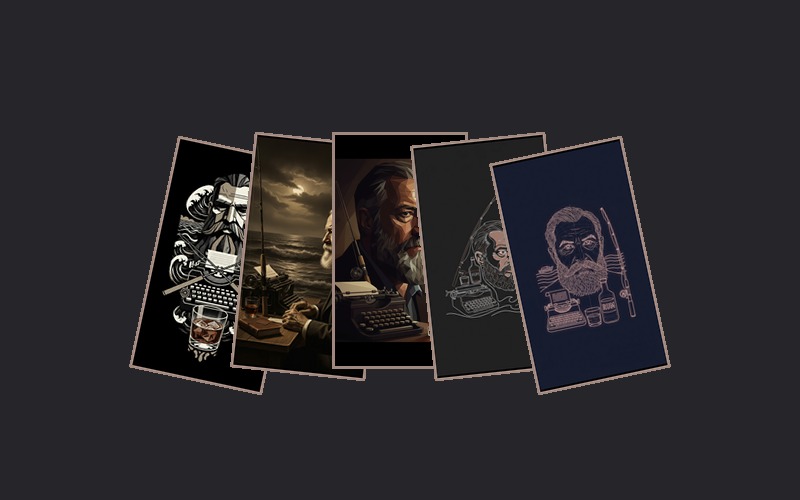 NEW
NEW Wallpaper Pack
$266 exclusive phone wallpapers, low-poly, neon blueprint, vintage engraving, minimalist, abstract, and cinematic.
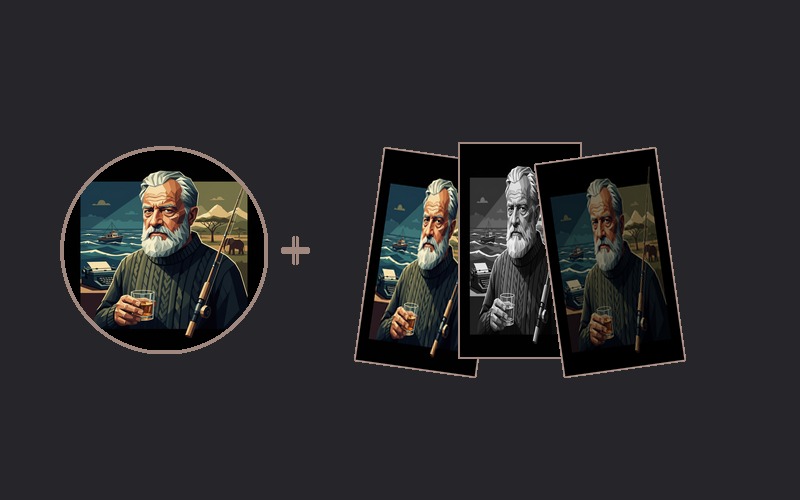 BEST VALUE
 Complete Bundle
$44Everything: the 24-chapter Deep Dive report + 6 exclusive wallpapers. Best value.
 EXCLUSIVE
 Tarot Card Collection
$496 premium print-quality tarot cards in 6 stunning styles: Dark Botanical, Vintage Woodcut, Minimalist Line, Neon Mystic, Stained Glass, Watercolor Dream. Collector edition.
Pay what you want, starting at $1. Every contribution keeps this quiz free, ad-free, and accessible to everyone. Schools and NGOs get everything at no cost. This is self-knowledge for the people, not profit.
Preguntas Frecuentes
¿Qué tipo de personalidad es Equipo Hemingway?
Equipo Hemingway es el tipo Los Realistas (EXDI): Epicurean · Empiricist · Sisyphean · Solitary. Te alejaste del ruido no porque le tengas miedo, sino porque escuchaste algo más interesante en el silencio. Tu vida es tu investigación. Cada cicatriz, cada resaca, cada desamor: material en bruto. No teorizas sobre la experiencia. La vives y luego la destilas hasta encontrar lo que es verdad.
¿Quiénes son miembros famosos de Equipo Hemingway?
Miembros famosos de Equipo Hemingway incluyen a Marcel Proust (Se retiró a una habitación forrada de corcho para escribir una obra monumental que refinaba la memoria y la sensación.); Henry David Thoreau (Se retiró a Walden Pond, observó la naturaleza y refinó una filosofía contemplativa.); Oliver Sacks (Observación solitaria y profundamente sensorial de pacientes individuales, refinada a lo largo de toda una vida.); Frida Kahlo (Transformó el dolor físico y emocional en bruto en autorretratos brutalmente honestos, en soledad.); Raymond Carver (Desnudó la prosa hasta el hueso: cada frase ganada a través de la experiencia vivida de la clase trabajadora.); Miyamoto Musashi (Espadachín errante que refinó un arte a través de toda una vida de disciplina solitaria y experiencia directa.).
¿Cuál es el rival de Equipo Hemingway?
El rival de Equipo Hemingway es Equipo Kant (Los Archivistas). Tú observas desde la experiencia. Ellos razonan desde el principio. Tú te retiras para escribir. Ellos se involucran con el público. Tú refinas la verdad en bruto. Ellos construyen marcos universales.
¿Cómo funciona el test de personalidad?
El test tiene 12 preguntas que mapean 4 ejes binarios con 3 preguntas de elección forzada cada uno. La elección forzada binaria prácticamente elimina el sesgo (d=0.06, Cao & Drasgow 2019). Dos ítems por escala es el mínimo validado para validez de criterio (Crede et al. 2012); usamos tres por eje porque un número impar no puede empatar, así que ningún eje necesita una regla de desempate que favorezca a un polo. Ver nuestra metodología completa. Los resultados son gratuitos, instantáneos y no se requiere email.
Profundiza en Equipo Hemingway
Conoce las fortalezas y superpoderes de Equipo Hemingway, descubre con quién es más compatible Equipo Hemingway y lee la guía completa de relaciones y amor de Equipo Hemingway.
En el trabajo, explora las mejores carreras para Equipo Hemingway y entiende cómo Equipo Hemingway maneja el estrés. Para el día a día, mira a Equipo Hemingway en la vida cotidiana y conoce a los miembros famosos de Equipo Hemingway.

Get your full Team Hemingway report, free
Your Team Hemingway deep dive: 24 chapters on strengths, blind spots, compatibility, career, money, and stress. One email and it is yours.
One email. One confirmation click and the PDF is yours. No spam, leave anytime.