
El Oráculo
Lo ve todo, dice poco.
MWAK
"Ya vas tres capítulos por delante de todos."
El Oráculo (MWAK) es Lo ve todo, dice poco., un tipo de personalidad mirror, wings, water, kaleidoscope. Rasgos principales: Perceptivo, Fluido, Sabio, Adaptable, Conectado. Miembros famosos incluyen a El Oráculo (Matrix), Tilda Swinton, Wanda Maximoff. Descubre tu tipo en mypeeps.ai con nuestro test gratuito de 12 preguntas respaldado por investigación científica.
Así Eres Tú
Ves patrones en todas partes. En las conversaciones, en las relaciones, en la forma en que el mundo se mueve. Mientras los demás reaccionan a lo que sucede ahora, tú ya estás viendo los efectos dominó, las consecuencias, la hermosa reacción en cadena que nadie más ha notado todavía.
Tu mente es un caleidoscopio dentro de un telescopio. Ve a lo lejos y a lo ancho, y todo lo que hay en medio, cambiando de perspectiva constantemente, encontrando conexiones que parecen imposibles hasta que las explicas, y entonces parecen obvias. Ese es tu don. Hacer visible lo invisible.
A veces la gente te encuentra inquietante. Sabes demasiado. Ves con demasiada claridad. Haces la pregunta que nadie quería escuchar. Pero las personas que realmente te conocen entienden: no intentas inquietarlos. Intentas ayudarlos a ver lo que tú ves. Y lo que tú ves suele ser asombroso.
Rasgos
Estás en Buena Compañía





¿Qué te Hace Único?
Mirror + Wings + Water + Kaleidoscope is the most perceptive combination in the entire system. You reflect from infinite depths, explore from infinite angles, flow through infinite emotional landscapes, and see through infinite lenses. You perceive more of reality than anyone around you, which is both a gift and an unbearable weight.
Your combination means you're always processing more information than you can share. You see the connections between things that other people experience as separate. Time, relationships, patterns, possibilities: they're all visible to you simultaneously. The challenge is choosing which vision to communicate and which to hold in silence.
Tus Fortalezas
Multi-dimensional perception: you see w
Multi-dimensional perception: you see what others can’t from angles they haven’t tried
Gentle transcendence: you elevate every
Gentle transcendence: you elevate every conversation without trying
Adaptive wisdom: you shift perspectives
Adaptive wisdom: you shift perspectives to find truth from any angle
Pattern mastery: you connect dots acros
Pattern mastery: you connect dots across time, space, and disciplines
Debilidades Sinceras
Seeing everything can be paralyzing, to
Seeing everything can be paralyzing, too many possibilities, too few choices
Your transcendence can become detachment
Your transcendence can become detachment, floating above life instead of living it
People may stop sharing because they fee
People may stop sharing because they feel you already know
Your fluid boundaries can leave you with
Your fluid boundaries can leave you without a solid sense of self
¿Cómo tomas decisiones?
You can see three possible futures clearly. None of them are certain, but all are probable. Others want you to choose. Your entire being resists, because choosing one future means letting the others die. The Oracle's growth is learning that choosing doesn't kill possibilities; it creates new ones.
Compatibilidad
Relaciones
You love from a place that most people can't reach. Your partner feels understood at a level that borders on telepathy. The risk: you can see too much, and knowing where a relationship is heading before your partner does can create a loneliness that no amount of love can fill. Let them discover things in their own time.
You're the friend people call when they need someone who actually listens. Not the 'mm-hmm' kind, the kind that reflects back what they said better than they said it. Your friendships are deep but few. Quantity has never been your metric.
Full relationship guide →Carrera y estilo de trabajo
Tu perfil profesional
You need roles where perception is the product, pattern analysis, futures research, depth psychology, or advisory roles where your ability to see what's coming is the competitive advantage. Avoid roles that require quick, single-perspective decisions. Your gift is the panoramic view.
Carreras ideales para ti
Therapy, counseling, or executive coaching, roles where deep listening and pattern recognition are the actual product.
UX research, strategic consulting, or editorial work, careers where understanding WHY matters more than doing WHAT.
Writing, academic research, or policy analysis, environments that reward depth of thought over speed of output.
Travel journalism, international development, or cross-cultural consulting, anything that lets you wake up in a different timezone and call it work.
Entrepreneurship, freelance creative work, or innovation labs, careers where reinvention IS the job, not a disruption.
Documentary filmmaking, field research, or adventure tourism, roles where curiosity is rewarded and routine is the enemy.
Mediation, diplomacy, or HR, roles where reading the room and navigating competing needs is the actual skill.
Nursing, palliative care, or therapy, careers where emotional presence and gentle adaptation heal people.
Design thinking, user research, or change management, work where understanding how people actually feel matters more than how they should feel.
Creative direction, art therapy, or experience design, roles where seeing from multiple angles isn't just tolerated, it's the competitive advantage.
Innovation consulting, trend forecasting, or cultural analysis, careers where connecting unrelated dots creates actual value.
Interdisciplinary research, transmedia storytelling, or curatorial work, environments that reward the exact kind of thinking that made school boring for you.
Carreras a Evitar
High-volume customer service or fast-paced sales floors. The constant surface interactions will drain your battery faster than a phone with 47 open tabs.
Cultures that equate visibility with value. You do your best work behind the scenes, and being forced to perform productivity is exhausting.
Bureaucratic institutions with rigid hierarchies and 30-year career ladders. You'd rather eat glass than fill out the same form every Tuesday.
Roles that require you to become an expert in one narrow domain forever. Your strength is breadth and adaptation, let the specialists specialize.
Aggressive sales or competitive trading floors where emotional attunement is treated as weakness. They'll eat you alive, and you'll let them.
Roles that demand you be the loudest voice in the room. You influence through resonance, not volume.
Assembly-line processes or highly standardized roles. Your mind will rebel against repetition by generating increasingly creative forms of procrastination.
Organizations that worship 'best practices' and fear deviation. You don't follow paths: you see the whole landscape.
Tu Estilo de Trabajo
You need time to think before you act. The open-plan, always-on, Slack-pinging environment is your personal circle of hell. You perform best with autonomy, quiet, and the freedom to go deep. Your insights are worth the wait, but you need managers who understand that quiet doesn't mean idle. The perfect role for you involves complex problems, long timelines, and people who appreciate nuance over noise.
Tú como colega
You're the colleague who sees the interpersonal dynamics nobody's talking about. You know why the meeting went sideways before anyone else does. Use that power wisely: your insights can either heal a team or make you the office therapist nobody asked for.
Bajo Estrés
When you're stressed, you retreat into your head. You replay conversations, analyze decisions, and build elaborate mental models of what went wrong and why. This feels like processing, but it can become rumination, the same thought loop disguised as insight.
Your stress signal is when your inner monologue becomes a courtroom drama with you as both prosecutor and defendant. When you catch yourself in the third re-analysis of the same conversation, it's time to stop thinking and start talking, to another person, out loud, imperfectly.
When you're stressed, you want to leave. Not metaphorically, literally. New city, new job, new haircut, new life. The urge to shed your current reality is powerful, and sometimes it's the right call. But when escape becomes your default stress response, you carry the problem with you to every new destination.
Your stress signal is when you start fantasizing about a completely different life instead of addressing what's wrong with this one. When wanderlust becomes an escape hatch, the bravest thing you can do is stay and face the thing you're running from.
When you're stressed, you go quiet. You adapt so seamlessly to the needs around you that nobody notices you're drowning. You keep flowing, keep accommodating, keep being the calm one, while internally, you're disappearing. Your stress response is invisible, which makes it dangerous.
Your stress signal is when you can't remember the last time you said 'no' or the last time you wanted something for yourself. When your adaptability becomes self-erasure, you need to create a disruption, say something selfish, make a demand, take up space. It will feel wrong. It's not.
When you're stressed, your mind fragments. Every perspective is equally valid, every option equally possible, every emotion equally intense. You spin through possibilities without landing on any of them. Analysis paralysis meets emotional overwhelm, and the result is a strange combination of hyperactivity and paralysis.
Your stress signal is when you can't finish a sentence because three other thoughts keep interrupting. When your beautiful kaleidoscope becomes a whirlpool, you need to simplify: one thing, one focus, one decision. Not because the other perspectives don't matter, but because you can't see anything clearly when everything is spinning.
When overwhelmed by seeing too much, deliberately narrow your focus. One thing. One perspective. One moment. Your kaleidoscope can pause, give it permission to rest.
¿Cómo te Comunicas Bajo Presión?
You communicate through carefully chosen words. When you speak, it carries weight because people know you've thought deeply before opening your mouth. Your feedback is precise, your questions are incisive, and your observations are often uncomfortably accurate.
The gap in your communication is spontaneity. By the time you've processed your perfect response, the moment may have passed. Practice speaking at 70% formation, your half-formed thoughts are better than most people's finished ones.
You communicate through stories and experiences. Every conversation with you is a journey: you bring references from different cultures, different disciplines, different corners of your adventurous life. People find you fascinating and energizing.
The gap is consistency of message. Your perspective evolves so quickly that people may struggle to follow your narrative thread. Practice grounding your stories in a consistent theme, even as the details change.
You communicate through attunement. You match the emotional frequency of whoever you're talking to, which makes them feel deeply understood. You're the person who makes introverts open up and extroverts calm down. Your communication is a bridge.
The gap is your own voice. You're so good at reflecting others that people may not know what YOU actually think or feel. Practice starting sentences with 'I want' or 'I believe' without checking the room's temperature first.
You communicate through association and metaphor. Your mind connects ideas from wildly different domains, creating insights that are both surprising and illuminating. Conversations with you are never boring: they're adventures in perspective.
The gap is accessibility. Your leaps can lose people who think more linearly. Practice the bridge sentence: 'Here's how this connects' before making your kaleidoscopic jump. You'll lose none of the magic and gain all of the clarity.
Reto de crecimiento de 7 días
Small daily actions to build resilience and break your stress patterns.
Monday: Choose one perspective and commit to it for a full day.
Tuesday: Plant your feet. Feel the ground. You don't always need to transcend.
Wednesday: Let someone surprise you. Stop predicting and start experiencing.
Thursday: Define one thing you believe without qualification. Say it plainly.
Friday: Ask someone what THEY see. You might be surprised by a perspective you missed.
Saturday: Do something that requires only your body, not your mind. Run. Swim. Build.
Sunday: What did you see this week that nobody else noticed? Was sharing it the right call?
Ruta de crecimiento
Choose one perspective and commit to it
Choose one perspective and commit to it. Not forever, just for today.
Plant your feet
Plant your feet. Feel the ground. You don’t always need to transcend.
Let someone surprise you
Let someone surprise you. Stop predicting and start experiencing.
Define one thing you believe, without qualificatio
Define one thing you believe, without qualification or nuance. Just say it plainly.
Vida diaria
You communicate through carefully chosen words. When you speak, it carries weight because people know you've thought deeply before opening your mouth. Your feedback is precise, your questions are incisive, and your observations are often uncomfortably accurate.
Communication, hobbies, pets & more →Tu rival

Tú ves lo que podría ser. Ellos protegen lo que es. Tú disuelves todas las líneas. Ellos mantienen la línea. Tú fluyes por todas partes. Ellos arden con firmeza.
 NEW
NEW Mood Wallpaper Pack
$266 mood wallpapers (Power, Storm, Calm, Love, Shield, Growth) + 3 affirmation lock screens. 9 exclusive phone backgrounds.
 BEST VALUE
 Complete Bundle
$44Everything: your full archetype report + 9 exclusive wallpapers. Best value.
 EXCLUSIVE
 Tarot Card Collection
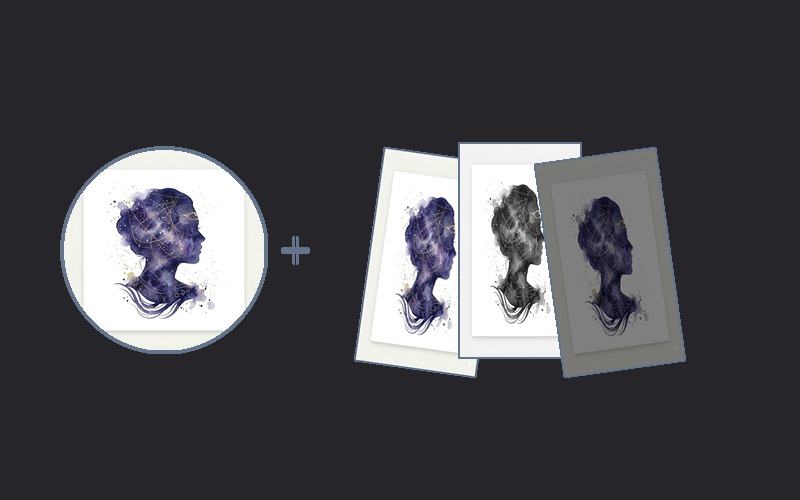
$496 premium print-quality tarot cards in 6 stunning styles: Dark Botanical, Vintage Woodcut, Minimalist Line, Neon Mystic, Stained Glass, Watercolor Dream. Collector edition.
Pay what you want, starting at $1. Every contribution keeps this quiz free, ad-free, and accessible to everyone. Schools and NGOs get everything at no cost. This is self-knowledge for the people, not profit.
Preguntas Frecuentes
¿Qué tipo de personalidad es El Oráculo?
El Oráculo es el tipo Lo ve todo, dice poco. (MWAK): Mirror · Wings · Water · Kaleidoscope. Ves patrones en todas partes. En las conversaciones, en las relaciones, en la forma en que el mundo se mueve. Mientras los demás reaccionan a lo que sucede ahora, tú ya estás viendo los efectos dominó, las consecuencias, la hermosa reacción en cadena que nadie más ha notado todavía.
¿Quiénes son miembros famosos de El Oráculo?
Miembros famosos de El Oráculo incluyen a El Oráculo (Matrix) (Lo ve todo, dice lo justo, cambia el universo con una frase y una galleta.); Tilda Swinton (Existe fuera del tiempo, ve desde todos los ángulos, trasciende cada categoría.); Wanda Maximoff (Ve a través de realidades, fluye entre mundos, posee infinitas perspectivas (Marvel).); FKA Twigs (Existe fuera de cada límite: arte, música, danza, identidad, todo fluido, todo vidente.); Abuela Sauce (Ve el futuro en el viento, sabe sin que se lo digan, guía con preguntas (Pocahontas).); Janelle Monáe (Ve a través de líneas de tiempo, géneros, estilos: una visión caleidoscópica que lo trasciende todo.).
¿Cuál es el rival de El Oráculo?
El rival de El Oráculo es El Guardián (Feroz protector, llama constante). Tú ves lo que podría ser. Ellos protegen lo que es. Tú disuelves todas las líneas. Ellos mantienen la línea. Tú fluyes por todas partes. Ellos arden con firmeza.
¿Cómo funciona el test de personalidad?
El test tiene 12 preguntas que mapean 4 ejes binarios con 3 preguntas de elección forzada cada uno. La elección forzada binaria prácticamente elimina el sesgo (d=0.06, Cao & Drasgow 2019). Dos ítems por escala es el mínimo validado para validez de criterio (Crede et al. 2012); usamos tres por eje porque un número impar no puede empatar, así que ningún eje necesita una regla de desempate que favorezca a un polo. Ver nuestra metodología completa. Los resultados son gratuitos, instantáneos y no se requiere email.
Profundiza en El Oráculo
Conoce las fortalezas y superpoderes de El Oráculo, descubre con quién es más compatible El Oráculo y lee la guía completa de relaciones y amor de El Oráculo.
En el trabajo, explora las mejores carreras para El Oráculo y entiende cómo El Oráculo maneja el estrés. Para el día a día, mira a El Oráculo en la vida cotidiana y conoce a los miembros famosos de El Oráculo.

Get your full The Oracle report, free
Your The Oracle report: your emotional blueprint, superpowers, blind spots, compatibility, and growth. One email and it is yours.
One email. One confirmation click and the PDF is yours. No spam, leave anytime.