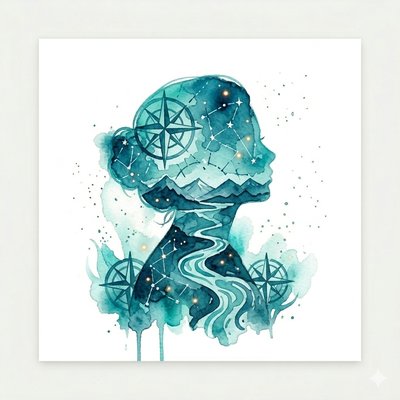
La Pionera
Encuentra un camino donde no lo hay.
TWAC
"El camino no existía hasta que tú lo anduviste."
La Pionera (TWAC) es Encuentra un camino donde no lo hay., un tipo de personalidad torch, wings, water, compass. Rasgos principales: Ingenioso, Adaptable, Independiente, Valiente, Enfocado. Miembros famosos incluyen a Elsa, Sara Blakely, Mulan. Descubre tu tipo en mypeeps.ai con nuestro test gratuito de 12 preguntas respaldado por investigación científica.
Así Eres Tú
Tú no esperas permiso. No esperas que el camino aparezca. Simplemente empiezas a caminar, y de alguna manera el suelo se solidifica bajo tus pies. Siempre has sido así: la primera persona en intentar, la primera en adaptarse, la primera en cruzar la puerta.
No eres imprudente. Eres ingenioso. Cada obstáculo es solo un rompecabezas con una solución que aún no has encontrado. Donde otros ven callejones sin salida, tú ves desvíos. Donde otros se rinden, tú te vuelves creativo. La adaptabilidad no es tu plan B: es toda tu estrategia.
Lo más solitario es ser el primero. Nadie entiende el camino que estás abriendo porque nadie lo ha andado antes. Pero no necesitas compañía para avanzar. Solo necesitas creer que hay algo que vale la pena encontrar al otro lado. Y tú siempre lo haces.
Rasgos
Estás en Buena Compañía




¿Qué te Hace Único?
Torch + Wings + Water + Compass creates the pathfinder, someone who acts decisively, explores fearlessly, adapts fluidly, and always knows why they're going where they're going. You don't wander; you navigate uncharted territory with purpose.
Your combination is uniquely equipped for building new things. Where Rebels destroy and Visionaries dream, you actually BUILD the path. Your Water adaptability means obstacles don't stop you: they redirect you. Your Compass means you never lose sight of why the path matters.
Tus Fortalezas
Resourcefulness: you can build somethin
Resourcefulness: you can build something from nothing
Independence: you don’t need permission
Independence: you don’t need permission or a manual
Adaptability, obstacles become detours
Adaptability, obstacles become detours, never dead ends
Practical courage: you’re brave AND sma
Practical courage: you’re brave AND smart about it
Debilidades Sinceras
Your independence can become isolation,
Your independence can become isolation, trailblazing alone gets lonely
You may refuse help because asking feels
You may refuse help because asking feels like failure
Your focus on the path ahead can make yo
Your focus on the path ahead can make you miss the view
Not every problem needs a pioneer. Somet
Not every problem needs a pioneer. Sometimes the path already exists.
¿Cómo tomas decisiones?
The safe path is clear and well-traveled. The unknown path is risky but potentially transformative. For most people, this is a dilemma. For you, it's barely a question. Just make sure you're pioneering toward something, not away from something.
Compatibilidad
Relaciones
You need a partner who can keep up OR a partner who's secure enough to hold the fort while you explore. The worst match is someone who interprets your movement as abandonment. The best match is someone who sends you off with 'go find amazing things and come home.'
You're the friend who books the restaurant, organizes the trip, and remembers to check in after the hard conversation. People rely on you because you're reliable. But sometimes you need a friend who makes YOU sit down and talk about YOUR feelings for once.
Full relationship guide →Carrera y estilo de trabajo
Tu perfil profesional
You need roles where the territory is unmapped, international development, startup operations, expedition leadership, or building systems from scratch. You're the person organizations hire to figure out what nobody else could. Avoid maintenance roles: you build, you don't maintain.
Carreras ideales para ti
Emergency response, project management, or nonprofit leadership, environments where decisive emotional action saves the day and committees just slow things down.
Event planning, community organizing, or team leadership, roles where showing up and making things happen IS the job description.
Teaching, coaching, or social work, careers where your instinct to act on behalf of others becomes a superpower, not a liability.
Travel journalism, international development, or cross-cultural consulting, anything that lets you wake up in a different timezone and call it work.
Entrepreneurship, freelance creative work, or innovation labs, careers where reinvention IS the job, not a disruption.
Documentary filmmaking, field research, or adventure tourism, roles where curiosity is rewarded and routine is the enemy.
Mediation, diplomacy, or HR, roles where reading the room and navigating competing needs is the actual skill.
Nursing, palliative care, or therapy, careers where emotional presence and gentle adaptation heal people.
Design thinking, user research, or change management, work where understanding how people actually feel matters more than how they should feel.
Mission-driven organizations, ethical business, or values-based investing, careers where your internal north star aligns with the organization's actual direction.
Quality assurance, editorial standards, or compliance, roles where 'this is the right way to do it' isn't annoying, it's the whole job.
Leadership coaching, curriculum design, or strategic planning, work where your clarity of purpose helps other people find theirs.
Carreras a Evitar
Purely analytical roles with no human contact, data entry, backend systems, compliance auditing. You'll feel like your soul is being slowly siphoned.
Cultures that reward 'strategic patience' over action. You'll start fixing things nobody asked you to fix, and they won't thank you for it.
Bureaucratic institutions with rigid hierarchies and 30-year career ladders. You'd rather eat glass than fill out the same form every Tuesday.
Roles that require you to become an expert in one narrow domain forever. Your strength is breadth and adaptation, let the specialists specialize.
Aggressive sales or competitive trading floors where emotional attunement is treated as weakness. They'll eat you alive, and you'll let them.
Roles that demand you be the loudest voice in the room. You influence through resonance, not volume.
Environments where the mission statement is marketing and the actual culture is 'whatever makes money.' You'll spend all your energy fighting a system that doesn't want to be fixed.
Roles that require constant compromise on principles. You can negotiate tactics, but compromising on values makes you physically ill.
Tu Estilo de Trabajo
You need to feel useful. Not theoretically useful, tangibly, visibly, right-now useful. You thrive when there's a clear problem, a deadline, and people counting on you. The worst environment for you is one where meetings happen about meetings, and nothing actually gets done. Give you ownership and urgency, and you'll move mountains. Give you a committee, and you'll quietly lose your mind.
Tú como colega
You're the colleague who takes charge when things fall apart. People follow you in a crisis because you radiate calm competence. The risk is that you can steamroll quieter voices in your urgency to act. The best teams give you the lead when speed matters and pull you back when nuance does.
Bajo Estrés
When you're stressed, your first instinct is to DO something, anything. Clean the house, start a project, help someone, fix a problem that isn't yours. This looks productive from the outside. From the inside, it's avoidance with good optics. The thing causing the stress doesn't get addressed because you're too busy being useful somewhere else.
Your stress signal is when you can't sit still. When every quiet moment feels intolerable, when you'd rather reorganize the garage than feel what you're feeling: that's your cue to stop. Not forever. Just long enough to ask: what am I running from?
When you're stressed, you want to leave. Not metaphorically, literally. New city, new job, new haircut, new life. The urge to shed your current reality is powerful, and sometimes it's the right call. But when escape becomes your default stress response, you carry the problem with you to every new destination.
Your stress signal is when you start fantasizing about a completely different life instead of addressing what's wrong with this one. When wanderlust becomes an escape hatch, the bravest thing you can do is stay and face the thing you're running from.
When you're stressed, you go quiet. You adapt so seamlessly to the needs around you that nobody notices you're drowning. You keep flowing, keep accommodating, keep being the calm one, while internally, you're disappearing. Your stress response is invisible, which makes it dangerous.
Your stress signal is when you can't remember the last time you said 'no' or the last time you wanted something for yourself. When your adaptability becomes self-erasure, you need to create a disruption, say something selfish, make a demand, take up space. It will feel wrong. It's not.
When you're stressed, you grip your direction harder. You become more rigid, more certain, more unwilling to consider alternatives. This looks like strength, clear head, decisive action, but it's actually fear disguised as conviction. You're afraid that loosening your grip means losing your way.
Your stress signal is when other people's perspectives start feeling like attacks on your identity. When 'I disagree' triggers 'you don't understand me,' your compass has become a weapon. The healthiest response is to deliberately seek out a perspective that challenges your certainty. Not to adopt it, just to hold it alongside your own.
When stressed, physically move to a new environment. Your system resets through change of scenery. A 20-minute walk in an unfamiliar neighborhood does more for you than a week of therapy.
¿Cómo te Comunicas Bajo Presión?
You communicate through demonstration. 'Let me show you' is more natural to you than 'let me tell you.' You build trust through consistent action, not eloquent words. People know where they stand with you because your behavior is your message.
The gap in your communication is the emotional layer. You express care through effort, but some people need to hear the words. Practice saying 'I love you' or 'I'm worried about you' without immediately following it with an action item.
You communicate through stories and experiences. Every conversation with you is a journey: you bring references from different cultures, different disciplines, different corners of your adventurous life. People find you fascinating and energizing.
The gap is consistency of message. Your perspective evolves so quickly that people may struggle to follow your narrative thread. Practice grounding your stories in a consistent theme, even as the details change.
You communicate through attunement. You match the emotional frequency of whoever you're talking to, which makes them feel deeply understood. You're the person who makes introverts open up and extroverts calm down. Your communication is a bridge.
The gap is your own voice. You're so good at reflecting others that people may not know what YOU actually think or feel. Practice starting sentences with 'I want' or 'I believe' without checking the room's temperature first.
You communicate with purpose and clarity. Every conversation with you goes somewhere. You don't ramble, you don't hedge, and you don't say things you don't mean. This makes you trustworthy and efficient: people know that when you speak, it matters.
The gap is curiosity. Your clarity can come across as closed-mindedness. Practice asking 'tell me more' even when you already have an opinion. People will share more with you when they feel explored, not evaluated.
Reto de crecimiento de 7 días
Small daily actions to build resilience and break your stress patterns.
Monday: Invite someone to share your current path. Pioneers need companions.
Tuesday: Stop and look back at how far you've come. You never do this.
Wednesday: Accept offered help without feeling diminished.
Thursday: Do something familiar. Cook the same meal. Walk the same route. Notice the depth.
Friday: Tell someone specifically what they mean to you before you move on.
Saturday: Rest at a waypoint. The trail will still be there tomorrow.
Sunday: Where are you pioneering toward? Is it still where you want to go?
Ruta de crecimiento
Invite someone to walk your path with you
Invite someone to walk your path with you. Pioneers need companions, not just followers.
Stop and look back at how far you’ve come
Stop and look back at how far you’ve come. You never do this. Do it now.
Accept one offered hand this week without feeling
Accept one offered hand this week without feeling diminished.
Rest at a waypoint
Rest at a waypoint. The trail will still be there tomorrow.
Vida diaria
You communicate through demonstration. 'Let me show you' is more natural to you than 'let me tell you.' You build trust through consistent action, not eloquent words. People know where they stand with you because your behavior is your message.
Communication, hobbies, pets & more →Tu rival

Tú abres el camino. Ellos encienden la vela. Tú te mueves por el mundo. Ellos atraen el mundo hacia sí. Tú te adaptas y avanzas. Ellos echan raíces y brillan.
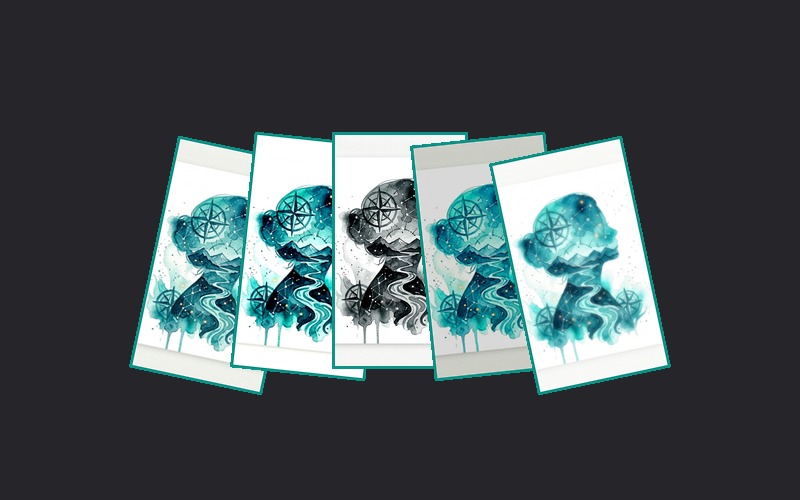 NEW
NEW Mood Wallpaper Pack
$266 mood wallpapers (Power, Storm, Calm, Love, Shield, Growth) + 3 affirmation lock screens. 9 exclusive phone backgrounds.
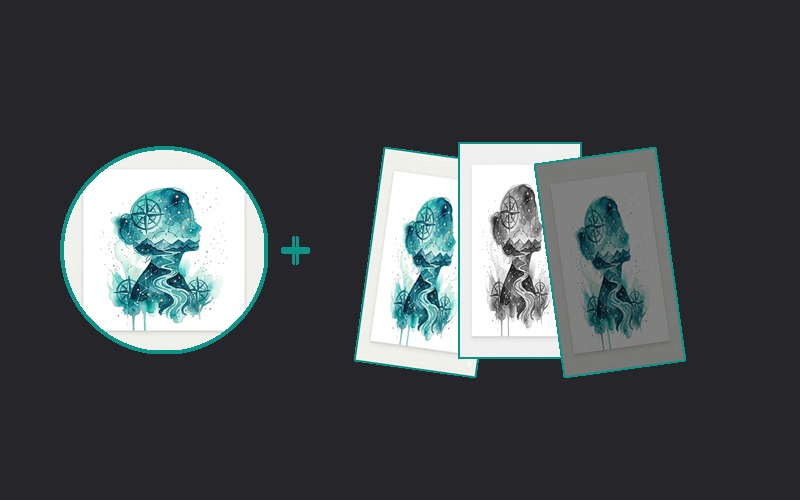 BEST VALUE
 Complete Bundle
$44Everything: your full archetype report + 9 exclusive wallpapers. Best value.
 EXCLUSIVE
 Tarot Card Collection
$496 premium print-quality tarot cards in 6 stunning styles: Dark Botanical, Vintage Woodcut, Minimalist Line, Neon Mystic, Stained Glass, Watercolor Dream. Collector edition.
Pay what you want, starting at $1. Every contribution keeps this quiz free, ad-free, and accessible to everyone. Schools and NGOs get everything at no cost. This is self-knowledge for the people, not profit.
Preguntas Frecuentes
¿Qué tipo de personalidad es La Pionera?
La Pionera es el tipo Encuentra un camino donde no lo hay. (TWAC): Torch · Wings · Water · Compass. Tú no esperas permiso. No esperas que el camino aparezca. Simplemente empiezas a caminar, y de alguna manera el suelo se solidifica bajo tus pies. Siempre has sido así: la primera persona en intentar, la primera en adaptarse, la primera en cruzar la puerta.
¿Quiénes son miembros famosos de La Pionera?
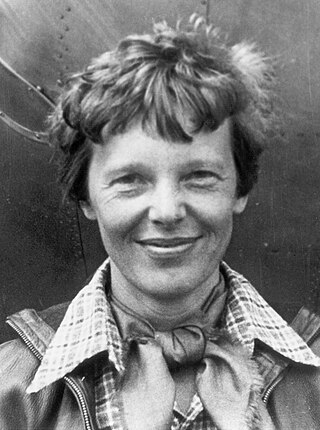
Miembros famosos de La Pionera incluyen a Elsa (Construye su propio reino, se adapta a su poder, encuentra su propio camino sola (Frozen)); Sara Blakely (Fundó Spanx con 5 mil dólares y sin experiencia en moda: pura energía pionera.); Mulan (Se disfrazó, se adaptó, luchó, encontró un camino donde no lo había (Disney)); Bear Grylls, pero a la moda (Los dejas en cualquier lugar y construirían algo hermoso y funcional.); Daenerys Targaryen (Caminó hacia el fuego, se adaptó a cada cultura, forjó su propio camino (Game of Thrones)); Amelia Earhart (Primera mujer en volar sola a través del Atlántico: no esperó una invitación.).
¿Cuál es el rival de La Pionera?
El rival de La Pionera es La Musa (Inspira sin esfuerzo). Tú abres el camino. Ellos encienden la vela. Tú te mueves por el mundo. Ellos atraen el mundo hacia sí. Tú te adaptas y avanzas. Ellos echan raíces y brillan.
¿Cómo funciona el test de personalidad?
El test tiene 12 preguntas que mapean 4 ejes binarios con 3 preguntas de elección forzada cada uno. La elección forzada binaria prácticamente elimina el sesgo (d=0.06, Cao & Drasgow 2019). Dos ítems por escala es el mínimo validado para validez de criterio (Crede et al. 2012); usamos tres por eje porque un número impar no puede empatar, así que ningún eje necesita una regla de desempate que favorezca a un polo. Ver nuestra metodología completa. Los resultados son gratuitos, instantáneos y no se requiere email.
Profundiza en La Pionera
Conoce las fortalezas y superpoderes de La Pionera, descubre con quién es más compatible La Pionera y lee la guía completa de relaciones y amor de La Pionera.
En el trabajo, explora las mejores carreras para La Pionera y entiende cómo La Pionera maneja el estrés. Para el día a día, mira a La Pionera en la vida cotidiana y conoce a los miembros famosos de La Pionera.

Get your full The Pioneer report, free
Your The Pioneer report: your emotional blueprint, superpowers, blind spots, compatibility, and growth. One email and it is yours.
One email. One confirmation click and the PDF is yours. No spam, leave anytime.