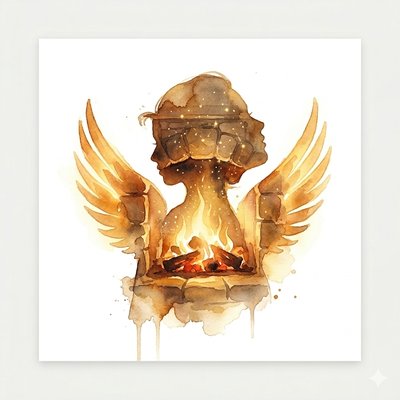
The Guardian
Fierce protector, steady flame
TRFC
"You burn steady so others can find their way home."
The Guardian (TRFC) is Fierce protector, steady flame, a torch, roots, fire, compass personality type. Core traits: Protective, Loyal, Fierce, Grounded, Principled. Famous members include Molly Weasley, Beyoncé, Michelle Obama. Discover your type at mypeeps.ai with our free 12-question personality quiz backed by peer-reviewed research.
This Is You
You're the person people call at 2am, not because you have all the answers, but because they know you'll show up. Your love isn't soft. It's fierce. It's the kind that stands between someone you care about and whatever's coming for them. You don't flinch.
Your strength comes from your roots. The people who raised you, the places that shaped you, the promises you made to yourself when you were young. You don't forget where you came from. And you'll walk through fire, literally, emotionally, to protect the people who matter.
Some people think loyalty is passive. Yours is a verb. It's showing up every day, holding the line when everyone else has walked away, being the last one standing when things get hard. That's not stubbornness. That's love with a backbone.
Your Traits
You're In Good Company




What Makes You Unique
Torch + Roots + Fire + Compass is the rarest combination of emotional anchoring. You don't just feel deeply: you feel with purpose, direction, and a fierce commitment to protecting what matters. While other types scatter their emotional energy, yours is a focused beam.
Your combination means you're simultaneously the person who acts (Torch), stays (Roots), burns (Fire), and knows exactly why (Compass). This makes you profoundly reliable in a crisis but potentially inflexible when life demands something you haven't prepared for.
Your Strengths
Unshakeable loyalty: people know they c
Unshakeable loyalty: people know they can count on you no matter what
Emotional stability under pressure: you
Emotional stability under pressure: you don’t panic, you protect
Deep sense of duty: you follow through
Deep sense of duty: you follow through when everyone else gives up
Fierce love, your caring isn’t passive
Fierce love, your caring isn’t passive, it has teeth and backbone
Honest Weaknesses
You can confuse protecting with controll
You can confuse protecting with controlling, not everyone needs saving
You may hold onto relationships past the
You may hold onto relationships past their expiration date out of loyalty
You sometimes forget that vulnerability
You sometimes forget that vulnerability isn’t weakness, let people protect you too
Your steady fire can burn you out if you
Your steady fire can burn you out if you never take a break from being strong
How You Decide
A friend asks you to lie for them. Your Compass says no: your values are clear. But your Roots say this person has been loyal for years. You'll probably tell the truth AND protect the friendship, because your fire burns for integrity and your roots hold for love.
Your workplace is changing direction in a way that conflicts with your values. A Wings type would leave. A Water type would adapt. You? You'll try to change it from the inside, fighting for what's right while keeping your roots planted. If that fails, you'll leave, but only after you've tried everything.
Someone you've protected for years tells you they don't need your protection anymore. This will feel like rejection. It's not. It's the highest compliment: your fire made them strong enough to burn on their own.
Compatibility
Relationships
In love, you're the person who makes your partner feel completely safe, and sometimes completely smothered. Your fierceness in protection can become control if you're not careful. The best relationships for you are with people strong enough to say 'I love you AND I can handle this myself.'
You're the friend who books the restaurant, organizes the trip, and remembers to check in after the hard conversation. People rely on you because you're reliable. But sometimes you need a friend who makes YOU sit down and talk about YOUR feelings for once.
Full relationship guide →Career & Work Style
Your Career Profile
Your ideal career puts your protective instincts to work, but with enough variety to keep your fire engaged. Think: emergency services, child advocacy, community leadership, or building something from the ground up that will outlast you.
Careers That Fit
Emergency response, project management, or nonprofit leadership, environments where decisive emotional action saves the day and committees just slow things down.
Event planning, community organizing, or team leadership, roles where showing up and making things happen IS the job description.
Teaching, coaching, or social work, careers where your instinct to act on behalf of others becomes a superpower, not a liability.
Family therapy, community development, or local government, work that deepens connections rather than constantly building new ones.
Heritage industries, hospitality, or education, careers where institutional knowledge and continuity are genuinely valued.
Healthcare, eldercare, or mentorship programs, roles where showing up consistently IS the most important thing you do.
Performance arts, advocacy, or crisis communications, roles where emotional intensity is an asset, not a liability.
Startup founding, political campaigning, or investigative journalism, careers where passion literally fuels the output.
Competitive athletics, emergency medicine, or trial law, environments where channeling emotional power into focused action wins the day.
Mission-driven organizations, ethical business, or values-based investing, careers where your internal north star aligns with the organization's actual direction.
Quality assurance, editorial standards, or compliance, roles where 'this is the right way to do it' isn't annoying, it's the whole job.
Leadership coaching, curriculum design, or strategic planning, work where your clarity of purpose helps other people find theirs.
Careers to Avoid
Purely analytical roles with no human contact, data entry, backend systems, compliance auditing. You'll feel like your soul is being slowly siphoned.
Cultures that reward 'strategic patience' over action. You'll start fixing things nobody asked you to fix, and they won't thank you for it.
Startup culture that celebrates 'pivoting' every quarter. Your strength is building things that last, not things that iterate into oblivion.
Remote-first global teams with zero in-person connection. You need to see the people you're working with. Slack emojis don't count.
Passive, consensus-driven environments where every decision requires 12 approvals. Your fire will either burn the bureaucracy down or burn you out.
Roles that require emotional neutrality, diplomatic services, mediation, or certain clinical settings. You can do it, but it'll cost you.
Environments where the mission statement is marketing and the actual culture is 'whatever makes money.' You'll spend all your energy fighting a system that doesn't want to be fixed.
Roles that require constant compromise on principles. You can negotiate tactics, but compromising on values makes you physically ill.
Your Work Style
You need to feel useful. Not theoretically useful, tangibly, visibly, right-now useful. You thrive when there's a clear problem, a deadline, and people counting on you. The worst environment for you is one where meetings happen about meetings, and nothing actually gets done. Give you ownership and urgency, and you'll move mountains. Give you a committee, and you'll quietly lose your mind.
You as a Colleague
You're the colleague who takes charge when things fall apart. People follow you in a crisis because you radiate calm competence. The risk is that you can steamroll quieter voices in your urgency to act. The best teams give you the lead when speed matters and pull you back when nuance does.
Under Stress
When you're stressed, your first instinct is to DO something, anything. Clean the house, start a project, help someone, fix a problem that isn't yours. This looks productive from the outside. From the inside, it's avoidance with good optics. The thing causing the stress doesn't get addressed because you're too busy being useful somewhere else.
Your stress signal is when you can't sit still. When every quiet moment feels intolerable, when you'd rather reorganize the garage than feel what you're feeling: that's your cue to stop. Not forever. Just long enough to ask: what am I running from?
When you're stressed, you grab onto what's familiar. Old routines, old places, old coping mechanisms. This feels safe and stabilizing. But if the stress is caused by something that requires change, your retreat to the familiar can keep you stuck in the exact pattern that's hurting you.
Your stress signal is when you start sentences with 'I've always...' or 'That's just how I am.' When your identity becomes a shield against growth, your roots have become chains. The healthiest thing you can do under stress is try one new thing, just one, and notice that the ground doesn't collapse.
When you're stressed, your fire flares. You become more intense, more reactive, more emotionally charged. Small irritations become existential crises. Your reactions are bigger than the situation warrants, and you know it, which makes you angrier. The spiral accelerates.
Your stress signal is when you start fights about dishes when the real issue is that you feel unseen, or when you catastrophize minor setbacks into evidence that everything is falling apart. When your fire is burning out of control, you need something physical, exercise, cold water, deep breaths, to bring your nervous system back to baseline before you try to think.
When you're stressed, you grip your direction harder. You become more rigid, more certain, more unwilling to consider alternatives. This looks like strength, clear head, decisive action, but it's actually fear disguised as conviction. You're afraid that loosening your grip means losing your way.
Your stress signal is when other people's perspectives start feeling like attacks on your identity. When 'I disagree' triggers 'you don't understand me,' your compass has become a weapon. The healthiest response is to deliberately seek out a perspective that challenges your certainty. Not to adopt it, just to hold it alongside your own.
When truly overwhelmed, go back to basics: feed someone, fix something, hold someone close. Your stress response is to act, and that instinct is correct, just make sure you're addressing the real issue, not a proxy.
How You Communicate Under Pressure
You communicate through demonstration. 'Let me show you' is more natural to you than 'let me tell you.' You build trust through consistent action, not eloquent words. People know where they stand with you because your behavior is your message.
The gap in your communication is the emotional layer. You express care through effort, but some people need to hear the words. Practice saying 'I love you' or 'I'm worried about you' without immediately following it with an action item.
You communicate through reliability. Your words have weight because you've always backed them up. People trust your promises because you've never broken one (or if you have, you fixed it). Your communication style is steady, warm, and grounding.
The gap is that you can default to 'safe' conversations. You know how to make people comfortable, but sometimes growth requires discomfort. Practice sharing an opinion that might create friction. Your relationships are strong enough to handle it.
You communicate with your whole body. Your face, your voice, your posture: everything broadcasts your emotional state. This makes you incredibly authentic and compelling. When you're excited, the whole room catches fire. When you're angry, nobody misses it.
The gap is volume control. Not literal volume, emotional volume. You can accidentally silence quieter communicators by filling all the emotional space in a conversation. Practice leaving silence after you speak and explicitly inviting others to respond.
You communicate with purpose and clarity. Every conversation with you goes somewhere. You don't ramble, you don't hedge, and you don't say things you don't mean. This makes you trustworthy and efficient: people know that when you speak, it matters.
The gap is curiosity. Your clarity can come across as closed-mindedness. Practice asking 'tell me more' even when you already have an opinion. People will share more with you when they feel explored, not evaluated.
7-Day Growth Challenge
Small daily actions to build resilience and break your stress patterns.
Monday: Ask someone for help with something you'd normally do yourself. Notice how the world doesn't end.
Tuesday: Write down three things you need that you haven't asked for. Circle one and ask for it today.
Wednesday: Let someone make a mistake without intervening. Watch what they learn from it.
Thursday: Do something purely for your own enjoyment with no one else to take care of.
Friday: Tell someone 'I trust you to handle this', and mean it.
Saturday: Spend two hours alone doing absolutely nothing productive. Feel what comes up.
Sunday: Reflect: When did protecting someone actually hold them back this week?
Growth Path
Practice receiving help
Practice receiving help. Your strength grows when you let others carry weight too.
Check in with yourself: are you protecting someone
Check in with yourself: are you protecting someone because they need it, or because you need to feel needed?
Schedule unstructured time with no one to take car
Schedule unstructured time with no one to take care of. Your soul needs fuel too.
Tell someone you trust: ‘I’m not okay.’ Watch how
Tell someone you trust: ‘I’m not okay.’ Watch how the world doesn’t end.
Daily Life
You communicate through demonstration. 'Let me show you' is more natural to you than 'let me tell you.' You build trust through consistent action, not eloquent words. People know where they stand with you because your behavior is your message.
Communication, hobbies, pets & more →Your Rival

You protect what is. They see what could be. You hold the line. They dissolve all lines. You burn steady. They flow everywhere.
 NEW
NEW Mood Wallpaper Pack
$266 mood wallpapers (Power, Storm, Calm, Love, Shield, Growth) + 3 affirmation lock screens. 9 exclusive phone backgrounds.
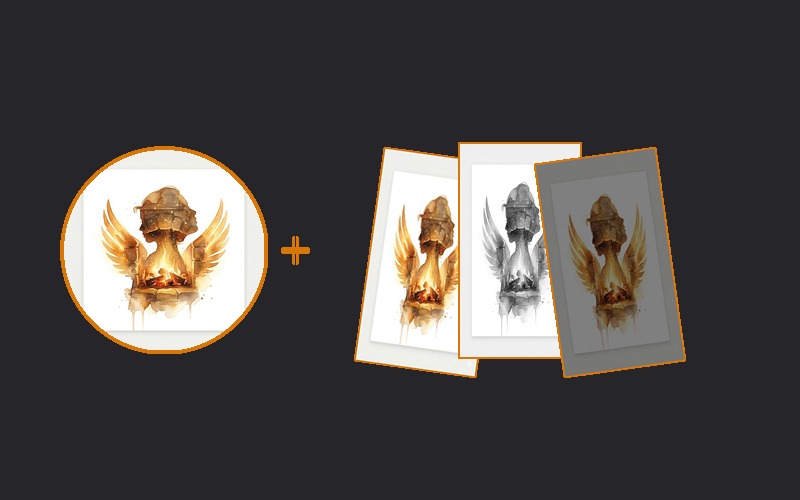 BEST VALUE
 Complete Bundle
$44Everything: your full archetype report + 9 exclusive wallpapers. Best value.
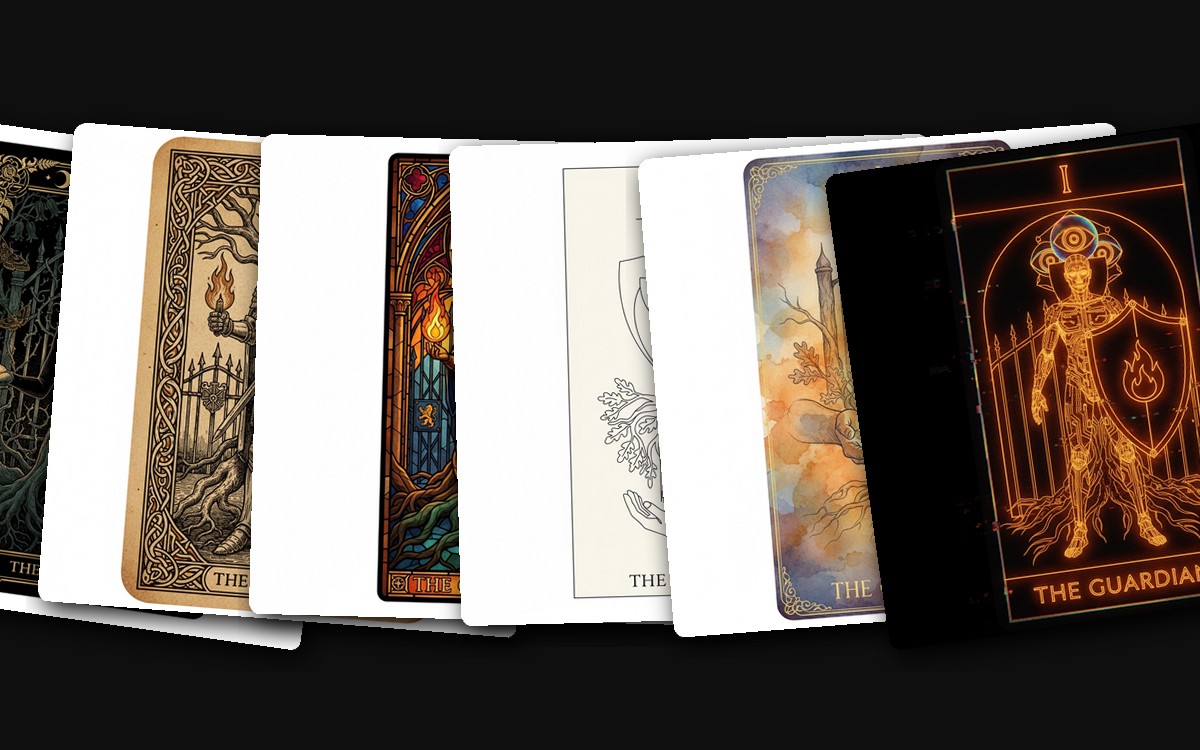 EXCLUSIVE
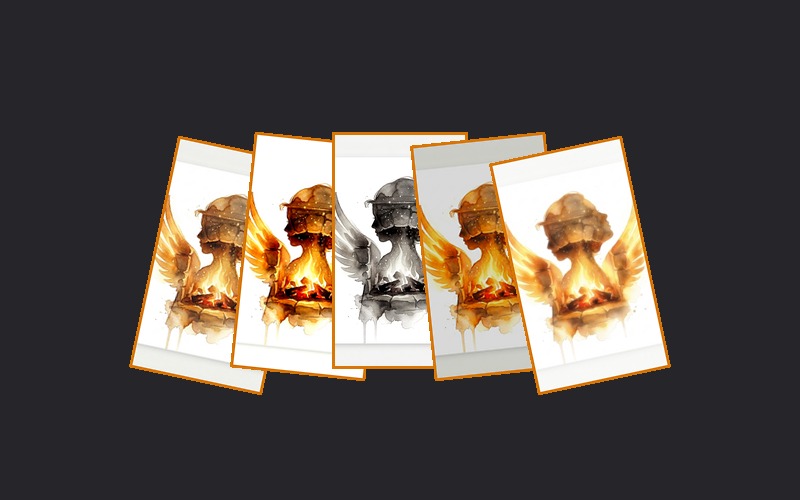
 Tarot Card Collection
$496 premium print-quality tarot cards in 6 stunning styles: Dark Botanical, Vintage Woodcut, Minimalist Line, Neon Mystic, Stained Glass, Watercolor Dream. Collector edition.
Pay what you want, starting at $1. Every contribution keeps this quiz free, ad-free, and accessible to everyone. Schools and NGOs get everything at no cost. This is self-knowledge for the people, not profit.
Frequently Asked Questions
What personality type is The Guardian?
The Guardian is the Fierce protector, steady flame type (TRFC): Torch · Roots · Fire · Compass. You're the person people call at 2am, not because you have all the answers, but because they know you'll show up. Your love isn't soft. It's fierce. It's the kind that stands between someone you care about and whatever's coming for them. You don't flinch.
Who are famous The Guardian members?
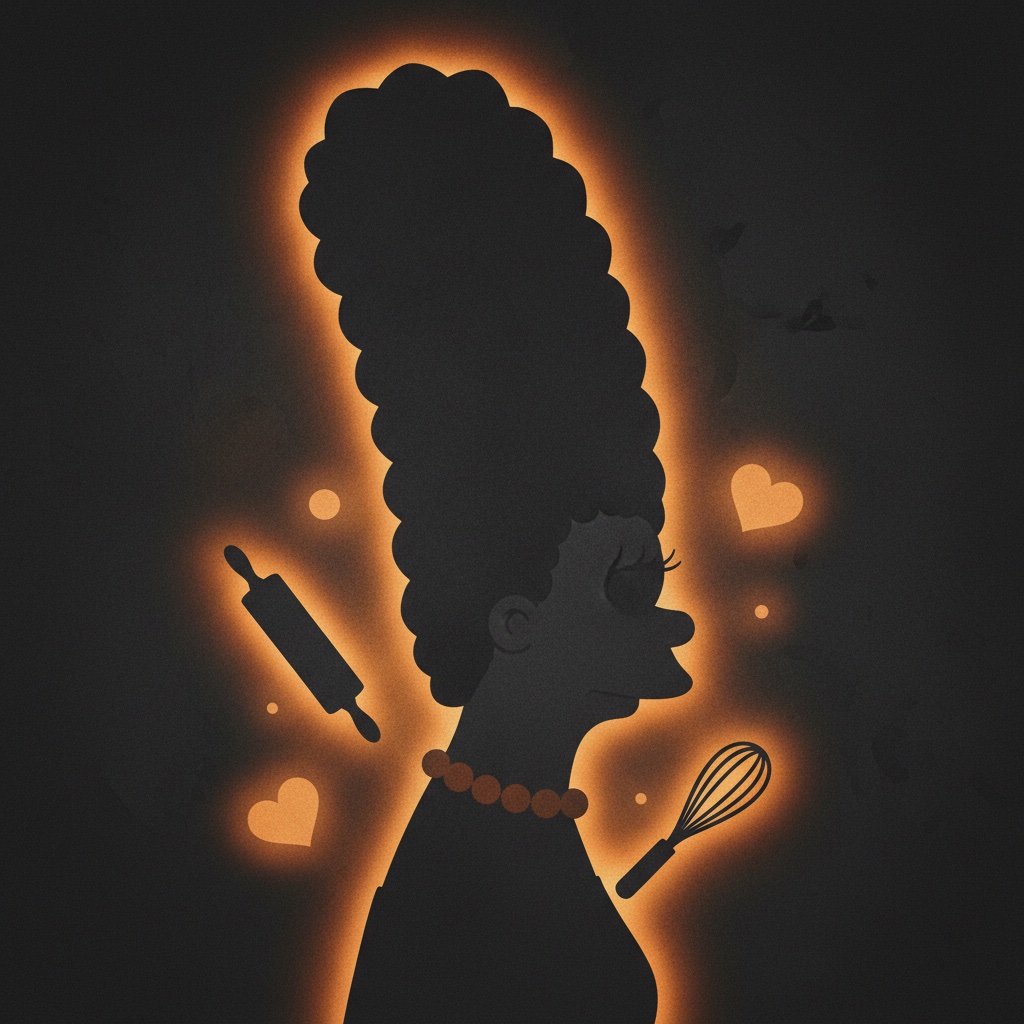
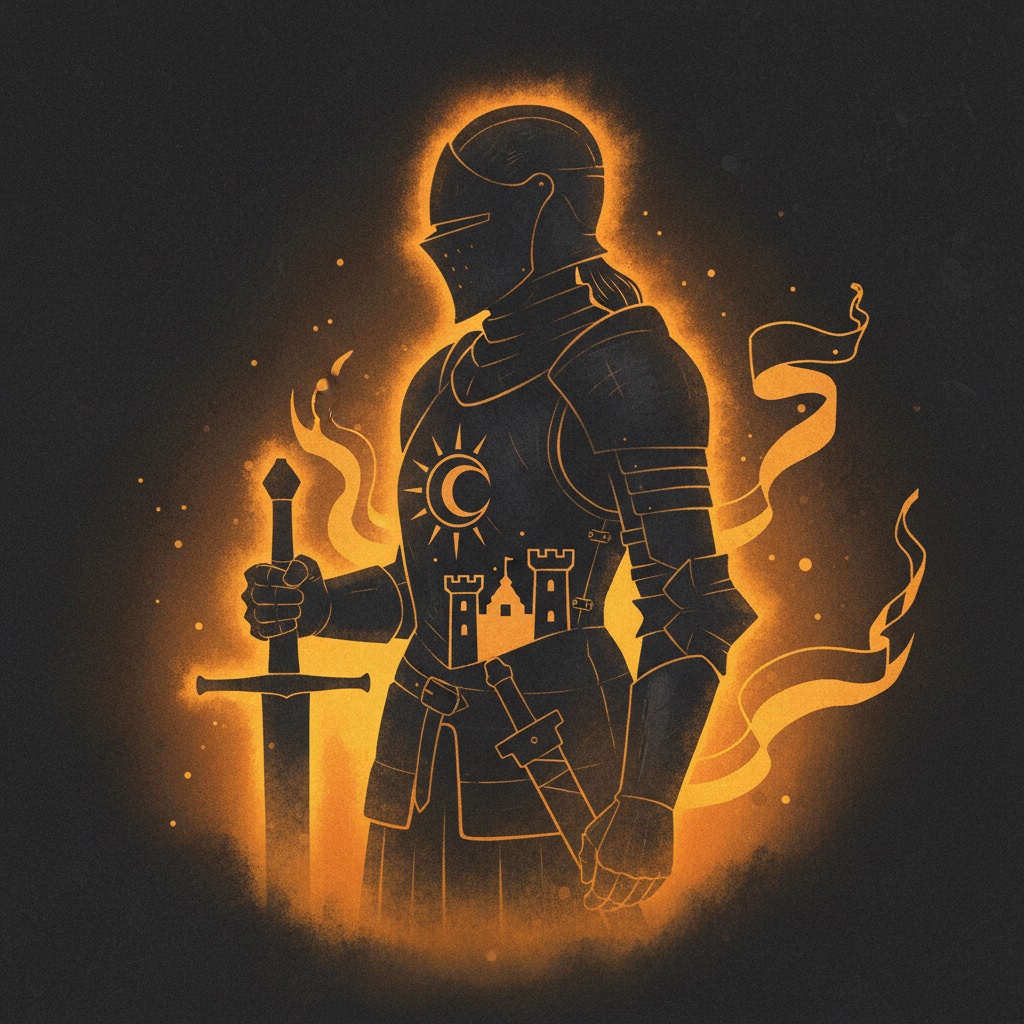
Famous The Guardian members include Molly Weasley (Fiercely protective mother who will destroy anyone who threatens her family (Harry Potter)); Beyoncé (Grounded in her roots, fiercely protective of her family, focused and unstoppable); Michelle Obama (Steady, principled, protective, turned the spotlight into a shield for what matters); Marge Simpson (The steady flame that holds everything together, always protecting her family (The Simpsons)); Brienne of Tarth (Loyal to the bone, will fight to the death for who she serves (Game of Thrones)); Pink (Fierce mama bear energy, grounded, loyal, says exactly what she means).
What is The Guardian's rival?
The Guardian's rival is The Oracle (Sees everything, says little). You protect what is. They see what could be. You hold the line. They dissolve all lines. You burn steady. They flow everywhere.
How does the personality quiz work?
The quiz has 12 questions mapping 4 binary axes with 3 forced-choice questions each. Binary forced-choice nearly eliminates faking (d=0.06, Cao & Drasgow 2019). Two items per scale is the validated minimum for criterion validity (Crede et al. 2012); we use three per axis because an odd number cannot tie, so no axis needs a tie-break rule that would favour one pole. See our full methodology. Results are free, instant, and no email is required.
Go Deeper Into The Guardian
Get to know The Guardian strengths and superpowers, find out who The Guardian is most compatible with, and read the full guide to The Guardian relationships and love.
At work, explore the best careers for The Guardian and learn how The Guardian handles stress. For the everyday, see The Guardian in daily life and meet the famous The Guardian members.
Get your full The Guardian report, free
Your The Guardian report: your emotional blueprint, superpowers, blind spots, compatibility, and growth. One email and it is yours.
One email. One confirmation click and the PDF is yours. No spam, leave anytime.