
Team Marcus Aurelius
The Field Engineers
SXDA
"The impediment to action advances action. What stands in the way becomes the way."
Team Marcus Aurelius (SXDA) is The Field Engineers, a stoic, empiricist, sisyphean, agora personality type. Core traits: Stoic, Reliable, Pragmatic, Principled, Enduring. Famous members include Dwight Eisenhower, Angela Merkel, Nelson Mandela. Discover your type at mypeeps.ai with our free 12-question personality quiz backed by peer-reviewed research.
This Is You
You lead by enduring. Not with speeches or grand gestures, but by showing up every single day, doing the work that needs to be done, and making sure the people around you can do the same. Duty isn't a burden to you: it's the point.
You've learned that reality doesn't care about your plans. So you test, adapt, and hold the line. Your leadership isn't about vision: it's about reliability. When everything falls apart, you're the one still standing, still making it work.
The stoic in you accepts what can't be changed. The leader in you changes what can be changed. You maintain systems, steady institutions, and keep communities running when everyone else has given up. That's not glamorous work. But it's the work that matters most.
Your Traits
You're In Good Company






What Makes You Unique
You are the dutiful leader who never stops improving, disciplined in character, grounded in reality, devoted to mastery, and accountable to the people around you. Your Stoic core gives you the emotional steadiness to lead through chaos. Your Empiricist wiring means your decisions are informed by what's actually happening, not what should be happening. Your Sisyphean depth means you pursue excellence in your domain long after others have moved on to the next trend. And your Agora nature means you lead through presence, not position.
The tension in your combination is between perfectionism and public accountability. Your Sisyphean side wants to keep refining before anyone sees the work. Your Agora side insists on transparency, collaboration, and shared standards. The result: you hold yourself and others to standards that are simultaneously inspiring and exhausting. When you learn to calibrate your standards to the moment, perfection for what matters, good enough for what doesn't, you become the leader people actually want to follow.
Your Strengths
Earned Authority
People follow you because you do the work, not because you have the title. Your leadership is built on demonstrated competence, not charisma or politics.
Operational Excellence
You don't just set standards: you meet them. You can design a system, operate within it, and improve it iteratively. This operational depth is rare in leaders.
Steady Presence
In chaos, you're the calm center. Your emotional regulation isn't performed; it's genuine. People feel safer when you're in the room.
Community Building
Your Agora instinct means you don't just lead: you create belonging. Your teams feel like teams, not just organizational units.
Reality-Grounded Judgment
You make decisions based on what's actually true, not what's politically convenient. Your Empiricist-Stoic core produces judgment people trust.
Continuous Improvement
Your Sisyphean drive means your work, your systems, and your leadership get better every year. You're never done growing, and that inspires the people around you.
Honest Weaknesses
Over-Responsibility
You take on more than you should because you trust your own standards more than anyone else's. This creates a bottleneck where everything runs through you, and eventually through your health.
Rigid Standards
Your combination of Stoic discipline and Sisyphean perfectionism can make you inflexible. 'Good enough' isn't in your vocabulary, even when it should be.
Emotional Suppression
Your Stoic core handles pressure by suppressing feelings. Your Agora side hides this behind a composed public presence. The result: nobody knows you're struggling until you collapse.
Change Resistance
Your Sisyphean depth makes you expert in the current paradigm, and reluctant to abandon it for the next one. You can mistake loyalty to the old way for wisdom.
How You Decide
A team member makes a significant error. You wouldn't publicly shame them or quietly ignore it: you'd have a direct, private conversation focused on what happened, what was learned, and how to prevent it next time. Your discipline is corrective, not punitive.
Asked to choose between a proven method and an innovative but untested one, you'd choose the proven method, unless the evidence for the new approach was overwhelming. You don't take risks with other people's outcomes for the sake of novelty.
Offered a promotion that would move you away from the team you've built. You'd feel genuinely torn, your Agora side values the community, and your Stoic side values the duty. You'd ultimately go where the responsibility is greatest.
Compatibility

Your opposite number. Same Stoic-Agora structure, but they reason (Rationalist) where you observe (Empiricist), and they create (Promethean) where you perfect (Sisyphean). They'll call you traditional; you'll call them reckless. You're both effective leaders, in different contexts.

Same Stoic-Empiricist-Agora base, but they innovate (Promethean) where you refine (Sisyphean). You can deploy what they discover.

Your closest sibling, same Sisyphean-Agora social-depth combination. The difference: they run on duty (Stoic) to your evidence (Empiricist). Together, you build institutions that last.

Same Stoic-Empiricist-Sisyphean foundation, but they work alone (Solitary) where you work with people (Agora). You understand each other's standards; you differ on how to apply them.

Same Empiricist-Sisyphean-Agora combination, but they're driven by passion (Epicurean) where you're driven by duty (Stoic). Together, you bring both heart and spine to the work.
Relationships
You're the reliable partner everyone wishes they had, steady, present, and willing to do the hard work of maintaining a relationship. Your Stoic side keeps you committed through difficult periods. Your Agora side makes you communicative and engaged. The growth edge: you can hold your partner to impossibly high standards without realizing it. Your Sisyphean instinct to improve everything includes your relationships, and people aren't projects.
You keep a small circle and you keep it for decades. You're the friend people call at 3am because they know you'll pick up and you won't panic. The downside: you can be so self-contained that friends stop reaching out, assuming you don't need them. You do. You're just terrible at showing it.
Full relationship guide →Career & Work Style
Your Career Profile
You belong in leadership roles that combine operational excellence with people management, engineering management, school administration, military command, quality-driven manufacturing, or any domain where someone needs to both understand the work deeply and coordinate the people doing it. You're wasted in roles that are all vision and no operations, or all operations and no people. The sweet spot is where expertise, discipline, and human connection intersect.
Careers That Fit
Emergency medicine, crisis management, or military leadership, environments where emotional control is a survival skill, not a personality quirk.
Long-cycle engineering, infrastructure, or research science, work where the payoff is years away and most people would quit before seeing results.
Financial risk management, compliance, or quality assurance, roles that reward patience, vigilance, and the ability to say 'no' when everyone else says 'yes'.
Data science, lab research, or investigative journalism, work where truth is found through observation, not assertion.
Product management, operations, or process improvement, roles where 'what actually happened' matters more than 'what should have happened.'
Trades, craftsmanship, or hands-on engineering, careers where competence is measured by outcomes, not credentials.
Precision manufacturing, watchmaking, or surgical specialization, work where mastery is measured in thousandths of an inch and years of practice.
Editing, quality assurance, or restoration, careers where finding the flaw others missed is the highest form of expertise.
Academic research, archival work, or classical music, domains where depth is more respected than breadth and patience is the differentiator.
Team leadership, community building, or facilitation, roles where connecting people and synthesizing perspectives is the work itself.
Consulting, diplomatic roles, or stakeholder management, careers where navigating between different groups and building consensus creates value.
Teaching, public speaking, or media, work where your ability to communicate complex ideas to diverse audiences is your competitive edge.
Careers to Avoid
High-energy sales or entertainment roles that demand constant emotional performance. You'll burn out pretending to be excited about things that don't move you.
Fast-pivoting startup culture where 'fail fast' means abandoning discipline for speed. Your superpower is endurance, not improvisation.
Pure strategy consulting or think-tank roles where ideas never get tested against reality. You'll feel like you're playing pretend.
Visionary leadership positions that demand you sell a future nobody can prove yet. You struggle to champion ideas before the evidence exists.
Growth-hacking, rapid prototyping, or 'move fast and break things' culture. Your instinct to perfect will be treated as a liability.
Generalist management roles where you're spread thin across ten domains instead of going deep in one. Breadth without depth feels like incompetence to you.
Isolated technical roles with minimal human interaction. You can do the work, but you'll feel disconnected from its purpose without people to share it with.
Highly competitive, zero-sum environments where collaboration is punished. Your instinct to share and build together will be exploited.
Your Work Style
You thrive in structured environments with clear expectations and long time horizons. Open-plan offices drain you, not because of noise, but because of the constant performance of being 'present.' You do your best work when left alone with a hard problem and a deadline. Give you autonomy and accountability, and you'll outperform anyone in the building. Micromanage you, and you'll quietly disengage.
You as a Colleague
You're the colleague everyone trusts but few truly know. You deliver consistently, you don't play politics, and you absorb pressure without complaint. The trap: people will load you up because you never push back. Learn to say 'I'm at capacity' before you're at breaking point, because once you break, you don't bend first.
Under Stress
Under pressure, you go into 'just keep going' mode. You strip away everything non-essential, emotions, social obligations, personal needs, and focus entirely on the task. From the outside, this looks like superhuman composure. From the inside, it feels like slowly going numb. The longer the pressure lasts, the less you feel, until you can't distinguish genuine peace from emotional shutdown.
The danger isn't the stress itself: it's the delayed explosion. Stoics don't crack under pressure; they crack three months after the pressure ends, when they finally feel safe enough to process what they suppressed. Watch for the moment of relief: that's when the dam breaks. Build micro-processing habits during the stress, not after: a five-minute journal, a walk without a podcast, a honest answer to 'how are you actually doing?'
Under pressure, you default to data collection. When you don't know what to do, you gather more information, another analysis, another spreadsheet, another round of research. This feels productive, but past a certain point, you're not learning; you're stalling. The discomfort of acting on incomplete information is your biggest stress trigger, and the only cure is practice.
Your stress signal is overwork disguised as thoroughness. When you're staying late to 'double-check the numbers' for the third time, you're not being diligent: you're anxious. The fix: set decision deadlines before you start the research. 'I will decide by Friday with whatever I have.' Then actually do it. Your track record of good decisions on imperfect data is better than you think.
Under pressure, you tighten your grip. The standard goes up, the tolerance for imperfection goes down, and the pace slows to a crawl. You convince yourself that the problem is quality, 'if I just make this a little better, everything will be fine', when the real problem is that you're afraid of shipping something imperfect into a world that already feels too chaotic.
Your stress signal is control disguised as craft. When you start re-editing emails, reorganizing files that were already organized, or revising work that was already approved: you're not being thorough, you're managing anxiety through the illusion of control. The fix: name the fear. 'I'm afraid this isn't good enough' is honest. Once you say it, you can evaluate it. Usually, it's good enough. Ship it.
Under pressure, you talk more. You process by externalizing, calling friends, scheduling meetings, thinking out loud with anyone who'll listen. This feels productive because you're engaged, you're connecting, you're 'working on it.' But past a certain point, you're not processing; you're ruminating through other people's ears. The conversation becomes a loop, not a path.
Your stress signal is over-socializing. When you're scheduling your fourth coffee of the day to 'talk through' the same problem, you've crossed from processing into avoidance. The fix: one conversation, then one decision. Talk it through with one trusted person, write down the conclusion, and act on it. Your social instincts become your superpower again once they're directed toward action instead of repetition.
Under pressure, you double down on duty and community, more work, more check-ins, more responsibility. You're the leader who carries more and delegates less as the crisis deepens, because you trust your own standards more than anyone else's. This heroism has an expiry date. Your stress antidote is learning to lower the bar temporarily, not forever, just until the storm passes. Good enough today, excellent tomorrow.
How You Communicate Under Pressure
You say less than you think. Your communication style is economical: you don't waste words, you don't perform emotions, and you don't repeat yourself. When you speak, it carries weight because people know you don't do it for show. The gap between what you feel and what you express is the largest of any type, and it's both your signature strength and your core vulnerability.
In conflicts, you go quiet, which most people interpret as either agreement or hostility, neither of which is accurate. You're processing. The problem is that your silence gives the other person nothing to work with, so they fill it with assumptions. Learning to say 'I need time to think about this, but I hear you' is the single most useful communication upgrade you can make.
You communicate through evidence. 'Here's what happened,' 'Here's what I observed,' 'Let me show you the data.' Your communication style builds credibility through specificity: you don't make vague claims, you bring receipts. People who value precision love working with you. People who value feeling heard can find you frustrating.
In conflicts, you instinctively reach for facts, which works brilliantly when the conflict is about what happened, and terribly when the conflict is about how someone felt. Learning to say 'I understand why that upset you' before 'but here's what the data shows' will transform your most difficult conversations. Lead with acknowledgment, then bring the evidence.
You communicate through depth. Your explanations are thorough, nuanced, and complete. You cover edge cases, acknowledge exceptions, and give people everything they need to understand the full picture. People who value precision respect you enormously. People who need the headline first may lose patience waiting for it.
In conflicts, you can over-explain, presenting such a comprehensive case that the other person feels overwhelmed rather than persuaded. Your instinct to be thorough can become a weapon when deployed in a disagreement. Learning to lead with your conclusion and then support it, instead of building to it, will make your thoroughness an asset in every conversation, not just the technical ones.
You communicate through connection. Your natural mode is dialogue: you share ideas in progress, invite reactions, and refine in real-time. This makes you collaborative and easy to work with, but it can also make you hard to pin down. Your first statement on any topic is rarely your final one, because you're still thinking. People who understand this love brainstorming with you. People who don't can find you inconsistent.
In conflicts, your instinct is to talk it through, which is healthy until it becomes over-processing. You can hold the same conversation multiple times with different people, seeking the validation that one person couldn't give you. The Agora who learns to resolve conflicts in fewer, deeper conversations instead of many shallow ones becomes exceptional at both harmony and truth.
7-Day Growth Challenge
Small daily actions to build resilience and break your stress patterns.
Monday: Delegate one task you normally do yourself. Fully. No checking behind them.
Tuesday: Lower the standard on one deliverable, intentionally. Ship it at 80% and observe whether anyone notices.
Wednesday: Express one genuine feeling to someone you lead. Not a performance, an honest admission.
Thursday: Say 'no' to one request that you'd normally absorb out of duty. Protect your capacity.
Friday: Ask your team what they think should change, and actually implement one suggestion without editing it.
Saturday: Do something with zero productive value. No improvement, no mastery, no duty. Pure waste of time.
Sunday: Write down what you're carrying that isn't yours to carry. Consider putting one thing down.
Growth Path
Address: Over-Responsibility
This creates a bottleneck where everything runs through you, and eventually through your health.
Address: Rigid Standards
'Good enough' isn't in your vocabulary, even when it should be.
Address: Emotional Suppression
The result: nobody knows you're struggling until you collapse.
Address: Change Resistance
You can mistake loyalty to the old way for wisdom.
Daily Life
You say less than you think. Your communication style is economical: you don't waste words, you don't perform emotions, and you don't repeat yourself. When you speak, it carries weight because people know you don't do it for show. The gap between what you feel and what you express is the largest of any type, and it's both your signature strength and your core vulnerability.
Communication, hobbies, pets & more →Your Rival

You endure and maintain. They destroy and create. You lead publicly. They burn alone. You test through reality. They reason from vision.
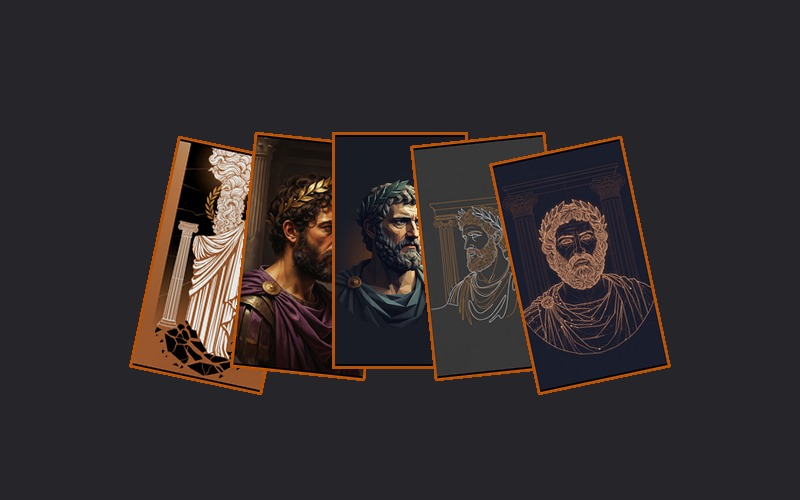 NEW
NEW Wallpaper Pack
$266 exclusive phone wallpapers, low-poly, neon blueprint, vintage engraving, minimalist, abstract, and cinematic.
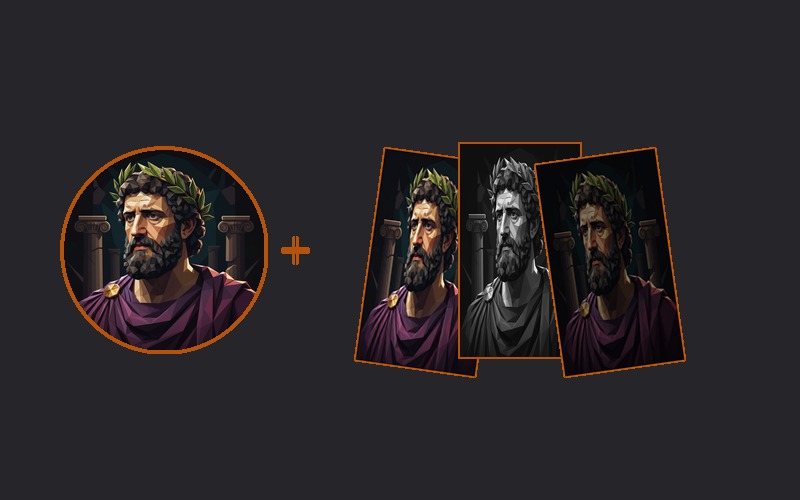 BEST VALUE
 Complete Bundle
$44Everything: the 24-chapter Deep Dive report + 6 exclusive wallpapers. Best value.
 EXCLUSIVE
 Tarot Card Collection
$496 premium print-quality tarot cards in 6 stunning styles: Dark Botanical, Vintage Woodcut, Minimalist Line, Neon Mystic, Stained Glass, Watercolor Dream. Collector edition.
Pay what you want, starting at $1. Every contribution keeps this quiz free, ad-free, and accessible to everyone. Schools and NGOs get everything at no cost. This is self-knowledge for the people, not profit.
Frequently Asked Questions
What personality type is Team Marcus Aurelius?
Team Marcus Aurelius is the The Field Engineers type (SXDA): Stoic · Empiricist · Sisyphean · Agora. You lead by enduring. Not with speeches or grand gestures, but by showing up every single day, doing the work that needs to be done, and making sure the people around you can do the same. Duty isn't a burden to you: it's the point.
Who are famous Team Marcus Aurelius members?
Famous Team Marcus Aurelius members include Dwight Eisenhower (Stoic general and president who managed coalitions through reality-tested decisions); Angela Merkel (Physicist-turned-chancellor who led through crises with empirical pragmatism for sixteen years); Nelson Mandela (Twenty-seven years of stoic endurance, then pragmatic leadership of a fragile democracy); Queen Elizabeth II (Seventy years of disciplined public duty, maintaining an institution through constant change); George Washington (Stoic general who endured Valley Forge, chose to maintain the republic over seizing power); Atticus Finch (Stoic public figure who endures injustice, leads by principled example (To Kill a Mockingbird)).
What is Team Marcus Aurelius's rival?
Team Marcus Aurelius's rival is Team Nietzsche (The Optimizers). You endure and maintain. They destroy and create. You lead publicly. They burn alone. You test through reality. They reason from vision.
How does the personality quiz work?
The quiz has 12 questions mapping 4 binary axes with 3 forced-choice questions each. Binary forced-choice nearly eliminates faking (d=0.06, Cao & Drasgow 2019). Two items per scale is the validated minimum for criterion validity (Crede et al. 2012); we use three per axis because an odd number cannot tie, so no axis needs a tie-break rule that would favour one pole. See our full methodology. Results are free, instant, and no email is required.
Go Deeper Into Team Marcus Aurelius
Get to know Team Marcus Aurelius strengths and superpowers, find out who Team Marcus Aurelius is most compatible with, and read the full guide to Team Marcus Aurelius relationships and love.
At work, explore the best careers for Team Marcus Aurelius and learn how Team Marcus Aurelius handles stress. For the everyday, see Team Marcus Aurelius in daily life and meet the famous Team Marcus Aurelius members.

Get your full Team Marcus Aurelius report, free
Your Team Marcus Aurelius deep dive: 24 chapters on strengths, blind spots, compatibility, career, money, and stress. One email and it is yours.
One email. One confirmation click and the PDF is yours. No spam, leave anytime.