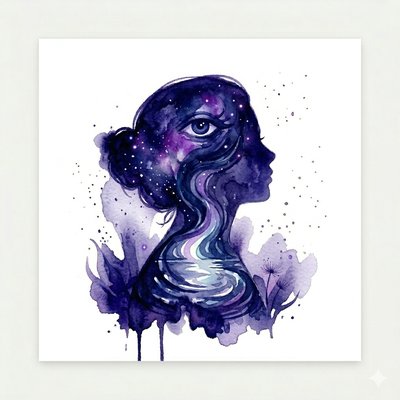
The Mystic
Knows things without being told
MRAK
"You don't read the room. You read the universe."
The Mystic (MRAK) is Knows things without being told, a mirror, roots, water, kaleidoscope personality type. Core traits: Intuitive, Sensitive, Deep, Perceptive, Flowing. Famous members include Luna Lovegood, Erykah Badu, Mantis. Discover your type at mypeeps.ai with our free 12-question personality quiz backed by peer-reviewed research.
This Is You
You've always known things you shouldn't know. Not facts, feelings. You walk into a room and feel everything that's happening beneath the surface. The tension nobody's addressing. The love nobody's admitting. The grief nobody's processing. You feel it all.
Your intuition isn't magic. It's a kind of deep listening that most people have forgotten how to do. You listen to the silence between words, to the energy behind smiles, to the rhythm of things that can't be measured. And you're almost never wrong.
People call you 'too sensitive.' You've realized that's like calling a radio 'too good at picking up signals.' Your sensitivity is your superpower. It's how you navigate a world that's louder and more chaotic than it needs to be. You don't turn down the volume. You tune in more precisely.
Your Traits
You're In Good Company






What Makes You Unique
Mirror + Roots + Water + Kaleidoscope creates the intuitive seer, someone who reflects from the deepest well, stays grounded in embodied knowing, flows through emotional landscapes, and perceives from every possible angle simultaneously. You don't think your way to truth: you feel it.
Your combination makes you otherworldly while remaining earthly. Your Roots keep you from floating away into pure perception. Your Water lets you navigate the feelings without drowning. Your Kaleidoscope means you never see just one layer of reality. People find you both comforting and unsettling, and they're right to feel both.
Your Strengths
Extraordinary intuition: you sense what
Extraordinary intuition: you sense what’s really going on beneath the surface
Emotional depth: you understand feeling
Emotional depth: you understand feelings most people can’t even name
Connection to the unseen: you pick up p
Connection to the unseen: you pick up patterns others miss entirely
Sensitivity as radar: you navigate comp
Sensitivity as radar: you navigate complex emotional landscapes effortlessly
Honest Weaknesses
You can confuse your feelings with other
You can confuse your feelings with other people’s, whose emotion is this, really?
Your sensitivity can become overwhelm wi
Your sensitivity can become overwhelm without proper boundaries
Not every intuition is correct, sometim
Not every intuition is correct, sometimes anxiety disguises itself as knowing
Your depth can make surface-level social
Your depth can make surface-level socializing feel unbearable, which isolates you
How You Decide
Your intuition says one thing. The evidence says another. Everyone you trust agrees with the evidence. Do you trust the room or trust the feeling? The Mystic's growth isn't learning to trust intuition: it's learning when intuition is actual knowing vs when it's anxiety in disguise.
Compatibility
Relationships
You love from a place most people can't access. Your partner feels seen at a cellular level, which is both intimate and invasive. The risk: your knowing can replace asking. Even when you sense what someone needs, let them tell you. Autonomy matters.
You're the friend people call when they need someone who actually listens. Not the 'mm-hmm' kind, the kind that reflects back what they said better than they said it. Your friendships are deep but few. Quantity has never been your metric.
Full relationship guide →Career & Work Style
Your Career Profile
You need work that values your intuition, energy healing, art therapy, depth psychology, spiritual direction, or any creative field where 'I can't explain how I know, but I know' is an acceptable professional credential. Avoid environments that only value what can be measured.
Careers That Fit
Therapy, counseling, or executive coaching, roles where deep listening and pattern recognition are the actual product.
UX research, strategic consulting, or editorial work, careers where understanding WHY matters more than doing WHAT.
Writing, academic research, or policy analysis, environments that reward depth of thought over speed of output.
Family therapy, community development, or local government, work that deepens connections rather than constantly building new ones.
Heritage industries, hospitality, or education, careers where institutional knowledge and continuity are genuinely valued.
Healthcare, eldercare, or mentorship programs, roles where showing up consistently IS the most important thing you do.
Mediation, diplomacy, or HR, roles where reading the room and navigating competing needs is the actual skill.
Nursing, palliative care, or therapy, careers where emotional presence and gentle adaptation heal people.
Design thinking, user research, or change management, work where understanding how people actually feel matters more than how they should feel.
Creative direction, art therapy, or experience design, roles where seeing from multiple angles isn't just tolerated, it's the competitive advantage.
Innovation consulting, trend forecasting, or cultural analysis, careers where connecting unrelated dots creates actual value.
Interdisciplinary research, transmedia storytelling, or curatorial work, environments that reward the exact kind of thinking that made school boring for you.
Careers to Avoid
High-volume customer service or fast-paced sales floors. The constant surface interactions will drain your battery faster than a phone with 47 open tabs.
Cultures that equate visibility with value. You do your best work behind the scenes, and being forced to perform productivity is exhausting.
Startup culture that celebrates 'pivoting' every quarter. Your strength is building things that last, not things that iterate into oblivion.
Remote-first global teams with zero in-person connection. You need to see the people you're working with. Slack emojis don't count.
Aggressive sales or competitive trading floors where emotional attunement is treated as weakness. They'll eat you alive, and you'll let them.
Roles that demand you be the loudest voice in the room. You influence through resonance, not volume.
Assembly-line processes or highly standardized roles. Your mind will rebel against repetition by generating increasingly creative forms of procrastination.
Organizations that worship 'best practices' and fear deviation. You don't follow paths: you see the whole landscape.
Your Work Style
You need time to think before you act. The open-plan, always-on, Slack-pinging environment is your personal circle of hell. You perform best with autonomy, quiet, and the freedom to go deep. Your insights are worth the wait, but you need managers who understand that quiet doesn't mean idle. The perfect role for you involves complex problems, long timelines, and people who appreciate nuance over noise.
You as a Colleague
You're the colleague who sees the interpersonal dynamics nobody's talking about. You know why the meeting went sideways before anyone else does. Use that power wisely: your insights can either heal a team or make you the office therapist nobody asked for.
Under Stress
When you're stressed, you retreat into your head. You replay conversations, analyze decisions, and build elaborate mental models of what went wrong and why. This feels like processing, but it can become rumination, the same thought loop disguised as insight.
Your stress signal is when your inner monologue becomes a courtroom drama with you as both prosecutor and defendant. When you catch yourself in the third re-analysis of the same conversation, it's time to stop thinking and start talking, to another person, out loud, imperfectly.
When you're stressed, you grab onto what's familiar. Old routines, old places, old coping mechanisms. This feels safe and stabilizing. But if the stress is caused by something that requires change, your retreat to the familiar can keep you stuck in the exact pattern that's hurting you.
Your stress signal is when you start sentences with 'I've always...' or 'That's just how I am.' When your identity becomes a shield against growth, your roots have become chains. The healthiest thing you can do under stress is try one new thing, just one, and notice that the ground doesn't collapse.
When you're stressed, you go quiet. You adapt so seamlessly to the needs around you that nobody notices you're drowning. You keep flowing, keep accommodating, keep being the calm one, while internally, you're disappearing. Your stress response is invisible, which makes it dangerous.
Your stress signal is when you can't remember the last time you said 'no' or the last time you wanted something for yourself. When your adaptability becomes self-erasure, you need to create a disruption, say something selfish, make a demand, take up space. It will feel wrong. It's not.
When you're stressed, your mind fragments. Every perspective is equally valid, every option equally possible, every emotion equally intense. You spin through possibilities without landing on any of them. Analysis paralysis meets emotional overwhelm, and the result is a strange combination of hyperactivity and paralysis.
Your stress signal is when you can't finish a sentence because three other thoughts keep interrupting. When your beautiful kaleidoscope becomes a whirlpool, you need to simplify: one thing, one focus, one decision. Not because the other perspectives don't matter, but because you can't see anything clearly when everything is spinning.
When overwhelmed by sensory input, ground through your body, bare feet on earth, cold water on your face, heavy blanket. Your nervous system is receiving too much signal; reduce the input before trying to process it.
How You Communicate Under Pressure
You communicate through carefully chosen words. When you speak, it carries weight because people know you've thought deeply before opening your mouth. Your feedback is precise, your questions are incisive, and your observations are often uncomfortably accurate.
The gap in your communication is spontaneity. By the time you've processed your perfect response, the moment may have passed. Practice speaking at 70% formation, your half-formed thoughts are better than most people's finished ones.
You communicate through reliability. Your words have weight because you've always backed them up. People trust your promises because you've never broken one (or if you have, you fixed it). Your communication style is steady, warm, and grounding.
The gap is that you can default to 'safe' conversations. You know how to make people comfortable, but sometimes growth requires discomfort. Practice sharing an opinion that might create friction. Your relationships are strong enough to handle it.
You communicate through attunement. You match the emotional frequency of whoever you're talking to, which makes them feel deeply understood. You're the person who makes introverts open up and extroverts calm down. Your communication is a bridge.
The gap is your own voice. You're so good at reflecting others that people may not know what YOU actually think or feel. Practice starting sentences with 'I want' or 'I believe' without checking the room's temperature first.
You communicate through association and metaphor. Your mind connects ideas from wildly different domains, creating insights that are both surprising and illuminating. Conversations with you are never boring: they're adventures in perspective.
The gap is accessibility. Your leaps can lose people who think more linearly. Practice the bridge sentence: 'Here's how this connects' before making your kaleidoscopic jump. You'll lose none of the magic and gain all of the clarity.
7-Day Growth Challenge
Small daily actions to build resilience and break your stress patterns.
Monday: Before acting on a feeling, ask: is this mine or someone else's?
Tuesday: Enjoy something surface-level. A dumb comedy. Fast food. No depth required.
Wednesday: Ground yourself: 5 things you see, 4 you touch, 3 you hear, 2 you smell, 1 you taste.
Thursday: Share your weirdest intuition with someone. The right people will understand.
Friday: Let yourself not know something. Sit in the mystery without solving it.
Saturday: Exercise hard enough to get out of your head and into your body.
Sunday: What did you sense this week that turned out to be wrong? What was right?
Growth Path
Before acting on a feeling, ask: is this mine or s
Before acting on a feeling, ask: is this mine or someone else’s?
Practice grounding: five things you can see, four
Practice grounding: five things you can see, four you can touch, three you can hear.
Let yourself enjoy something simple and shallow
Let yourself enjoy something simple and shallow. Not everything needs depth.
Share your weirdest intuition with someone
Share your weirdest intuition with someone. The right people will understand.
Daily Life
You communicate through carefully chosen words. When you speak, it carries weight because people know you've thought deeply before opening your mouth. Your feedback is precise, your questions are incisive, and your observations are often uncomfortably accurate.
Communication, hobbies, pets & more →Your Rival

You feel your way through. They fight their way through. You dissolve walls. They break them. You sit still and know. They charge forward and act.
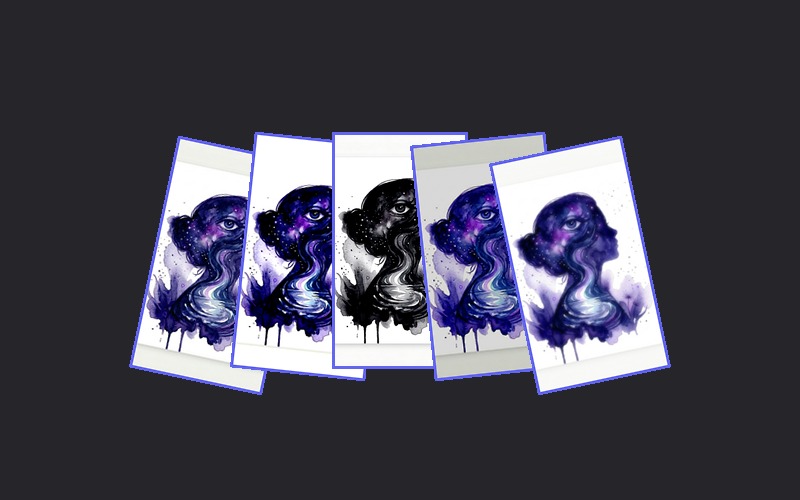 NEW
NEW Mood Wallpaper Pack
$266 mood wallpapers (Power, Storm, Calm, Love, Shield, Growth) + 3 affirmation lock screens. 9 exclusive phone backgrounds.
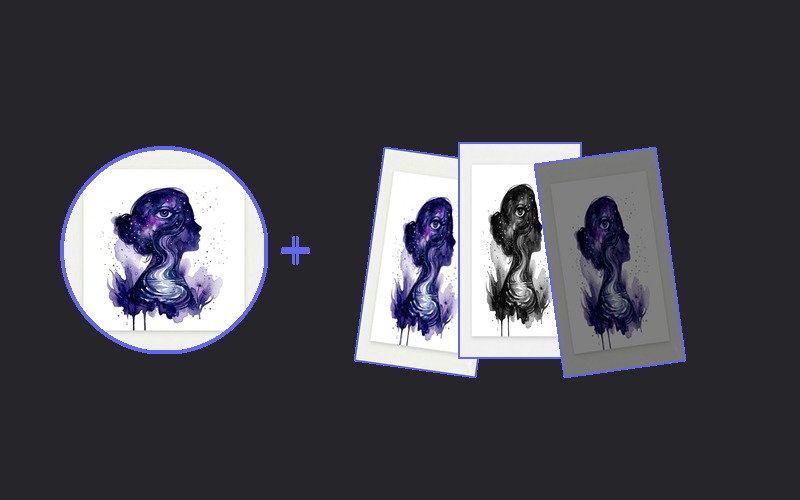 BEST VALUE
 Complete Bundle
$44Everything: your full archetype report + 9 exclusive wallpapers. Best value.
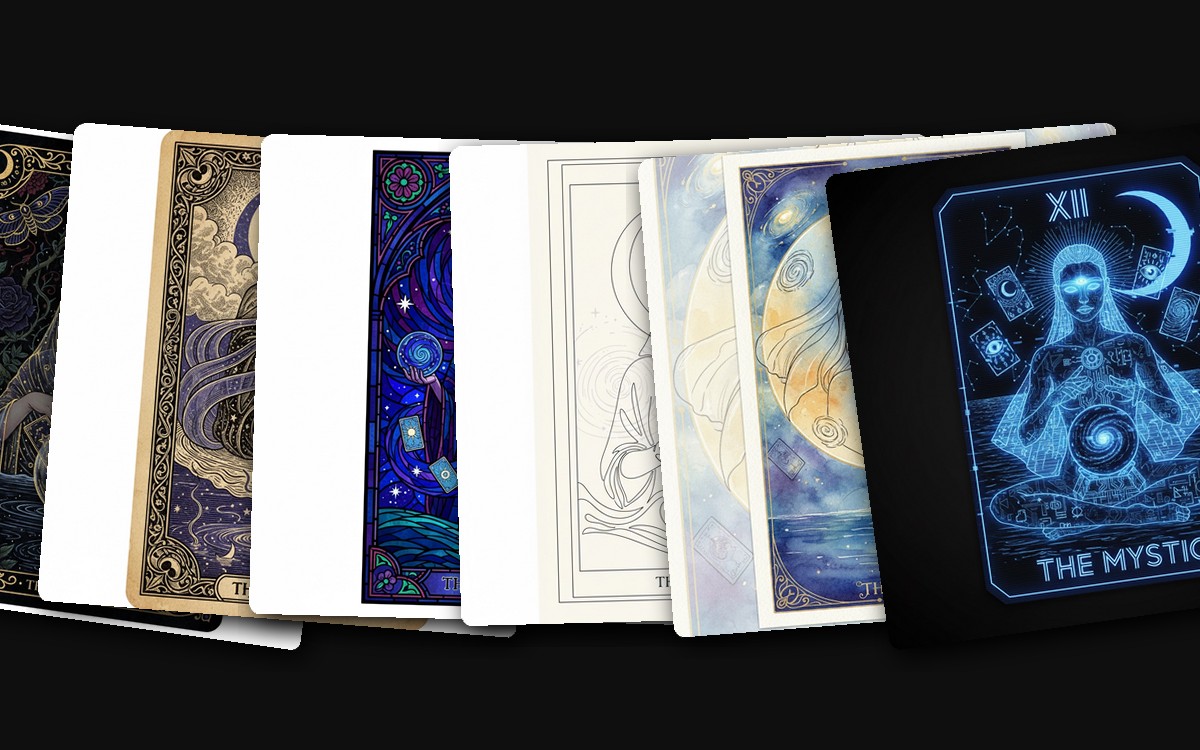 EXCLUSIVE
 Tarot Card Collection
$496 premium print-quality tarot cards in 6 stunning styles: Dark Botanical, Vintage Woodcut, Minimalist Line, Neon Mystic, Stained Glass, Watercolor Dream. Collector edition.
Pay what you want, starting at $1. Every contribution keeps this quiz free, ad-free, and accessible to everyone. Schools and NGOs get everything at no cost. This is self-knowledge for the people, not profit.
Frequently Asked Questions
What personality type is The Mystic?
The Mystic is the Knows things without being told type (MRAK): Mirror · Roots · Water · Kaleidoscope. You've always known things you shouldn't know. Not facts, feelings. You walk into a room and feel everything that's happening beneath the surface. The tension nobody's addressing. The love nobody's admitting. The grief nobody's processing. You feel it all.
Who are famous The Mystic members?
Famous The Mystic members include Luna Lovegood (Sees what nobody else sees, trusts what nobody else trusts, gently right about everything (Harry Potter)); Erykah Badu (Operates on a frequency most people can't hear, mystic, grounded, deeply intuitive); Mantis (Feels everything about everyone, navigates with pure empathic intuition (Guardians of the Galaxy)); Björk (Channels something from another dimension, connected to nature and cosmos simultaneously); Stevie Nicks (The original mystic queen, intuitive, poetic, grounded in her own private cosmos); Anya Taylor-Joy (Otherworldly presence, seems to know things she shouldn't, moves through the world differently).
What is The Mystic's rival?
The Mystic's rival is The Warrior (Fights for what matters). You feel your way through. They fight their way through. You dissolve walls. They break them. You sit still and know. They charge forward and act.
How does the personality quiz work?
The quiz has 12 questions mapping 4 binary axes with 3 forced-choice questions each. Binary forced-choice nearly eliminates faking (d=0.06, Cao & Drasgow 2019). Two items per scale is the validated minimum for criterion validity (Crede et al. 2012); we use three per axis because an odd number cannot tie, so no axis needs a tie-break rule that would favour one pole. See our full methodology. Results are free, instant, and no email is required.
Go Deeper Into The Mystic
Get to know The Mystic strengths and superpowers, find out who The Mystic is most compatible with, and read the full guide to The Mystic relationships and love.
At work, explore the best careers for The Mystic and learn how The Mystic handles stress. For the everyday, see The Mystic in daily life and meet the famous The Mystic members.

Get your full The Mystic report, free
Your The Mystic report: your emotional blueprint, superpowers, blind spots, compatibility, and growth. One email and it is yours.
One email. One confirmation click and the PDF is yours. No spam, leave anytime.