
The Sage
Sees clearly through the noise
MRAC
"When you speak, wise people listen."
The Sage (MRAC) is Sees clearly through the noise, a mirror, roots, water, compass personality type. Core traits: Wise, Observant, Calm, Patient, Grounded. Famous members include Olenna Tyrell, Michelle Obama, Tina Fey. Discover your type at mypeeps.ai with our free 12-question personality quiz backed by peer-reviewed research.
This Is You
You see things others miss. Not because you're smarter, because you're quieter. While everyone else is reacting, performing, shouting, you're watching. And from that stillness, you see the truth that everyone else is too busy to notice.
Your wisdom isn't book-learned. It's lived. You've watched, you've listened, you've sat with uncomfortable truths until they stopped being uncomfortable and started being useful. You don't give advice easily, but when you do, people write it down.
The hardest part of being you is watching people make mistakes you can see coming. You've learned you can't save everyone. But you can be there when they need someone who understands. And you always are. Quietly. Without judgment. Like a lighthouse.
Your Traits
You're In Good Company





What Makes You Unique
Mirror + Roots + Water + Compass creates the quiet authority, someone who reflects deeply, stays grounded, flows with wisdom, and navigates by truth. You don't need volume to be heard. Your words carry weight because they're earned, not given freely.
Your combination is the most internally consistent in the system. Every axis reinforces the others: your Mirror sees clearly, your Roots keep you stable, your Water adapts your delivery, and your Compass ensures every word serves a purpose. You're a truth machine, and sometimes that's uncomfortable for everyone, including you.
Your Strengths
Clarity of vision: you see truth that o
Clarity of vision: you see truth that others are too busy to notice
Trustworthy counsel: people rely on you
Trustworthy counsel: people rely on your judgment because it’s earned, not given freely
Emotional steadiness: your calm is cont
Emotional steadiness: your calm is contagious in a crisis
Pattern recognition: you see consequenc
Pattern recognition: you see consequences before they happen
Honest Weaknesses
Observation can become detachment, watc
Observation can become detachment, watching life instead of living it
Your measured approach can frustrate peo
Your measured approach can frustrate people who need urgency
You may withhold wisdom to avoid conflic
You may withhold wisdom to avoid conflict, speak up when it matters
Being right isn’t the same as being help
Being right isn’t the same as being helpful. Timing matters as much as truth.
How You Decide
You can see clearly that someone's choice will end badly. They haven't asked for your opinion. Do you speak or stay silent? The young Sage speaks too soon. The mature Sage asks one question that helps the person see for themselves. Timing is the Sage's most underrated skill.
Compatibility
Relationships
You love through wisdom. Your partner gets counsel, perspective, and the comfort of being truly understood. The risk: being wise can become being detached. Your partner sometimes needs you to be messy, present, and emotionally available, not insightful.
You're the friend people call when they need someone who actually listens. Not the 'mm-hmm' kind, the kind that reflects back what they said better than they said it. Your friendships are deep but few. Quantity has never been your metric.
Full relationship guide →Career & Work Style
Your Career Profile
You belong in advisory roles, strategic consulting, executive coaching, academic mentorship, or judicial positions. Any role where the quality of your judgment IS the product. Avoid performative environments: your power is quiet, and organizations that mistake volume for value will waste you.
Careers That Fit
Therapy, counseling, or executive coaching, roles where deep listening and pattern recognition are the actual product.
UX research, strategic consulting, or editorial work, careers where understanding WHY matters more than doing WHAT.
Writing, academic research, or policy analysis, environments that reward depth of thought over speed of output.
Family therapy, community development, or local government, work that deepens connections rather than constantly building new ones.
Heritage industries, hospitality, or education, careers where institutional knowledge and continuity are genuinely valued.
Healthcare, eldercare, or mentorship programs, roles where showing up consistently IS the most important thing you do.
Mediation, diplomacy, or HR, roles where reading the room and navigating competing needs is the actual skill.
Nursing, palliative care, or therapy, careers where emotional presence and gentle adaptation heal people.
Design thinking, user research, or change management, work where understanding how people actually feel matters more than how they should feel.
Mission-driven organizations, ethical business, or values-based investing, careers where your internal north star aligns with the organization's actual direction.
Quality assurance, editorial standards, or compliance, roles where 'this is the right way to do it' isn't annoying, it's the whole job.
Leadership coaching, curriculum design, or strategic planning, work where your clarity of purpose helps other people find theirs.
Careers to Avoid
High-volume customer service or fast-paced sales floors. The constant surface interactions will drain your battery faster than a phone with 47 open tabs.
Cultures that equate visibility with value. You do your best work behind the scenes, and being forced to perform productivity is exhausting.
Startup culture that celebrates 'pivoting' every quarter. Your strength is building things that last, not things that iterate into oblivion.
Remote-first global teams with zero in-person connection. You need to see the people you're working with. Slack emojis don't count.
Aggressive sales or competitive trading floors where emotional attunement is treated as weakness. They'll eat you alive, and you'll let them.
Roles that demand you be the loudest voice in the room. You influence through resonance, not volume.
Environments where the mission statement is marketing and the actual culture is 'whatever makes money.' You'll spend all your energy fighting a system that doesn't want to be fixed.
Roles that require constant compromise on principles. You can negotiate tactics, but compromising on values makes you physically ill.
Your Work Style
You need time to think before you act. The open-plan, always-on, Slack-pinging environment is your personal circle of hell. You perform best with autonomy, quiet, and the freedom to go deep. Your insights are worth the wait, but you need managers who understand that quiet doesn't mean idle. The perfect role for you involves complex problems, long timelines, and people who appreciate nuance over noise.
You as a Colleague
You're the colleague who sees the interpersonal dynamics nobody's talking about. You know why the meeting went sideways before anyone else does. Use that power wisely: your insights can either heal a team or make you the office therapist nobody asked for.
Under Stress
When you're stressed, you retreat into your head. You replay conversations, analyze decisions, and build elaborate mental models of what went wrong and why. This feels like processing, but it can become rumination, the same thought loop disguised as insight.
Your stress signal is when your inner monologue becomes a courtroom drama with you as both prosecutor and defendant. When you catch yourself in the third re-analysis of the same conversation, it's time to stop thinking and start talking, to another person, out loud, imperfectly.
When you're stressed, you grab onto what's familiar. Old routines, old places, old coping mechanisms. This feels safe and stabilizing. But if the stress is caused by something that requires change, your retreat to the familiar can keep you stuck in the exact pattern that's hurting you.
Your stress signal is when you start sentences with 'I've always...' or 'That's just how I am.' When your identity becomes a shield against growth, your roots have become chains. The healthiest thing you can do under stress is try one new thing, just one, and notice that the ground doesn't collapse.
When you're stressed, you go quiet. You adapt so seamlessly to the needs around you that nobody notices you're drowning. You keep flowing, keep accommodating, keep being the calm one, while internally, you're disappearing. Your stress response is invisible, which makes it dangerous.
Your stress signal is when you can't remember the last time you said 'no' or the last time you wanted something for yourself. When your adaptability becomes self-erasure, you need to create a disruption, say something selfish, make a demand, take up space. It will feel wrong. It's not.
When you're stressed, you grip your direction harder. You become more rigid, more certain, more unwilling to consider alternatives. This looks like strength, clear head, decisive action, but it's actually fear disguised as conviction. You're afraid that loosening your grip means losing your way.
Your stress signal is when other people's perspectives start feeling like attacks on your identity. When 'I disagree' triggers 'you don't understand me,' your compass has become a weapon. The healthiest response is to deliberately seek out a perspective that challenges your certainty. Not to adopt it, just to hold it alongside your own.
When overwhelmed, observe without trying to understand. For once, let the thoughts pass without analysis. Your mind needs rest from its own brilliance occasionally.
How You Communicate Under Pressure
You communicate through carefully chosen words. When you speak, it carries weight because people know you've thought deeply before opening your mouth. Your feedback is precise, your questions are incisive, and your observations are often uncomfortably accurate.
The gap in your communication is spontaneity. By the time you've processed your perfect response, the moment may have passed. Practice speaking at 70% formation, your half-formed thoughts are better than most people's finished ones.
You communicate through reliability. Your words have weight because you've always backed them up. People trust your promises because you've never broken one (or if you have, you fixed it). Your communication style is steady, warm, and grounding.
The gap is that you can default to 'safe' conversations. You know how to make people comfortable, but sometimes growth requires discomfort. Practice sharing an opinion that might create friction. Your relationships are strong enough to handle it.
You communicate through attunement. You match the emotional frequency of whoever you're talking to, which makes them feel deeply understood. You're the person who makes introverts open up and extroverts calm down. Your communication is a bridge.
The gap is your own voice. You're so good at reflecting others that people may not know what YOU actually think or feel. Practice starting sentences with 'I want' or 'I believe' without checking the room's temperature first.
You communicate with purpose and clarity. Every conversation with you goes somewhere. You don't ramble, you don't hedge, and you don't say things you don't mean. This makes you trustworthy and efficient: people know that when you speak, it matters.
The gap is curiosity. Your clarity can come across as closed-mindedness. Practice asking 'tell me more' even when you already have an opinion. People will share more with you when they feel explored, not evaluated.
7-Day Growth Challenge
Small daily actions to build resilience and break your stress patterns.
Monday: Share your opinion before you're asked. Your insight has value unsolicited too.
Tuesday: Do something impulsive. Let your body decide before your mind.
Wednesday: Be wrong on purpose about something small. Notice the freedom.
Thursday: Let someone change your mind about something you're certain about.
Friday: Replace one analysis with one feeling. What do you FEEL, not think?
Saturday: Laugh at something stupid. Not intellectually, belly laugh.
Sunday: What did you see this week that you chose not to say? Was the silence right?
Growth Path
Share your opinion before you’re asked
Share your opinion before you’re asked. Your insight has value even unsolicited.
Do something impulsive
Do something impulsive. Let your body lead instead of your mind.
Wrong is okay
Wrong is okay. Make a decision with incomplete information and see what happens.
Let someone change your mind about something you’r
Let someone change your mind about something you’re certain about.
Daily Life
You communicate through carefully chosen words. When you speak, it carries weight because people know you've thought deeply before opening your mouth. Your feedback is precise, your questions are incisive, and your observations are often uncomfortably accurate.
Communication, hobbies, pets & more →Your Rival

You observe from above. They burn it down. You understand the rules deeply. They break them. You feel one thing completely. They feel everything at once.
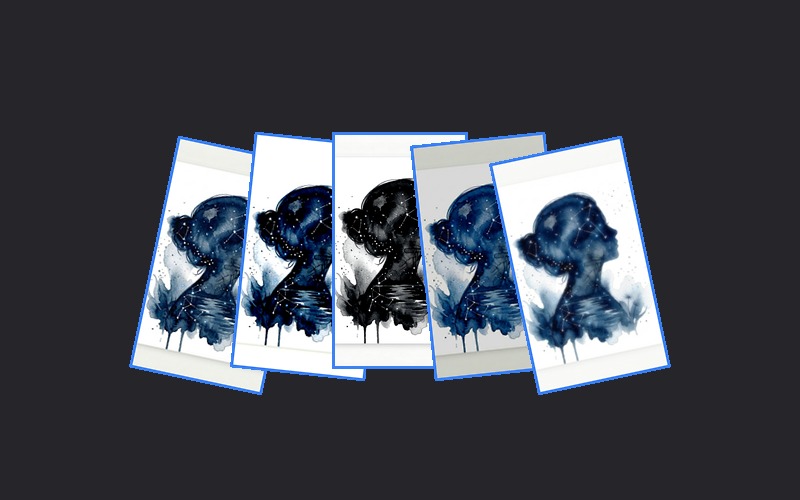 NEW
NEW Mood Wallpaper Pack
$266 mood wallpapers (Power, Storm, Calm, Love, Shield, Growth) + 3 affirmation lock screens. 9 exclusive phone backgrounds.
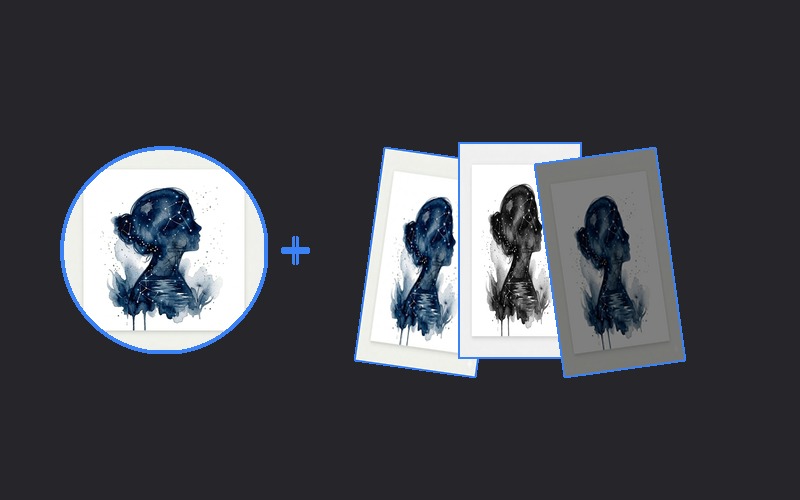 BEST VALUE
 Complete Bundle
$44Everything: your full archetype report + 9 exclusive wallpapers. Best value.
 EXCLUSIVE
 Tarot Card Collection
$496 premium print-quality tarot cards in 6 stunning styles: Dark Botanical, Vintage Woodcut, Minimalist Line, Neon Mystic, Stained Glass, Watercolor Dream. Collector edition.
Pay what you want, starting at $1. Every contribution keeps this quiz free, ad-free, and accessible to everyone. Schools and NGOs get everything at no cost. This is self-knowledge for the people, not profit.
Frequently Asked Questions
What personality type is The Sage?
The Sage is the Sees clearly through the noise type (MRAC): Mirror · Roots · Water · Compass. You see things others miss. Not because you're smarter, because you're quieter. While everyone else is reacting, performing, shouting, you're watching. And from that stillness, you see the truth that everyone else is too busy to notice.
Who are famous The Sage members?
Famous The Sage members include Olenna Tyrell (Sees through everyone, says what needs to be said, wisest person in the room (Game of Thrones)); Michelle Obama (When they go low, we go high, wisdom, patience, clarity under pressure); Tina Fey (Observes everything, processes it, turns it into clarity disguised as comedy); Maxine Waters (Reclaiming my time, cuts through noise with precision, grounded, immovable); Aunt May (Quiet wisdom, always there, sees the truth that the hero can't see yet (Spider-Man)); Maya Angelou (When someone shows you who they are, believe them, lived wisdom distilled to truth).
What is The Sage's rival?
The Sage's rival is The Rebel (Breaks the rules, then makes new ones). You observe from above. They burn it down. You understand the rules deeply. They break them. You feel one thing completely. They feel everything at once.
How does the personality quiz work?
The quiz has 12 questions mapping 4 binary axes with 3 forced-choice questions each. Binary forced-choice nearly eliminates faking (d=0.06, Cao & Drasgow 2019). Two items per scale is the validated minimum for criterion validity (Crede et al. 2012); we use three per axis because an odd number cannot tie, so no axis needs a tie-break rule that would favour one pole. See our full methodology. Results are free, instant, and no email is required.
Go Deeper Into The Sage
Get to know The Sage strengths and superpowers, find out who The Sage is most compatible with, and read the full guide to The Sage relationships and love.
At work, explore the best careers for The Sage and learn how The Sage handles stress. For the everyday, see The Sage in daily life and meet the famous The Sage members.

Get your full The Sage report, free
Your The Sage report: your emotional blueprint, superpowers, blind spots, compatibility, and growth. One email and it is yours.
One email. One confirmation click and the PDF is yours. No spam, leave anytime.