
Team Da Vinci
The Tinkerers
EXPI
"I have been impressed with the urgency of doing. Knowing is not enough; we must apply."
Team Da Vinci (EXPI) is The Tinkerers, a epicurean, empiricist, promethean, solitary personality type. Core traits: Curious, Polymathic, Inventive, Playful, Restless. Famous members include Richard Feynman, Buckminster Fuller, Alexander von Humboldt. Discover your type at mypeeps.ai with our free 12-question personality quiz backed by peer-reviewed research.
This Is You
Your curiosity has no off switch. You follow wonder wherever it leads, across disciplines, through rabbit holes, into domains nobody told you you were allowed to enter. Your notebook looks like a conspiracy board, and every page is a different obsession.
You don't build to spec. You build to discover. Every prototype is a question, every experiment a conversation with reality. You're not trying to ship a product: you're trying to understand how the world works, one wild idea at a time.
People think you're scattered because you have eleven projects open. You know you're focused because they're all asking the same question from different angles. The connections between seemingly unrelated things: that's where the magic lives. And you're the only one who sees the threads.
Your Traits
You're In Good Company





What Makes You Unique
You are curiosity without a leash, passionate, hands-on, endlessly inventive, and gloriously scattered. Your Epicurean core means you're driven by wonder, not duty. Your Empiricist wiring means every idea gets tested against reality. Your Promethean drive means you're never satisfied with the current state of knowledge. And your Solitary nature means your best discoveries happen in the private chaos of your own workshop.
The tension in your combination is between your limitless curiosity (Promethean-Epicurean) and your need for evidence (Empiricist). You want to explore everything, but you also want to prove everything, and you can't do both in one lifetime. The result is notebooks full of brilliant observations, half-finished prototypes, and connections between fields that nobody else has made. Your greatest risk is dying with your best ideas in your head.
Your Strengths
Polymathic Curiosity
You see connections between fields that specialists miss because you're the only person who's looked at both. Your cross-pollination of ideas produces genuinely novel solutions.
Hands-On Innovation
You don't just theorize: you build, test, sketch, prototype. Your Empiricist grounding means your creativity produces real things, not just interesting thoughts.
Passionate Engagement
When you're interested in something, your energy is boundless. Your Epicurean warmth combined with Empiricist rigor makes you both inspiring and credible.
Independent Discovery
You find things that nobody was looking for because you explore without a roadmap. Your Solitary nature protects your curiosity from the gravitational pull of consensus.
Visual-Spatial Intelligence
You think in images, diagrams, and spatial relationships. Your notebooks aren't written: they're drawn. This gives you a unique perspective that word-based thinkers can't access.
Adaptive Problem-Solving
Your Epicurean flexibility combined with Empiricist reality-testing makes you exceptionally good at improvising solutions when the original plan fails.
Honest Weaknesses
Chronic Non-Completion
Your notebooks are full of brilliant starts and almost no finishes. Your Promethean drive toward the new constantly pulls you away from the hard work of completing the old.
Social Invisibility
Your Solitary nature means your discoveries often stay in your workshop. The world benefits from your ideas only when someone else finds them and publishes them, sometimes centuries later.
Focus Fragmentation
Eleven open projects means none get your full attention. Your breadth of curiosity, while genuinely valuable, prevents the depth of focus that produces your best work.
Emotional Inconsistency
Your Epicurean energy ebbs and flows with your interest level. When the passion fades, so does your productivity, and you don't have a Stoic discipline system to fill the gap.
How You Decide
A colleague insists you choose one of your eleven projects to focus on. You'd spend a week agonizing, then quietly continue working on three of them while officially committing to one. Your curiosity doesn't respond to organizational constraints.
Discovering a fascinating tangent during a research project with a tight deadline. You'd follow the tangent, telling yourself it might be relevant, and deal with the deadline later. The tangent almost always produces something valuable. The deadline almost always suffers.
Asked to teach your process to others, you'd struggle, because your process is 'follow whatever's most interesting right now,' and that doesn't translate into a repeatable methodology.
Compatibility

Your closest sibling, same Epicurean-Empiricist-Promethean-Solitary combination... wait, that's identical. Actually, Da Vinci and Darwin are the same axes. The distinction is in their application: Darwin observes nature; Da Vinci builds things. You understand each other perfectly.

Same Epicurean-Empiricist-Promethean core, but they work publicly (Agora) where you work privately. They can take your inventions and build communities around them.

Same Empiricist-Promethean-Solitary base, but they run on discipline (Stoic) where you run on passion (Epicurean). Their consistency fills the gaps your passion leaves.

Same Epicurean-Empiricist-Solitary foundation, but they refine (Sisyphean) where you create (Promethean). They can take your best idea and distill it to its essence.
Relationships
You love with warmth and curiosity: you find your partner endlessly fascinating, at least initially. Your Epicurean warmth and genuine interest make you an engaging partner. The challenge: your Promethean-Solitary side can make you disappear into obsessions for weeks, leaving your partner wondering where you went. The fix is simple: bring them into your world. Show them the notebook. Share the wonder.
You're the friend who remembers birthdays, plans adventures, and makes people feel special. You collect friends easily because your energy is magnetic. The downside: you can spread yourself thin, maintaining fifty friendships at surface level instead of ten at depth. The friendships that sustain you long-term are the ones where you can be tired and boring and still loved.
Full relationship guide →Career & Work Style
Your Career Profile
You belong in exploratory roles, field research, R&D labs, design studios, or any environment that feeds your curiosity and doesn't punish your tangents. You're the person who finds the breakthrough that nobody was looking for because you were looking at everything. Avoid jobs that require you to specialize in one domain, follow rigid processes, or explain your work in progress to committees.
Careers That Fit
Creative direction, brand strategy, or UX design, roles where emotional authenticity and taste drive outcomes, not just data.
Teaching, coaching, or mentorship, work where your contagious enthusiasm becomes someone else's breakthrough. Your energy is a force multiplier.
Entrepreneurship, content creation, or product innovation, environments where passion sustains you through the grind better than a paycheck ever could.
Data science, lab research, or investigative journalism, work where truth is found through observation, not assertion.
Product management, operations, or process improvement, roles where 'what actually happened' matters more than 'what should have happened.'
Trades, craftsmanship, or hands-on engineering, careers where competence is measured by outcomes, not credentials.
R&D, invention, or early-stage startups, environments where creating something that doesn't exist yet is the entire point.
Creative arts, game design, or speculative architecture, work where imagination is the primary tool and constraints are suggestions.
Venture capital, trend forecasting, or innovation consulting, roles that reward spotting what's next before anyone else does.
Software development, writing, or solo research, work where deep focus and uninterrupted thinking produce the best outcomes.
Remote or asynchronous roles, environments where your output matters more than your presence and nobody counts how many meetings you attended.
Forensic analysis, cryptography, or puzzle-solving, careers where the answer reveals itself to the person willing to sit with the problem longest.
Careers to Avoid
Highly procedural roles in compliance, accounting, or bureaucratic institutions. The repetition will deaden the thing that makes you exceptional.
Toxic hustle culture that confuses burnout with dedication. You need to love the work, 'just push through' isn't in your operating system.
Pure strategy consulting or think-tank roles where ideas never get tested against reality. You'll feel like you're playing pretend.
Visionary leadership positions that demand you sell a future nobody can prove yet. You struggle to champion ideas before the evidence exists.
Maintenance engineering, operations, or support roles where the goal is keeping existing systems running. You'll feel like you're dying slowly.
Heavily regulated industries (banking, healthcare compliance) where innovation requires 18 months of approvals. Your pace and their pace will never align.
Open-plan office cultures with mandatory 'collaboration hours' and team-building retreats. You'll spend more energy managing your exhaustion than doing your work.
Client-facing roles that require constant social performance. You can do it, but it drains the battery that powers your real work.
Your Work Style
You need meaning in your work, not just a mission statement, actual, daily meaning. You perform best when you believe in what you're building and the people you're building it with. Flexibility matters more to you than hierarchy. You'll take a pay cut to work on something that matters. The danger is chasing novelty when the current work gets hard, build checkpoints that force you to finish before you pivot.
You as a Colleague
You're the colleague who raises morale and makes the team actually want to show up. Your enthusiasm is contagious and your emotional intelligence catches problems before they become crises. The trap: you may avoid necessary conflict because it threatens the positive atmosphere you've built. Sometimes the most caring thing is the hard conversation.
Under Stress
Under pressure, you seek escape through stimulation. New projects, new environments, new conversations, anything to replace the heavy feeling with something lighter. This isn't laziness; it's your nervous system's way of self-regulating. The problem is that the thing causing the stress is still there when you come back, and now it's bigger because you've been away.
Your stress recovery superpower is that you're actually good at asking for help, better than most types. Use it. The Epicurean who reaches out to their support system during a crisis recovers faster than the one who tries to distract their way through it. Your emotional honesty is an asset, not a vulnerability. The people who love you want to help, let them.
Under pressure, you default to data collection. When you don't know what to do, you gather more information, another analysis, another spreadsheet, another round of research. This feels productive, but past a certain point, you're not learning; you're stalling. The discomfort of acting on incomplete information is your biggest stress trigger, and the only cure is practice.
Your stress signal is overwork disguised as thoroughness. When you're staying late to 'double-check the numbers' for the third time, you're not being diligent: you're anxious. The fix: set decision deadlines before you start the research. 'I will decide by Friday with whatever I have.' Then actually do it. Your track record of good decisions on imperfect data is better than you think.
Under pressure, you start new things. Project A is stuck? Begin project B. Project B hits a wall? Sketch out project C. Each pivot feels like progress because you're moving, generating, creating, but your energy is fragmenting into smaller and smaller pieces. The pile of 80%-finished work grows while nothing actually ships.
Your stress signal is hyperactivity that produces nothing. You're busy, frantically, impressively busy, but if someone asked what you completed this week, you'd struggle to name one thing. The fix is brutal and simple: pick one thing, finish it, then move on. Write it on a sticky note. Look at it every hour. The Promethean who learns to finish under pressure is more dangerous than any competitor.
Under pressure, you disappear. Messages go unread, invitations get declined, and you retreat so deep into your own space that people start worrying about you. This isn't depression (though it can look like it): it's your nervous system's emergency protocol. You're trying to reduce input to a level you can process. The problem is that the people who could help are the ones you're cutting off.
Your stress signal is radio silence. When the Solitary goes dark, it means the pressure has exceeded their processing capacity. The fix is counterintuitive: reach out before you feel ready. Send a one-line text: 'I'm okay but overwhelmed. Need some space. Will check in Friday.' This buys you the solitude you need while keeping the lifeline intact. Silence worries people; a brief message sets boundaries without burning bridges.
Under pressure, you start too many new things. Your Epicurean-Promethean combination responds to difficulty by seeking novelty, a new project, a new interest, a new obsession. Meanwhile, your Solitary nature means nobody sees this happening until you surface weeks later having abandoned the original task entirely. Your stress antidote: write down the one thing that needs finishing. Tape it to your mirror. Finish it before starting anything new.
How You Communicate Under Pressure
You communicate with your whole self, words, tone, facial expressions, energy. People don't just hear what you're saying; they feel it. This makes you compelling, persuasive, and easy to connect with. You build rapport faster than almost any other type because your emotional transparency signals safety. People trust you quickly because they can see what you're feeling.
In conflicts, you lead with emotion, which is both your gift and your risk. Your honesty cuts through pretense, but it can also escalate situations that needed a cooler approach. The Epicurean who learns to express emotion without being driven by it becomes an extraordinary communicator. Feel everything; say what matters; filter through purpose, not impulse.
You communicate through evidence. 'Here's what happened,' 'Here's what I observed,' 'Let me show you the data.' Your communication style builds credibility through specificity: you don't make vague claims, you bring receipts. People who value precision love working with you. People who value feeling heard can find you frustrating.
In conflicts, you instinctively reach for facts, which works brilliantly when the conflict is about what happened, and terribly when the conflict is about how someone felt. Learning to say 'I understand why that upset you' before 'but here's what the data shows' will transform your most difficult conversations. Lead with acknowledgment, then bring the evidence.
You communicate through vision. Your natural mode is painting a picture of what could exist, the future, the possibility, the 'imagine if.' This makes you inspiring and sometimes infuriating. People follow your vision when they believe it's achievable, and tune out when it feels like fantasy. The line between the two is details, the more specific you can be, the more persuasive you become.
In conflicts, you tend to leap past the current problem to the solution, which can feel dismissive to someone who needs the current problem acknowledged. 'Okay but here's what we should do instead' can land as 'your feelings about this don't matter.' Slow down. Acknowledge the present before you paint the future.
You communicate through considered, deliberate output. Emails are precise, messages are purposeful, and conversations are efficient. You don't do small talk easily, and you rarely think out loud. What comes out has already been processed, which means your communication is high-quality but low-frequency. People who work with you learn that when you speak, it matters.
In conflicts, you withdraw to process, which can leave the other person feeling abandoned. 'I need to think about this' is responsible, but 'I need to think about this and I'll come back to you by Wednesday' is relationship-saving. The Solitary's communication becomes powerful when it includes timelines and follow-through on the response, not just the retreat.
7-Day Growth Challenge
Small daily actions to build resilience and break your stress patterns.
Monday: Choose ONE project for the week. Write its name on a card. Look at the card before starting anything else.
Tuesday: Spend an hour on the boring part of your main project. The foundation work that makes the interesting parts possible.
Wednesday: Show someone your current notebook. Not the finished thoughts, the messy ones. Let them see how you think.
Thursday: Finish one small thing completely. Start to finish, no loose ends. Practice completion.
Friday: Resist one new idea. Write it down for later but don't start it today. Build the muscle of deferral.
Saturday: Follow your curiosity wherever it leads. This is your natural state, enjoy it without guilt.
Sunday: Review what you completed this week vs. what you started. Let the ratio teach you something.
Growth Path
Address: Chronic Non-Completion
Your Promethean drive toward the new constantly pulls you away from the hard work of completing the old.
Address: Social Invisibility
The world benefits from your ideas only when someone else finds them and publishes them, sometimes centuries later.
Address: Focus Fragmentation
Your breadth of curiosity, while genuinely valuable, prevents the depth of focus that produces your best work.
Address: Emotional Inconsistency
When the passion fades, so does your productivity, and you don't have a Stoic discipline system to fill the gap.
Daily Life
You communicate with your whole self, words, tone, facial expressions, energy. People don't just hear what you're saying; they feel it. This makes you compelling, persuasive, and easy to connect with. You build rapport faster than almost any other type because your emotional transparency signals safety. People trust you quickly because they can see what you're feeling.
Communication, hobbies, pets & more →Your Rival

You invent wildly. They preserve carefully. You follow curiosity. They follow principle. You work alone. They teach publicly.
 NEW
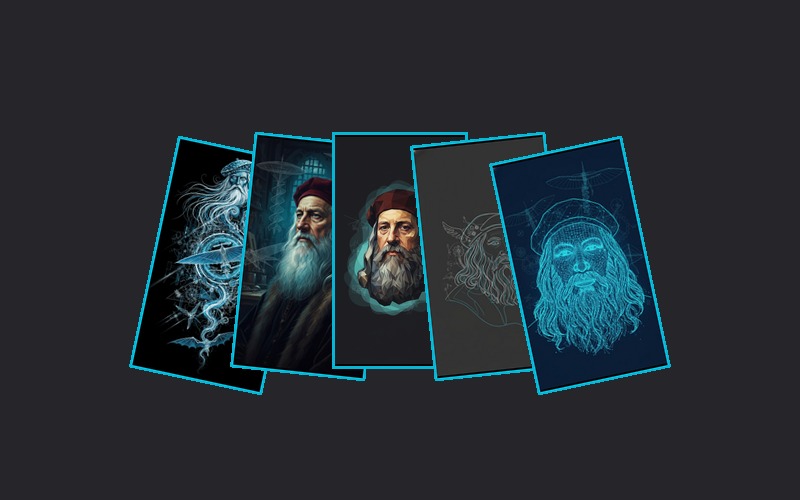
NEW Wallpaper Pack
$266 exclusive phone wallpapers, low-poly, neon blueprint, vintage engraving, minimalist, abstract, and cinematic.
 BEST VALUE
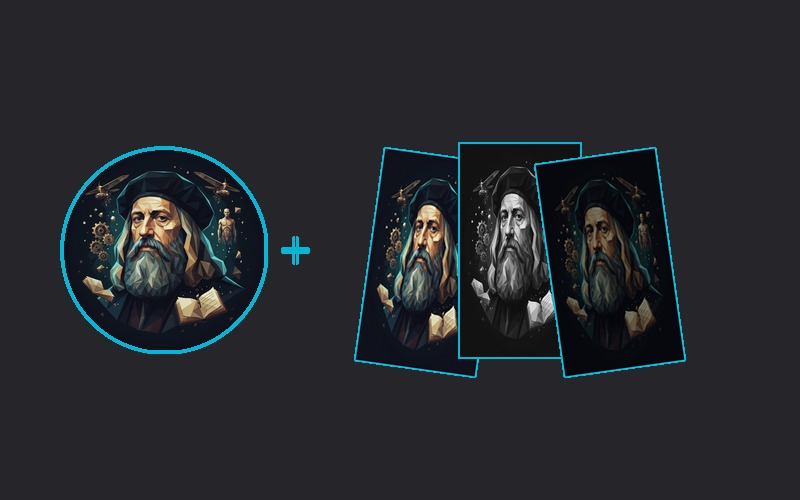
 Complete Bundle
$44Everything: the 24-chapter Deep Dive report + 6 exclusive wallpapers. Best value.
 EXCLUSIVE
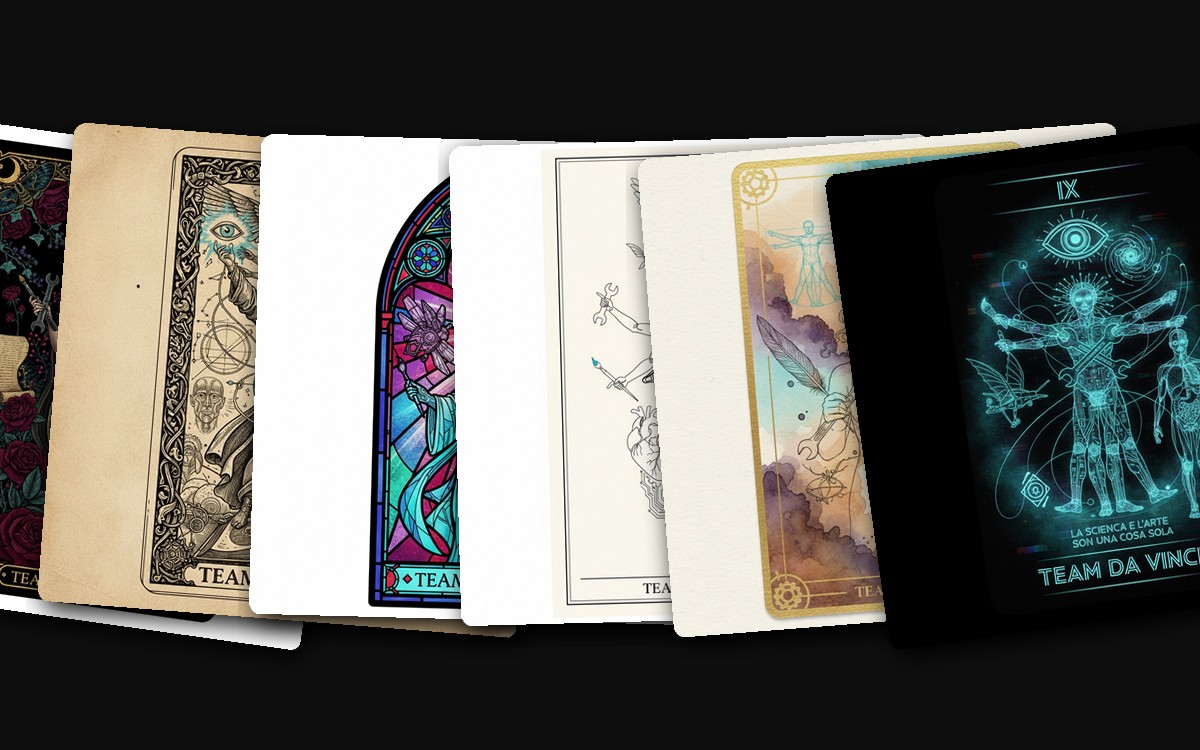
 Tarot Card Collection
$496 premium print-quality tarot cards in 6 stunning styles: Dark Botanical, Vintage Woodcut, Minimalist Line, Neon Mystic, Stained Glass, Watercolor Dream. Collector edition.
Pay what you want, starting at $1. Every contribution keeps this quiz free, ad-free, and accessible to everyone. Schools and NGOs get everything at no cost. This is self-knowledge for the people, not profit.
Frequently Asked Questions
What personality type is Team Da Vinci?
Team Da Vinci is the The Tinkerers type (EXPI): Epicurean · Empiricist · Promethean · Solitary. Your curiosity has no off switch. You follow wonder wherever it leads, across disciplines, through rabbit holes, into domains nobody told you you were allowed to enter. Your notebook looks like a conspiracy board, and every page is a different obsession.
Who are famous Team Da Vinci members?
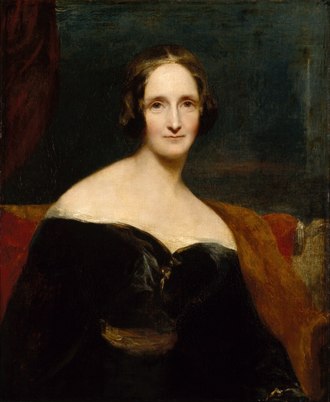
Famous Team Da Vinci members include Richard Feynman (Delighted in wonder, experimented constantly, invented new physics through personal curiosity); Buckminster Fuller (Followed curiosity across dozens of fields, tested everything with prototypes); Alexander von Humboldt (Roamed the world driven by wonder, measured everything, invented ecology); Ada Lovelace (Followed fascination with Babbage's engine, wrote the first algorithm in private pursuit); Hypatia (Polymath of ancient Alexandria, mathematician, astronomer, philosopher, driven by pure wonder); Mary Shelley (Fused science, philosophy, and gothic imagination to invent an entire genre at nineteen).
What is Team Da Vinci's rival?
Team Da Vinci's rival is Team Confucius (The Anthropologists). You invent wildly. They preserve carefully. You follow curiosity. They follow principle. You work alone. They teach publicly.
How does the personality quiz work?
The quiz has 12 questions mapping 4 binary axes with 3 forced-choice questions each. Binary forced-choice nearly eliminates faking (d=0.06, Cao & Drasgow 2019). Two items per scale is the validated minimum for criterion validity (Crede et al. 2012); we use three per axis because an odd number cannot tie, so no axis needs a tie-break rule that would favour one pole. See our full methodology. Results are free, instant, and no email is required.
Go Deeper Into Team Da Vinci
Get to know Team Da Vinci strengths and superpowers, find out who Team Da Vinci is most compatible with, and read the full guide to Team Da Vinci relationships and love.
At work, explore the best careers for Team Da Vinci and learn how Team Da Vinci handles stress. For the everyday, see Team Da Vinci in daily life and meet the famous Team Da Vinci members.

Get your full Team Da Vinci report, free
Your Team Da Vinci deep dive: 24 chapters on strengths, blind spots, compatibility, career, money, and stress. One email and it is yours.
One email. One confirmation click and the PDF is yours. No spam, leave anytime.