
Team Tesla
The Craftmasters
SXPI
"The present is theirs; the future, for which I really worked, is mine."
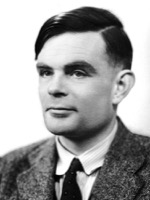
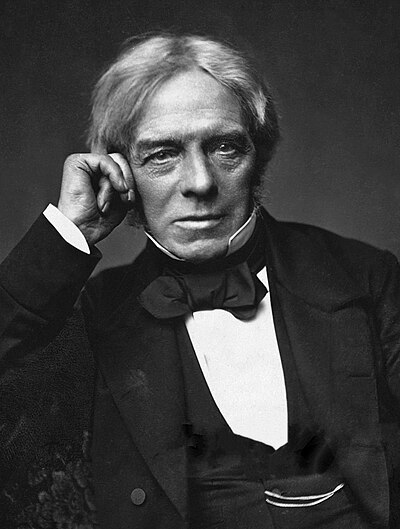
Team Tesla (SXPI) is The Craftmasters, a stoic, empiricist, promethean, solitary personality type. Core traits: Disciplined, Self-reliant, Inventive, Focused, Patient. Famous members include Alan Turing, Hedy Lamarr, Henry Cavendish. Discover your type at mypeeps.ai with our free 12-question personality quiz backed by peer-reviewed research.
This Is You
You don't trust anything you haven't built and tested yourself. While others debate theory, you're already in the workshop, hands deep in something real. Your failures are private lessons; your breakthroughs, quiet victories. You don't need an audience for either.
Discipline isn't something you practice: it's something you ARE. You learned by burning your fingers, not by reading warning labels. Every broken prototype taught you more than any textbook could. And you kept going, because the work matters more than the applause.
The world moves too fast for most people. For you, it doesn't move fast enough. You're three prototypes ahead of whatever everyone else is still arguing about. The lonely part isn't being misunderstood: it's waiting for reality to catch up to what you already know is possible.
Your Traits
You're In Good Company




What Makes You Unique
You are discipline channeled through experiment toward invention, processed in solitude. This is the rarest and most potent combination on the board, the person who creates the future alone in a workshop, driven not by passion but by duty to the work itself. Where other creators need an audience, you need a workbench. Where other innovators need inspiration, you need data. Your Stoic core keeps you going when the project should have killed you. Your Empiricist wiring means every breakthrough is earned through trial and error, not epiphany. And your Promethean drive means you're never building the same thing twice.
The tension in your combination is between creation and patience. Your Promethean side wants to leap to the next thing, but your Stoic-Empiricist core insists on doing it right. This creates an internal tug-of-war that, when resolved, produces work of extraordinary quality and originality. When unresolved, it produces isolation and frustration, the inventor who can't explain why no one else sees what they see.
Your Strengths
Relentless Focus
You can sustain deep work on a single problem longer than almost anyone. Where others context-switch and multitask, you drill down until you hit the core. This is your superpower in any domain that rewards depth.
Evidence-Based Innovation
You don't just dream up ideas: you test them. Every prototype teaches you something, and you iterate faster alone than most teams do together. Your innovations are grounded, not speculative.
Emotional Steadiness
You don't panic. In crises, your heart rate stays the same while everyone else is spiraling. This makes you the person people rely on when everything is falling apart.
Self-Sufficiency
You need remarkably little from others to produce remarkable work. Give you a problem, a deadline, and solitude, and you'll outperform entire departments.
Patient Persistence
You understand that the best work takes time. You don't rush to ship; you rush to learn. This patience produces breakthroughs that faster, flashier people miss.
Intellectual Independence
You form your own conclusions from your own evidence. You're not swayed by trends, opinions, or authority, only by what you've observed and verified yourself.
Honest Weaknesses
Emotional Isolation
Your combination of Stoic suppression and Solitary withdrawal means people often have no idea what you're feeling. This isn't strength: it's a communication gap that costs you relationships, opportunities, and support you actually need.
Perfectionist Paralysis
Your Empiricist side wants more data, your Stoic side wants to do it right, and your Solitary side won't show it until it's perfect. This triple-lock can keep you from shipping work that's already better than anyone else's.
Delegation Resistance
You believe (often correctly) that you can do it better alone. But this ceiling is real, the work you can't do alone is the work that defines your career's upper limit.
Social Invisibility
Your work speaks for itself, but it whispers. You're terrible at self-promotion, networking, and the kind of visibility that turns good work into recognized work. The world rewards what it sees, not what it knows.
How You Decide
A colleague pitches a flashy but untested approach to a critical project. You'd quietly decline, run your own smaller experiment on the side, and present the results only after you had data. You don't argue with enthusiasm: you let evidence do the arguing.
Offered a promotion that means managing people instead of building things. You'd hesitate, not because you can't lead, but because leadership means meetings, visibility, and less time at the workbench. You'd only accept if the role still protected your deep work time.
Your prototype fails publicly. While others scramble to assign blame or pivot to something safer, you'd go home, analyze what broke, and come back tomorrow with version two. Failure isn't a setback for you: it's data.
Compatibility

Your closest ally on the board. Same Empiricist-Promethean drive, but they bring the social dimension you lack. A Galileo can translate your work into language the world understands. Partner with them.

They share your Empiricist-Promethean core but add Epicurean warmth where you have Stoic reserve. They build with passion where you build with discipline. Together, you cover the full spectrum of creation.

Almost identical to you but Rationalist instead of Empiricist. Where you test, they theorize. You'll respect each other's depth but disagree on method. The best projects start with Newton's framework and Tesla's prototype.

Same Stoic-Empiricist foundation, but they go deep (Sisyphean) and wide (Agora) where you go new (Promethean) and solo (Solitary). They're the one who can maintain and scale what you invent.
Relationships
Your relationships run deep but invisible. You love through dedication and acts of quiet service, not through words or gestures. Your partner needs to understand that your silence is not distance; it's the sound of someone who's thinking about you while building something in the next room. The biggest gift you can give your relationships is narration: 'I'm thinking about you' said out loud, not just felt.
You keep a small circle and you keep it for decades. You're the friend people call at 3am because they know you'll pick up and you won't panic. The downside: you can be so self-contained that friends stop reaching out, assuming you don't need them. You do. You're just terrible at showing it.
Full relationship guide →Career & Work Style
Your Career Profile
Your ideal career is one where you can prototype, test, and iterate on your own terms, with minimal meetings, maximum autonomy, and a problem hard enough that most people would quit before year two. You're the person who turns a garage into a lab. Companies that hire you should leave you alone and judge by results. The worst thing you can do to a Tesla is put them in an open-plan office with daily standups.
Careers That Fit
Emergency medicine, crisis management, or military leadership, environments where emotional control is a survival skill, not a personality quirk.
Long-cycle engineering, infrastructure, or research science, work where the payoff is years away and most people would quit before seeing results.
Financial risk management, compliance, or quality assurance, roles that reward patience, vigilance, and the ability to say 'no' when everyone else says 'yes'.
Data science, lab research, or investigative journalism, work where truth is found through observation, not assertion.
Product management, operations, or process improvement, roles where 'what actually happened' matters more than 'what should have happened.'
Trades, craftsmanship, or hands-on engineering, careers where competence is measured by outcomes, not credentials.
R&D, invention, or early-stage startups, environments where creating something that doesn't exist yet is the entire point.
Creative arts, game design, or speculative architecture, work where imagination is the primary tool and constraints are suggestions.
Venture capital, trend forecasting, or innovation consulting, roles that reward spotting what's next before anyone else does.
Software development, writing, or solo research, work where deep focus and uninterrupted thinking produce the best outcomes.
Remote or asynchronous roles, environments where your output matters more than your presence and nobody counts how many meetings you attended.
Forensic analysis, cryptography, or puzzle-solving, careers where the answer reveals itself to the person willing to sit with the problem longest.
Careers to Avoid
High-energy sales or entertainment roles that demand constant emotional performance. You'll burn out pretending to be excited about things that don't move you.
Fast-pivoting startup culture where 'fail fast' means abandoning discipline for speed. Your superpower is endurance, not improvisation.
Pure strategy consulting or think-tank roles where ideas never get tested against reality. You'll feel like you're playing pretend.
Visionary leadership positions that demand you sell a future nobody can prove yet. You struggle to champion ideas before the evidence exists.
Maintenance engineering, operations, or support roles where the goal is keeping existing systems running. You'll feel like you're dying slowly.
Heavily regulated industries (banking, healthcare compliance) where innovation requires 18 months of approvals. Your pace and their pace will never align.
Open-plan office cultures with mandatory 'collaboration hours' and team-building retreats. You'll spend more energy managing your exhaustion than doing your work.
Client-facing roles that require constant social performance. You can do it, but it drains the battery that powers your real work.
Your Work Style
You thrive in structured environments with clear expectations and long time horizons. Open-plan offices drain you, not because of noise, but because of the constant performance of being 'present.' You do your best work when left alone with a hard problem and a deadline. Give you autonomy and accountability, and you'll outperform anyone in the building. Micromanage you, and you'll quietly disengage.
You as a Colleague
You're the colleague everyone trusts but few truly know. You deliver consistently, you don't play politics, and you absorb pressure without complaint. The trap: people will load you up because you never push back. Learn to say 'I'm at capacity' before you're at breaking point, because once you break, you don't bend first.
Under Stress
Under pressure, you go into 'just keep going' mode. You strip away everything non-essential, emotions, social obligations, personal needs, and focus entirely on the task. From the outside, this looks like superhuman composure. From the inside, it feels like slowly going numb. The longer the pressure lasts, the less you feel, until you can't distinguish genuine peace from emotional shutdown.
The danger isn't the stress itself: it's the delayed explosion. Stoics don't crack under pressure; they crack three months after the pressure ends, when they finally feel safe enough to process what they suppressed. Watch for the moment of relief: that's when the dam breaks. Build micro-processing habits during the stress, not after: a five-minute journal, a walk without a podcast, a honest answer to 'how are you actually doing?'
Under pressure, you default to data collection. When you don't know what to do, you gather more information, another analysis, another spreadsheet, another round of research. This feels productive, but past a certain point, you're not learning; you're stalling. The discomfort of acting on incomplete information is your biggest stress trigger, and the only cure is practice.
Your stress signal is overwork disguised as thoroughness. When you're staying late to 'double-check the numbers' for the third time, you're not being diligent: you're anxious. The fix: set decision deadlines before you start the research. 'I will decide by Friday with whatever I have.' Then actually do it. Your track record of good decisions on imperfect data is better than you think.
Under pressure, you start new things. Project A is stuck? Begin project B. Project B hits a wall? Sketch out project C. Each pivot feels like progress because you're moving, generating, creating, but your energy is fragmenting into smaller and smaller pieces. The pile of 80%-finished work grows while nothing actually ships.
Your stress signal is hyperactivity that produces nothing. You're busy, frantically, impressively busy, but if someone asked what you completed this week, you'd struggle to name one thing. The fix is brutal and simple: pick one thing, finish it, then move on. Write it on a sticky note. Look at it every hour. The Promethean who learns to finish under pressure is more dangerous than any competitor.
Under pressure, you disappear. Messages go unread, invitations get declined, and you retreat so deep into your own space that people start worrying about you. This isn't depression (though it can look like it): it's your nervous system's emergency protocol. You're trying to reduce input to a level you can process. The problem is that the people who could help are the ones you're cutting off.
Your stress signal is radio silence. When the Solitary goes dark, it means the pressure has exceeded their processing capacity. The fix is counterintuitive: reach out before you feel ready. Send a one-line text: 'I'm okay but overwhelmed. Need some space. Will check in Friday.' This buys you the solitude you need while keeping the lifeline intact. Silence worries people; a brief message sets boundaries without burning bridges.
Under pressure, you combine Stoic suppression with Solitary withdrawal: you go completely dark. No messages, no updates, just heads-down grind. This is your emergency mode and it works for short sprints, but over weeks it erodes every relationship you have. Your stress antidote: one five-minute check-in per day with one person. That's it. It keeps the lifeline intact without breaking your focus.
How You Communicate Under Pressure
You say less than you think. Your communication style is economical: you don't waste words, you don't perform emotions, and you don't repeat yourself. When you speak, it carries weight because people know you don't do it for show. The gap between what you feel and what you express is the largest of any type, and it's both your signature strength and your core vulnerability.
In conflicts, you go quiet, which most people interpret as either agreement or hostility, neither of which is accurate. You're processing. The problem is that your silence gives the other person nothing to work with, so they fill it with assumptions. Learning to say 'I need time to think about this, but I hear you' is the single most useful communication upgrade you can make.
You communicate through evidence. 'Here's what happened,' 'Here's what I observed,' 'Let me show you the data.' Your communication style builds credibility through specificity: you don't make vague claims, you bring receipts. People who value precision love working with you. People who value feeling heard can find you frustrating.
In conflicts, you instinctively reach for facts, which works brilliantly when the conflict is about what happened, and terribly when the conflict is about how someone felt. Learning to say 'I understand why that upset you' before 'but here's what the data shows' will transform your most difficult conversations. Lead with acknowledgment, then bring the evidence.
You communicate through vision. Your natural mode is painting a picture of what could exist, the future, the possibility, the 'imagine if.' This makes you inspiring and sometimes infuriating. People follow your vision when they believe it's achievable, and tune out when it feels like fantasy. The line between the two is details, the more specific you can be, the more persuasive you become.
In conflicts, you tend to leap past the current problem to the solution, which can feel dismissive to someone who needs the current problem acknowledged. 'Okay but here's what we should do instead' can land as 'your feelings about this don't matter.' Slow down. Acknowledge the present before you paint the future.
You communicate through considered, deliberate output. Emails are precise, messages are purposeful, and conversations are efficient. You don't do small talk easily, and you rarely think out loud. What comes out has already been processed, which means your communication is high-quality but low-frequency. People who work with you learn that when you speak, it matters.
In conflicts, you withdraw to process, which can leave the other person feeling abandoned. 'I need to think about this' is responsible, but 'I need to think about this and I'll come back to you by Wednesday' is relationship-saving. The Solitary's communication becomes powerful when it includes timelines and follow-through on the response, not just the retreat.
7-Day Growth Challenge
Small daily actions to build resilience and break your stress patterns.
Monday: Tell one person what you're working on, not for approval, just for visibility. Break the silence.
Tuesday: Make a decision with 70% of the information you'd normally want. Ship it. Observe what happens.
Wednesday: Respond to three messages you've been avoiding. Brief is fine. Silence isn't.
Thursday: Take one of your 80%-finished projects and ship it as-is. Good enough is good enough.
Friday: Ask one person for feedback on something you've been building alone. Listen without defending.
Saturday: Do something social that has nothing to do with work. No agenda, no purpose, just presence.
Sunday: Write down one emotion you felt this week. Name it. That's the whole exercise.
Growth Path
Address: Emotional Isolation
This isn't strength: it's a communication gap that costs you relationships, opportunities, and support you actually need.
Address: Perfectionist Paralysis
This triple-lock can keep you from shipping work that's already better than anyone else's.
Address: Delegation Resistance
But this ceiling is real, the work you can't do alone is the work that defines your career's upper limit.
Address: Social Invisibility
The world rewards what it sees, not what it knows.
Daily Life
You say less than you think. Your communication style is economical: you don't waste words, you don't perform emotions, and you don't repeat yourself. When you speak, it carries weight because people know you don't do it for show. The gap between what you feel and what you express is the largest of any type, and it's both your signature strength and your core vulnerability.
Communication, hobbies, pets & more →Your Rival

You build alone. They question in crowds. You test everything. They reason everything. You create the new. They refine the old.
 NEW
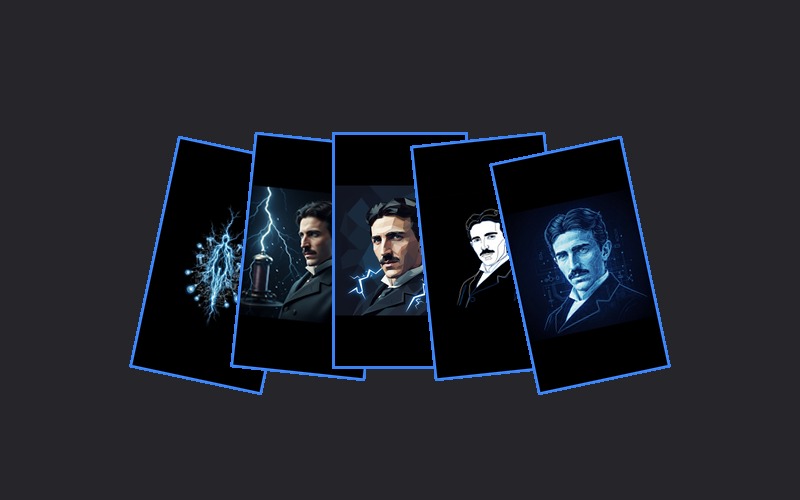
NEW Wallpaper Pack
$266 exclusive phone wallpapers, low-poly, neon blueprint, vintage engraving, minimalist, abstract, and cinematic.
 BEST VALUE
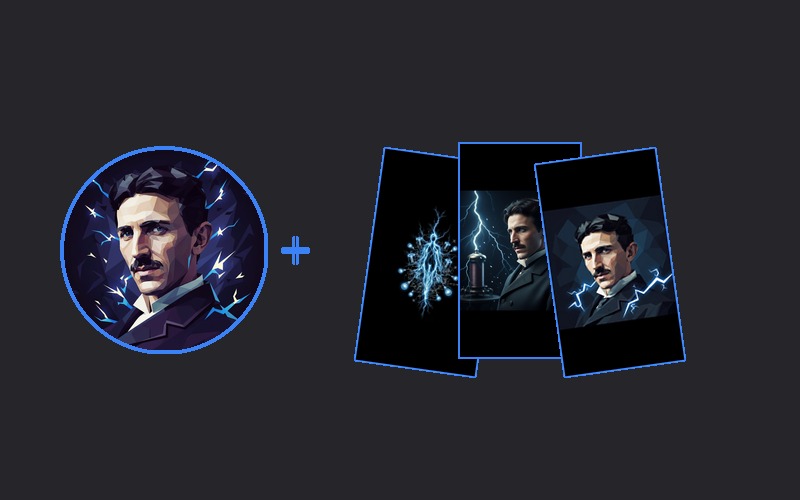
 Complete Bundle
$44Everything: the 24-chapter Deep Dive report + 6 exclusive wallpapers. Best value.
 EXCLUSIVE
 Tarot Card Collection
$496 premium print-quality tarot cards in 6 stunning styles: Dark Botanical, Vintage Woodcut, Minimalist Line, Neon Mystic, Stained Glass, Watercolor Dream. Collector edition.
Pay what you want, starting at $1. Every contribution keeps this quiz free, ad-free, and accessible to everyone. Schools and NGOs get everything at no cost. This is self-knowledge for the people, not profit.
Frequently Asked Questions
What personality type is Team Tesla?
Team Tesla is the The Craftmasters type (SXPI): Stoic · Empiricist · Promethean · Solitary. You don't trust anything you haven't built and tested yourself. While others debate theory, you're already in the workshop, hands deep in something real. Your failures are private lessons; your breakthroughs, quiet victories. You don't need an audience for either.
Who are famous Team Tesla members?
Famous Team Tesla members include Alan Turing (Built and tested computing machines, invented an entirely new field, worked in isolation); Hedy Lamarr (Invented frequency-hopping spread spectrum (basis for WiFi), unrecognized for decades); Henry Cavendish (Reclusive physicist who weighed the Earth through meticulous experiment); James Watt (Solitary tinkerer who perfected the steam engine through relentless hands-on experimentation); Rosalind Franklin (Meticulous experimentalist whose X-ray crystallography revealed DNA structure, worked alone); Michael Faraday (Self-taught lab genius who discovered electromagnetism through tireless solitary experiment).
What is Team Tesla's rival?
Team Tesla's rival is Team Socrates (The Strategists). You build alone. They question in crowds. You test everything. They reason everything. You create the new. They refine the old.
How does the personality quiz work?
The quiz has 12 questions mapping 4 binary axes with 3 forced-choice questions each. Binary forced-choice nearly eliminates faking (d=0.06, Cao & Drasgow 2019). Two items per scale is the validated minimum for criterion validity (Crede et al. 2012); we use three per axis because an odd number cannot tie, so no axis needs a tie-break rule that would favour one pole. See our full methodology. Results are free, instant, and no email is required.
Go Deeper Into Team Tesla
Get to know Team Tesla strengths and superpowers, find out who Team Tesla is most compatible with, and read the full guide to Team Tesla relationships and love.
At work, explore the best careers for Team Tesla and learn how Team Tesla handles stress. For the everyday, see Team Tesla in daily life and meet the famous Team Tesla members.

Get your full Team Tesla report, free
Your Team Tesla deep dive: 24 chapters on strengths, blind spots, compatibility, career, money, and stress. One email and it is yours.
One email. One confirmation click and the PDF is yours. No spam, leave anytime.