Career & Money
Team Darwin - The Wandering Builders
Your Career Profile
You belong in field research, natural sciences, exploratory journalism, or independent creative work, any career where you can wander, observe, and synthesize without a committee breathing down your neck. You're the person who finds the pattern nobody else saw because nobody else spent three years looking. Corporate hierarchy will suffocate you; academic freedom will liberate you. The ideal role has a generous deadline, a fascinating problem, and no mandatory meetings.
Careers That Fit
Emergency medicine, crisis management, or military leadership, environments where emotional control is a survival skill, not a personality quirk.
Long-cycle engineering, infrastructure, or research science, work where the payoff is years away and most people would quit before seeing results.
Financial risk management, compliance, or quality assurance, roles that reward patience, vigilance, and the ability to say 'no' when everyone else says 'yes'.
Data science, lab research, or investigative journalism, work where truth is found through observation, not assertion.
Product management, operations, or process improvement, roles where 'what actually happened' matters more than 'what should have happened.'
Trades, craftsmanship, or hands-on engineering, careers where competence is measured by outcomes, not credentials.
Precision manufacturing, watchmaking, or surgical specialization, work where mastery is measured in thousandths of an inch and years of practice.
Editing, quality assurance, or restoration, careers where finding the flaw others missed is the highest form of expertise.
Academic research, archival work, or classical music, domains where depth is more respected than breadth and patience is the differentiator.
Software development, writing, or solo research, work where deep focus and uninterrupted thinking produce the best outcomes.
Remote or asynchronous roles, environments where your output matters more than your presence and nobody counts how many meetings you attended.
Forensic analysis, cryptography, or puzzle-solving, careers where the answer reveals itself to the person willing to sit with the problem longest.
Careers to Avoid
High-energy sales or entertainment roles that demand constant emotional performance. You'll burn out pretending to be excited about things that don't move you.
Fast-pivoting startup culture where 'fail fast' means abandoning discipline for speed. Your superpower is endurance, not improvisation.
Pure strategy consulting or think-tank roles where ideas never get tested against reality. You'll feel like you're playing pretend.
Visionary leadership positions that demand you sell a future nobody can prove yet. You struggle to champion ideas before the evidence exists.
Growth-hacking, rapid prototyping, or 'move fast and break things' culture. Your instinct to perfect will be treated as a liability.
Generalist management roles where you're spread thin across ten domains instead of going deep in one. Breadth without depth feels like incompetence to you.
Open-plan office cultures with mandatory 'collaboration hours' and team-building retreats. You'll spend more energy managing your exhaustion than doing your work.
Client-facing roles that require constant social performance. You can do it, but it drains the battery that powers your real work.
Your Work Style
You thrive in structured environments with clear expectations and long time horizons. Open-plan offices drain you, not because of noise, but because of the constant performance of being 'present.' You do your best work when left alone with a hard problem and a deadline. Give you autonomy and accountability, and you'll outperform anyone in the building. Micromanage you, and you'll quietly disengage.
You want to touch the work. Reports about the work don't satisfy you: you want to see the data, run the test, talk to the customer. You're the person who says 'let me check' while everyone else is guessing. You thrive in iterative environments where feedback loops are short and results are measurable. Your frustration point is organizations that make decisions by committee and opinion rather than evidence.
You want to go deep. One domain, one craft, one problem, mastered over years, not months. You're the person who's still improving at something everyone else declared 'good enough' three iterations ago. You thrive in environments that value expertise and craftsmanship. Your frustration point is organizations that rotate people through roles every 18 months, treating depth as a luxury they can't afford.
You do your best thinking when nobody is watching. Your ideal workday has long blocks of uninterrupted time, async communication, and the freedom to disappear into a problem for hours. You're not antisocial: you're selectively social. You choose your interactions carefully because each one costs energy that could go toward the work. The organizations that get the best from you are the ones that judge output, not availability.
Your Money Philosophy
How You Spend
You spend deliberately, rarely impulsively. You'd rather have a full emergency fund than a new gadget. Your relationship with money is disciplined, which is a strength until it becomes stinginess disguised as virtue.
You research every purchase. You compare prices, read reviews, wait for sales, and never buy on impulse. Your spreadsheet knows more about your finances than your partner does. This is efficient, and occasionally exhausting for everyone around you.
You buy quality and keep things forever. You'd rather spend more on one excellent item than replace cheap ones repeatedly. Your possessions are curated, maintained, and deeply valued. You're the person who still uses the wallet they bought ten years ago.
Your expenses are low because your lifestyle is low-maintenance. You don't need much, a quiet space, your tools, your essentials. You're naturally frugal, not by philosophy but by preference. You just don't want that much stuff.
Financial Blind Spots
You under-invest in experiences and relationships because the ROI isn't measurable. The dinner with friends, the vacation, the gift that says 'I was thinking of you', these feel wasteful to you, but they're investments in the things that actually matter.
You over-optimize small purchases and under-think big ones. You'll spend an hour comparing $3 toothpaste but make a career change without calculating the financial impact. Zoom out occasionally.
You can be penny-wise and pound-foolish in reverse, spending too much on premium quality where standard would do. Not every purchase needs to be 'the best.' Sometimes good enough is genuinely good enough.
You under-invest in social infrastructure, the dinner out, the group trip, the round of drinks. These feel unnecessary to you, but they're the price of maintaining the relationships that enrich your life.
Money Strengths
Long-term financial planning. You can delay gratification for decades, build savings methodically, and resist lifestyle inflation. Your financial discipline is your quiet superpower.
Data-driven financial decisions. You track spending, compare returns, and make evidence-based investment choices. Your finances are probably in better shape than you give yourself credit for.
Low waste, high value. You don't accumulate things you don't need, and what you own serves you well. Your financial footprint is smaller than it looks because you extract maximum value from every purchase.
Natural minimalism. You don't suffer from lifestyle inflation because you genuinely don't want more things. Your savings rate is probably higher than your income would suggest.
You as a Colleague
You're the colleague everyone trusts but few truly know. You deliver consistently, you don't play politics, and you absorb pressure without complaint. The trap: people will load you up because you never push back. Learn to say 'I'm at capacity' before you're at breaking point, because once you break, you don't bend first.
You're the colleague who grounds the team in reality. When everyone is excited about a plan, you're the one checking whether the numbers actually work. This makes you essential and occasionally unpopular. The trap: being right isn't enough: you need to learn to deliver truth in a way people can hear. Evidence wrapped in empathy lands better than evidence alone.
You're the colleague who catches the mistakes everyone else missed. You maintain quality standards that make the entire team look good. Your thoroughness protects the organization from errors that would cost far more than the time you spent preventing them. The trap: perfectionism can slow the team when speed matters. Learn to calibrate your quality standard to the stakes, not everything needs to be flawless.
You're the colleague who produces remarkable work with minimal oversight. You don't need check-ins, status meetings, or collaborative brainstorms to be productive: you need a quiet room and a clear brief. The trap: your independence can make you invisible. The people who decide promotions don't always see the work: they see the person. Make your contributions visible enough that the right people notice.
Keep exploring
 NEW
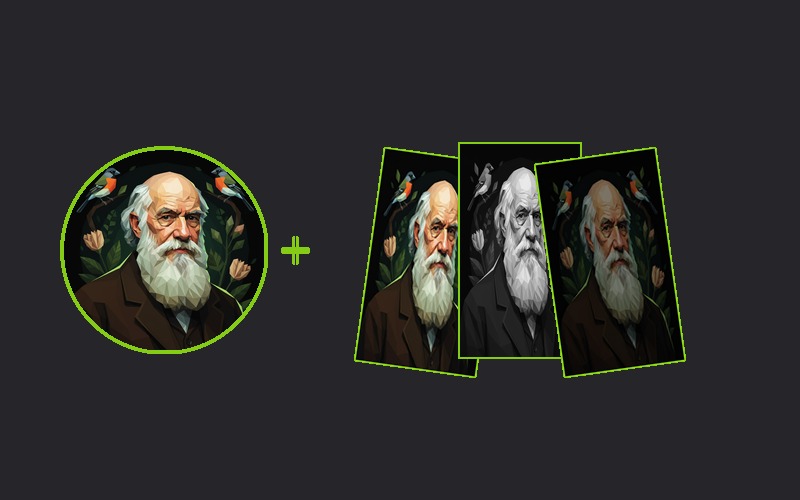
NEW Wallpaper Pack
$266 exclusive phone wallpapers, low-poly, neon blueprint, vintage engraving, minimalist, abstract, and cinematic.
 BEST VALUE
 Complete Bundle
$44Everything: the 24-chapter Deep Dive report + 6 exclusive wallpapers. Best value.
 EXCLUSIVE
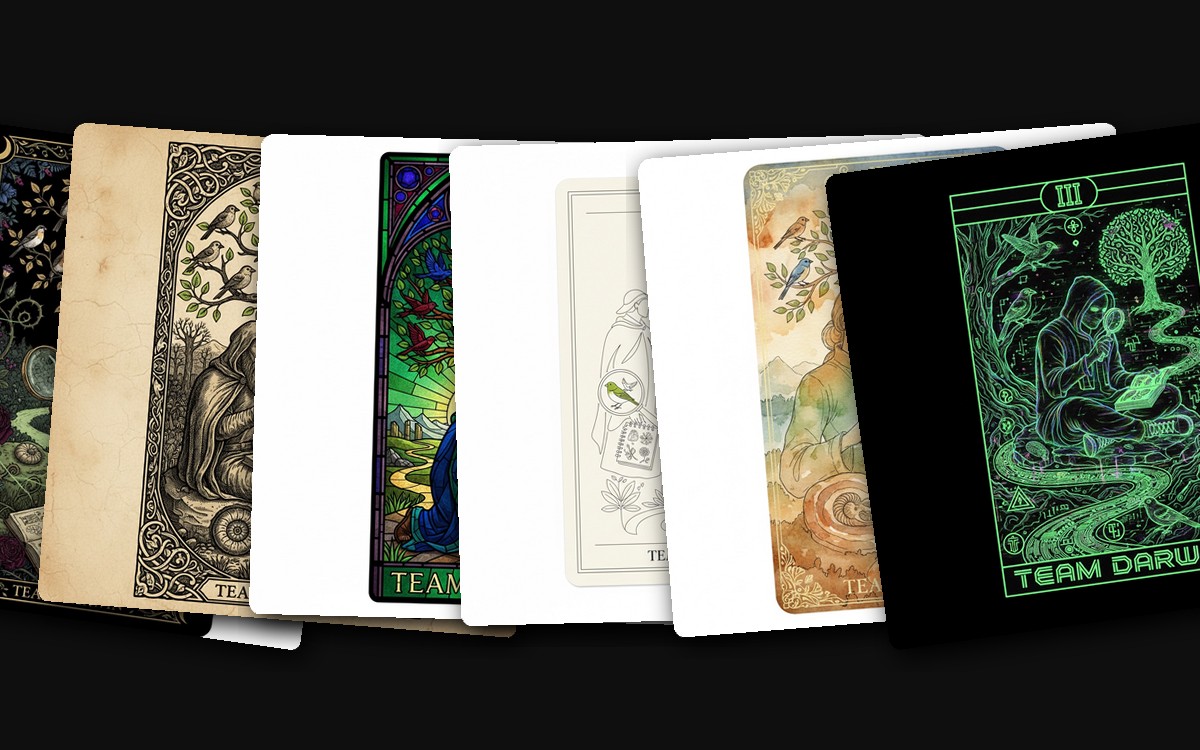
 Tarot Card Collection
$496 premium print-quality tarot cards in 6 stunning styles: Dark Botanical, Vintage Woodcut, Minimalist Line, Neon Mystic, Stained Glass, Watercolor Dream. Collector edition.
Pay what you want, starting at $1. Every contribution keeps this quiz free, ad-free, and accessible to everyone. Schools and NGOs get everything at no cost. This is self-knowledge for the people, not profit.