
Strengths & Weaknesses
Team Kant - The Archivists
What Makes You Unique
You are the public revolutionary, building new frameworks of thought with clockwork discipline, then sharing them with anyone who will listen. Your Stoic core means you show up every day, regardless of inspiration. Your Rationalist wiring means your ideas have the structural integrity to survive scrutiny. Your Promethean drive means you're not content to teach the old: you need to create the new. And your Agora nature means you believe ideas belong to everyone, not just their creator.
The tension in your combination is between the solitary act of creation and the social imperative to share. Your best ideas emerge from deep, disciplined reasoning, but they only matter when they reach other people. You're constantly balancing the need for uninterrupted thinking with the pull of public engagement. When this resolves well, you produce ideas that change culture. When it resolves poorly, you produce ideas that nobody had time to finish thinking through.
Your Strengths
Framework Building
You create mental models and systems of thought that become the default lens through which others see the world. Your frameworks outlast you.
Public Intellectual Courage
You don't just think revolutionary thoughts: you defend them in public, against opposition, with the full weight of your reasoning.
Disciplined Creativity
Your Stoic core prevents your Promethean ideas from remaining fantasies. You actually build, write, and ship your revolutionary frameworks.
Accessible Complexity
Your Agora nature drives you to make your complex ideas understandable. You don't dumb down: you translate up.
Principled Consistency
You hold yourself to the same standards you set for others. Your moral authority comes from living your philosophy, not just teaching it.
Institutional Vision
You can see how ideas become institutions, universities, legal systems, governance structures. You think in timescales that most people can't imagine.
Honest Weaknesses
Intellectual Rigidity
Once you've built a framework, you can be reluctant to abandon it even when the evidence demands it. Your Stoic discipline can become stubbornness in the face of new information.
Over-Systematization
Not everything can be captured in a framework. Your Rationalist instinct to systematize can drain the life out of experiences that resist categorization, art, love, grief.
Public Pressure
Your Agora nature makes you crave engagement, but your Stoic-Promethean work requires solitude. You can burn out trying to be both the creator and the communicator simultaneously.
Moral Absolutism
Your principled nature can shade into inflexibility. You can hold people to standards they didn't agree to, and judge them for failing tests they didn't know they were taking.
Your Shadow Side
The patterns you fall into when you're not at your best. Uncomfortable, but knowing them is the first step.
Ego Traps
You mistake emotional suppression for emotional strength. Your ego tells you that feeling nothing makes you superior to people who feel everything. It doesn't: it makes you a ticking bomb with excellent posture.
You believe that being logical makes you objective. Your ego tells you that your conclusions are bias-free because they're built from premises, not feelings. But your choice of premises IS the bias: you just can't see it because it looks like logic.
You believe that creating something new makes you more valuable than maintaining something old. Your ego ranks inventors above operators, pioneers above farmers. But the world runs on maintenance, not just breakthroughs.
You believe that being liked means being good. Your ego is fed by social approval, and your instinct to please can override your commitment to truth. You'll soften a harsh but necessary message because delivering it would cost you popularity.
Toxic Patterns
You weaponize silence. When you're angry, you don't fight: you withdraw. You punish people by withholding your presence, your words, your engagement. You call it 'not being reactive.' They call it 'emotional abandonment.'
You argue to win, not to understand. Your intellectual precision becomes a weapon: you dismantle people's positions with surgical efficiency, then wonder why they stop talking to you. Being right and being kind are different skills.
You leave a trail of abandoned projects and people. Each new thing feels like progress, but from the outside it looks like a pattern of broken promises. The people who relied on version 1.0 don't care about your excitement for version 2.0.
You create dependency. Your warmth and availability make people rely on you, and you subtly encourage that reliance because it makes you feel needed. Your generosity has a shadow: it keeps people close by keeping them dependent.
Self-Sabotage
You refuse help until you collapse. Your identity is so wrapped up in self-sufficiency that accepting support feels like failure. You'd rather burn out alone than admit you need someone.
You over-think everything until action becomes impossible. Your mind can build a perfect model of every scenario, including all the reasons not to act. Analysis becomes the activity, and the actual thing never gets done.
You destroy things that are working because they bore you. A perfectly good career, relationship, or routine gets blown up not because it failed, but because it stopped being novel. You mistake boredom for a sign that something is wrong.
You outsource your judgment. You poll so many people before every decision that your own voice gets drowned out. You know what everyone else thinks but have lost track of what you think. Consensus becomes a substitute for conviction.
How You Think
You decide by asking 'what must be done?', duty and discipline override preference. You're comfortable with unpleasant decisions because you separate emotion from action.
You decide by asking 'what follows logically?': you reason from principles, not precedent. If the logic is sound, you'll go against popular opinion without hesitation.
You decide by asking 'what's the biggest opportunity?': you optimize for upside and novelty. Safe choices bore you; you'd rather take a calculated risk on something new.
You decide through dialogue. You test your thinking against other people's perspectives, synthesize the best ideas, and emerge with a decision that's stronger than any individual input.
How You Decide
A colleague proposes a practical solution that works but violates your principles. You'd push back, not because the solution doesn't work, but because precedent matters. Today's expedient shortcut becomes tomorrow's institutional failure.
Invited to speak at a prestigious event but with restrictions on your content. You'd decline unless the restrictions were lifted, then write an essay about why those restrictions exist. Your principles aren't negotiable, even for status.
A student challenges your framework with a compelling counter-argument. You'd engage deeply, publicly, and if they were right, you'd revise your framework in the next lecture. Being wrong in public doesn't scare you, being wrong in private does.
 NEW
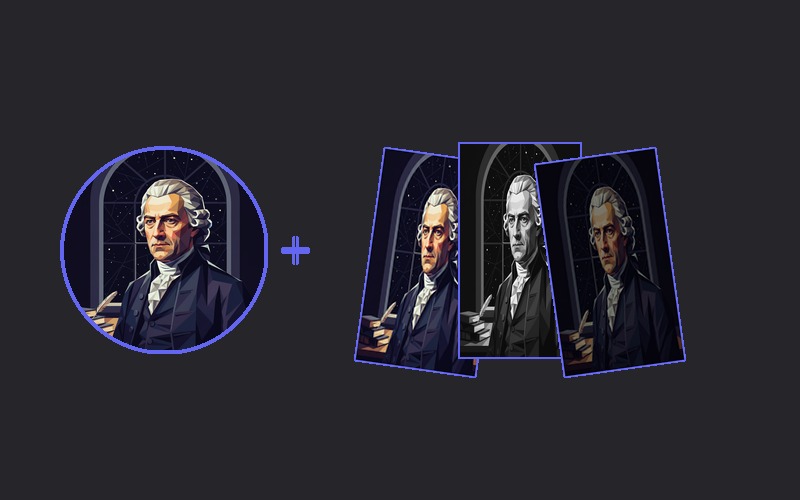
NEW Wallpaper Pack
$266 exclusive phone wallpapers, low-poly, neon blueprint, vintage engraving, minimalist, abstract, and cinematic.
 BEST VALUE
 Complete Bundle
$44Everything: the 24-chapter Deep Dive report + 6 exclusive wallpapers. Best value.
 EXCLUSIVE
 Tarot Card Collection
$496 premium print-quality tarot cards in 6 stunning styles: Dark Botanical, Vintage Woodcut, Minimalist Line, Neon Mystic, Stained Glass, Watercolor Dream. Collector edition.
Pay what you want, starting at $1. Every contribution keeps this quiz free, ad-free, and accessible to everyone. Schools and NGOs get everything at no cost. This is self-knowledge for the people, not profit.