
Daily Life
Team Newton - How you live, create, and communicate
How You Communicate
You say less than you think. Your communication style is economical: you don't waste words, you don't perform emotions, and you don't repeat yourself. When you speak, it carries weight because people know you don't do it for show. The gap between what you feel and what you express is the largest of any type, and it's both your signature strength and your core vulnerability.
In conflicts, you go quiet, which most people interpret as either agreement or hostility, neither of which is accurate. You're processing. The problem is that your silence gives the other person nothing to work with, so they fill it with assumptions. Learning to say 'I need time to think about this, but I hear you' is the single most useful communication upgrade you can make.
You communicate through structure. Your explanations have beginnings, middles, and ends. You define terms, you build from premises, and you arrive at conclusions through visible reasoning. People who think like you find this deeply satisfying. People who don't can feel like they're being lectured rather than talked to.
In conflicts, you try to find the logical core of the disagreement, which is useful but can feel invalidating when the other person's issue is emotional. You can be so focused on 'what's actually true' that you miss 'what's actually wrong.' The Rationalist who learns to validate feelings before restructuring the argument becomes someone people actually want to disagree with, because it always leads somewhere productive.
You communicate through vision. Your natural mode is painting a picture of what could exist, the future, the possibility, the 'imagine if.' This makes you inspiring and sometimes infuriating. People follow your vision when they believe it's achievable, and tune out when it feels like fantasy. The line between the two is details, the more specific you can be, the more persuasive you become.
In conflicts, you tend to leap past the current problem to the solution, which can feel dismissive to someone who needs the current problem acknowledged. 'Okay but here's what we should do instead' can land as 'your feelings about this don't matter.' Slow down. Acknowledge the present before you paint the future.
You communicate through considered, deliberate output. Emails are precise, messages are purposeful, and conversations are efficient. You don't do small talk easily, and you rarely think out loud. What comes out has already been processed, which means your communication is high-quality but low-frequency. People who work with you learn that when you speak, it matters.
In conflicts, you withdraw to process, which can leave the other person feeling abandoned. 'I need to think about this' is responsible, but 'I need to think about this and I'll come back to you by Wednesday' is relationship-saving. The Solitary's communication becomes powerful when it includes timelines and follow-through on the response, not just the retreat.
Hobbies & Creativity
Your Creative Style
Disciplined and structured. You approach creativity like a craft: daily practice, incremental improvement, mastery through repetition. You're the person who writes 500 words every morning regardless of inspiration.
Structural and systematic. You create through patterns, music theory, architectural design, game mechanics, procedural art. Your creativity has a logical backbone that other types might miss.
Experimental and prolific. You try everything, combine unexpected elements, and produce a volume of work that makes up in novelty what it sometimes lacks in polish. Your creative process looks chaotic; the results are often brilliant.
Private and contemplative. Your best creative work happens when nobody is watching. You process, draft, refine, and produce in silence, then reveal the finished product, if you reveal it at all.
Hobbies That Fit
Martial arts, woodworking, calligraphy, distance running, chess, meditation, journaling. Activities that reward discipline and improve through practice.
Programming, board game design, chess, music composition (theory-heavy), architecture models, mathematical puzzles, philosophy reading, strategy games. Activities that reward systematic thinking.
3D printing, game modding, experimental cooking, mixed media art, improv comedy, startup side projects, hackathons, creative writing. Activities that reward experimentation and tolerate failure.
Reading, solo hiking, writing, solo music practice, puzzle games, model building, astronomy, fishing. Activities that don't require other people and reward depth of attention.
Hobby Traps
You turn hobbies into obligations. The guitar practice becomes a chore, the meditation becomes a KPI. Remember: hobbies exist for joy, not productivity.
You intellectualize creativity until the joy disappears. The music becomes all theory, the writing becomes all structure, the cooking becomes all chemistry. Let yourself make something ugly. The imperfect thing you finished is worth more than the perfect thing you planned.
You have 47 unfinished projects and you're about to start number 48. The thrill of beginning is your drug. Challenge: pick your best half-finished project and complete it. The completion will teach you something the starting never could.
Your hobby becomes another form of isolation. The reading list replaces social plans, the solo hikes replace group activities, the workshop becomes a bunker. Occasionally invite someone into your hobby world. It won't ruin it.
Your Pet Personality
Ideal Pet
A loyal, low-drama companion that respects your space. A well-trained dog (think: German Shepherd, Akita) or a cat that doesn't need constant attention. You want reliability, not performance.
A cat. Independent, low-maintenance, and doesn't require you to perform enthusiasm. Alternatively, a chess-playing octopus, if that were possible, you'd have one. You want a pet that thinks, not one that needs.
Something unusual. A parrot (trainable, surprising, never boring), a ferret (chaotic energy matches yours), or a rescue with a complicated backstory that you're determined to rehabilitate. You don't want a normal pet.
A cat. Obviously a cat. Or a fish tank that provides ambient life without requiring interaction. You want a companion that coexists peacefully in your space without demanding your attention on their schedule.
You as a Pet Owner
You'll be the most consistent pet owner anyone has ever seen. Feeding schedule: precise. Vet appointments: never missed. Emotional bonding: deep but expressed through care, not cuddles.
You'll develop a theoretical framework for your pet's behavior within the first month. You understand why your cat does what it does better than the cat does. The relationship is one of mutual intellectual respect.
You'll cycle through pet interests the way you cycle through projects. The parrot gets intensive training for three months, then the ferret cage gets an elaborate renovation, then you're reading about beekeeping. Your pets are never bored.
You and your cat have an understanding: parallel existence with occasional moments of connection. You're both content to be in the same room without interacting. This isn't cold: it's the highest form of mutual respect.
Recommended Reading
'Principia Mathematica' by Isaac Newton, the book that defined modern physics (yes, really)
'Gödel, Escher, Bach' by Douglas Hofstadter, systems, recursion, and the architecture of thought
'A Brief History of Time' by Stephen Hawking, first-principles thinking about the universe
Keep exploring
 NEW
NEW Wallpaper Pack
$266 exclusive phone wallpapers, low-poly, neon blueprint, vintage engraving, minimalist, abstract, and cinematic.
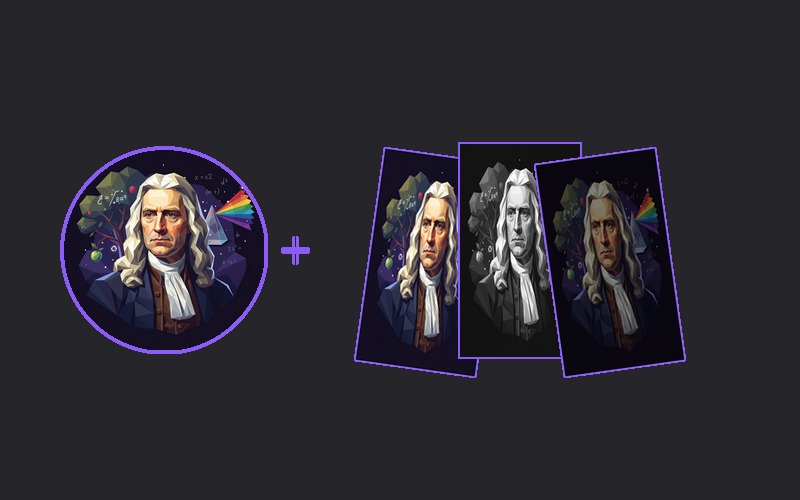 BEST VALUE
 Complete Bundle
$44Everything: the 24-chapter Deep Dive report + 6 exclusive wallpapers. Best value.
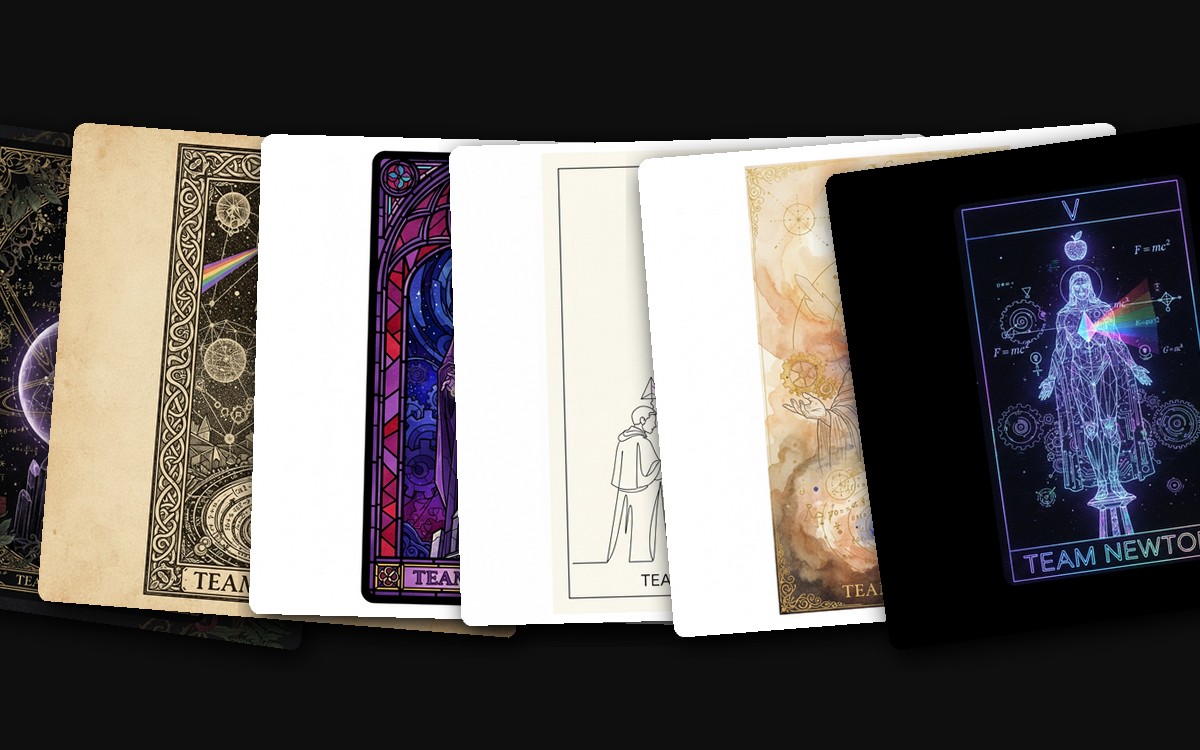 EXCLUSIVE
 Tarot Card Collection
$496 premium print-quality tarot cards in 6 stunning styles: Dark Botanical, Vintage Woodcut, Minimalist Line, Neon Mystic, Stained Glass, Watercolor Dream. Collector edition.
Pay what you want, starting at $1. Every contribution keeps this quiz free, ad-free, and accessible to everyone. Schools and NGOs get everything at no cost. This is self-knowledge for the people, not profit.