Strengths & Weaknesses
Team Nietzsche - The Optimizers
What Makes You Unique
You are destruction as an act of creation, burning down comfortable fictions to make space for something truer, something harder, something most people aren't brave enough to face. Your Epicurean core means you feel everything at maximum intensity. Your Rationalist wiring means you think from first principles, not precedent. Your Promethean drive means you're never satisfied with the current order. And your Solitary nature means you do all of this alone, because nobody else can keep up.
The tension in your combination is between your passionate nature (Epicurean) and your logical rigor (Rationalist). You feel the injustice AND you can prove why it's wrong. This combination produces ideas that are both intellectually devastating and emotionally compelling, but also ideas that can burn bridges faster than you can build them. Your solitude isn't chosen; it's the natural consequence of seeing the world more clearly than the people around you.
Your Strengths
Unflinching Honesty
You see the world as it actually is, not as people wish it were. This clarity is rare, uncomfortable, and absolutely essential.
Creative Destruction
You don't just critique the existing order: you build something better in its place. Your Promethean-Rationalist combination produces alternatives, not just complaints.
Intellectual Independence
You don't need anyone's permission to think. Your conclusions come from your own reasoning and your own experience, not from consensus or authority.
Passionate Conviction
Your Epicurean core ensures your ideas aren't cold abstractions: they're lived convictions. People follow your ideas because they can feel the truth in them.
Paradigm-Level Thinking
You don't think within systems: you think about systems. Your ability to question the framework itself, not just the details within it, produces genuinely revolutionary insight.
Artistic Vision
Your combination of passion, logic, and solitary depth produces work with an aesthetic quality that transcends mere argument. Your ideas aren't just correct: they're beautiful.
Honest Weaknesses
Destructive Excess
Your urge to tear down what's broken can extend to things that aren't broken, relationships, institutions, your own achievements. Not everything that's imperfect needs to be destroyed.
Isolating Intensity
Your combination of honesty, intensity, and solitude can push people away. The loneliness isn't the price of genius: it's the cost of refusing to modulate your truth for other people's comfort.
Nihilistic Risk
When your destructive drive outpaces your constructive one, you can spiral into 'nothing matters' territory. Creating must follow destruction, or the destruction becomes its own end.
Emotional Volatility
Your Epicurean intensity means your highs are stratospheric and your lows are abyssal. Without external grounding, the swings can become destabilizing.
Your Shadow Side
The patterns you fall into when you're not at your best. Uncomfortable, but knowing them is the first step.
Ego Traps
You confuse intensity with depth. Your ego tells you that feeling things strongly makes you more alive than people who feel things quietly. But volume isn't depth, sometimes the quietest conviction is the most profound.
You believe that being logical makes you objective. Your ego tells you that your conclusions are bias-free because they're built from premises, not feelings. But your choice of premises IS the bias: you just can't see it because it looks like logic.
You believe that creating something new makes you more valuable than maintaining something old. Your ego ranks inventors above operators, pioneers above farmers. But the world runs on maintenance, not just breakthroughs.
You believe that needing people is weakness. Your ego tells you that self-sufficiency is the highest virtue, and anyone who needs social connection is less evolved than you. But humans are social animals, your isolation isn't enlightenment, it's avoidance with a philosophical justification.
Toxic Patterns
You abandon things (and people) when the excitement fades. You chase the spark, and when it dims, in a project, a friendship, a career, you start looking for the next one. You call it 'following your passion.' Others call it 'unreliable.'
You argue to win, not to understand. Your intellectual precision becomes a weapon: you dismantle people's positions with surgical efficiency, then wonder why they stop talking to you. Being right and being kind are different skills.
You leave a trail of abandoned projects and people. Each new thing feels like progress, but from the outside it looks like a pattern of broken promises. The people who relied on version 1.0 don't care about your excitement for version 2.0.
You ghost people without explanation. When a relationship becomes uncomfortable, you simply disappear. No conversation, no closure, no conflict. You call it 'protecting your energy.' They call it 'being ghosted by someone they thought cared about them.'
Self-Sabotage
You avoid the boring work that makes exciting work possible. You'll start the novel but not edit it. You'll launch the business but not do the accounting. The gap between your vision and your execution is filled with things you found too tedious to finish.
You over-think everything until action becomes impossible. Your mind can build a perfect model of every scenario, including all the reasons not to act. Analysis becomes the activity, and the actual thing never gets done.
You destroy things that are working because they bore you. A perfectly good career, relationship, or routine gets blown up not because it failed, but because it stopped being novel. You mistake boredom for a sign that something is wrong.
You cut yourself off from the feedback that would make your work better. Working alone feels safe, but it also means no one challenges your assumptions, spots your blind spots, or tells you when you're wrong. Your echo chamber has an audience of one.
How You Think
You decide by asking 'what feels right?', not impulsively, but through authentic emotional intelligence. You trust your gut because your gut has been educated by experience.
You decide by asking 'what follows logically?': you reason from principles, not precedent. If the logic is sound, you'll go against popular opinion without hesitation.
You decide by asking 'what's the biggest opportunity?': you optimize for upside and novelty. Safe choices bore you; you'd rather take a calculated risk on something new.
You decide alone. You gather input selectively, then retreat to process it without pressure. Your best decisions come from quiet reflection, not group discussion.
How You Decide
A respected institution offers you a position on the condition that you moderate your public positions. You'd decline instantly and write an essay about why the offer itself proves your point. Compromise isn't in your vocabulary when principle is at stake.
Your latest work receives harsh public criticism. Your Epicurean side is wounded; your Rationalist side immediately analyzes whether the criticism has merit. If it does, you'd revise your position, publicly, dramatically, with the same intensity you brought to the original claim.
A close friend adopts a worldview you consider delusional. You can't pretend to agree. You'd tell them exactly what you think, accept the damage, and hope the relationship survives honesty.
Keep exploring
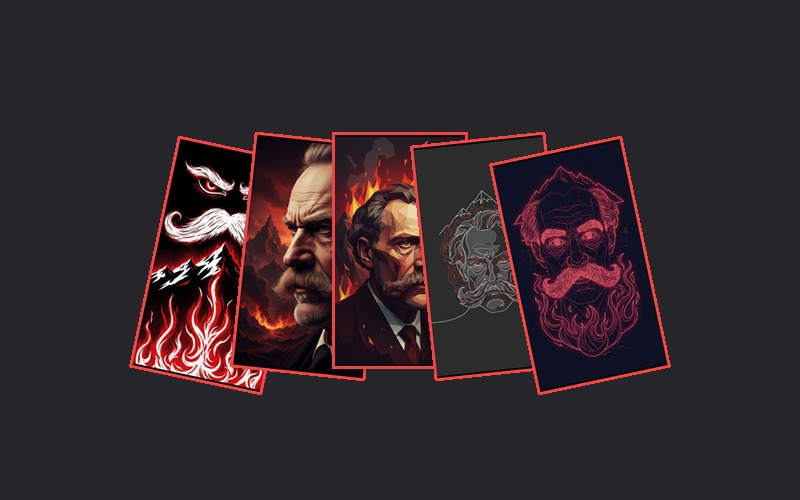 NEW
NEW Wallpaper Pack
$266 exclusive phone wallpapers, low-poly, neon blueprint, vintage engraving, minimalist, abstract, and cinematic.
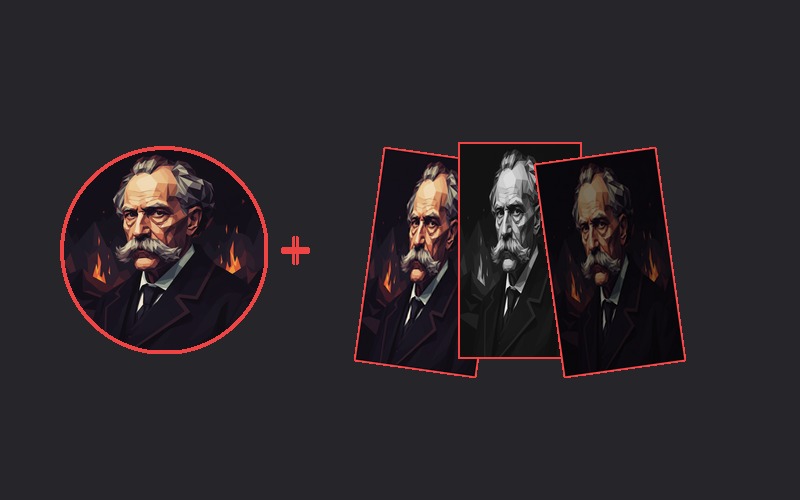 BEST VALUE
 Complete Bundle
$44Everything: the 24-chapter Deep Dive report + 6 exclusive wallpapers. Best value.
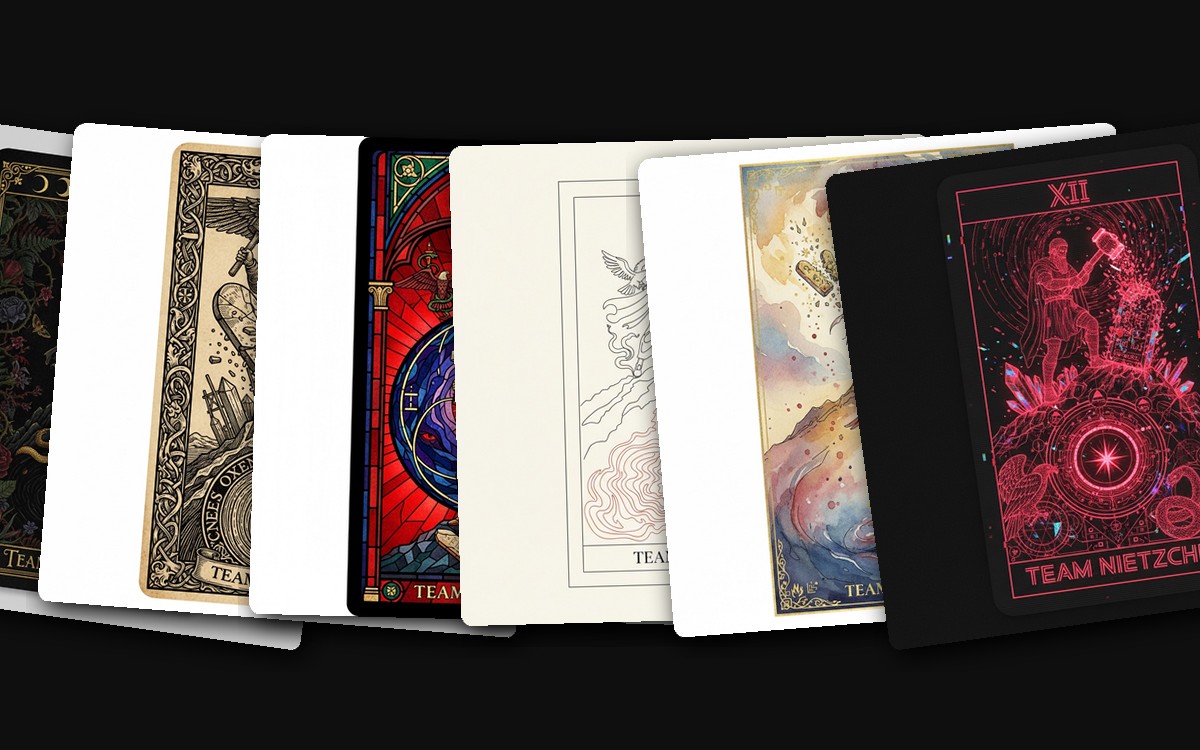 EXCLUSIVE
 Tarot Card Collection
$496 premium print-quality tarot cards in 6 stunning styles: Dark Botanical, Vintage Woodcut, Minimalist Line, Neon Mystic, Stained Glass, Watercolor Dream. Collector edition.
Pay what you want, starting at $1. Every contribution keeps this quiz free, ad-free, and accessible to everyone. Schools and NGOs get everything at no cost. This is self-knowledge for the people, not profit.