
Team Oscar Wilde
The Bon Vivants
EXDA
"To live is the rarest thing in the world. Most people exist, that is all."
Team Oscar Wilde (EXDA) is The Bon Vivants, a epicurean, empiricist, sisyphean, agora personality type. Core traits: Warm, Sociable, Witty, Generous, Refined. Famous members include Carl Sagan, Anthony Bourdain, Julia Child. Discover your type at mypeeps.ai with our free 12-question personality quiz backed by peer-reviewed research.
This Is You
You believe that the best ideas emerge from good company, good food, and honest conversation. Your empiricism isn't cold: it's warm, grounded in lived experience, tested against real human beings, refined through genuine connection.
You don't create revolutions. You improve what already exists, patiently, generously, by actually being present and paying attention to what works. Beauty isn't frivolous to you: it's evidence. You learn more from a perfect dinner party than most people learn from a textbook.
Your gift is making the complex feel approachable. You take difficult ideas and present them at the dinner table, wrapped in wit so sharp people laugh before they realize they've been changed. You don't dumb things down: you charm them up. Knowledge in your hands becomes hospitality.
Your Traits
You're In Good Company






What Makes You Unique
You are warmth refined, passionate about life, grounded in observation, devoted to improving what exists, and deeply connected to the people around you. Where others chase the new, you make the existing beautiful. Where others work alone, you create in conversation. Your superpower is making the complex feel effortless and the mundane feel magical.
The tension in your combination is between your Sisyphean perfectionism and your Agora sociability. You want everything to be exquisite, but you also want to share everything immediately. The result: you're simultaneously the most refined and the most accessible person in the room. When this resolves well, you become the host who elevates every gathering, the communicator who makes expertise feel like friendship. When it resolves poorly, you become the charmer who polishes everything and finishes nothing.
Your Strengths
Accessible Excellence
You make high-quality things feel approachable. Your combination of refinement and warmth is rare, most people are one or the other.
Sensory Intelligence
Your Epicurean-Empiricist combination gives you extraordinary taste, not just in food or art, but in experiences, environments, and the quality of human interactions.
Social Generosity
You elevate every room you enter. Your warmth makes people feel welcome, and your refinement makes them feel elevated. This is genuine hospitality.
Patient Quality
Your Sisyphean depth means your work improves over time. You're not chasing trends: you're building a body of work that gets better with each iteration.
Emotional Attunement
Your Agora sensitivity to group dynamics combined with your Epicurean empathy makes you exceptionally good at reading rooms and responding to what people need.
Communicative Precision
You explain complex things with clarity and charm. Your communication isn't just accurate: it's enjoyable. People learn from you without realizing they're being taught.
Honest Weaknesses
Perfectionist Hospitality
Your desire to make everything perfect for others can become exhausting, for you and for them. Not every dinner needs to be a production. Sometimes pizza on the couch is exactly right.
Approval Dependency
Your Agora nature combined with your Epicurean warmth can make you overly responsive to others' opinions. You can shape-shift to please rather than holding your own refined position.
Surface Depth
Your charm can substitute for substance. You're so good at making things feel polished that people don't always notice when there's not much underneath. Be as deep as you are smooth.
Avoidance of Ugliness
Your aesthetic sensitivity can make you avoid necessary confrontations that are 'unpleasant.' Some problems can only be solved through awkward, graceless conversations.
How You Decide
A colleague presents work that's functional but aesthetically rough. You'd improve it, not by criticizing, but by offering to 'polish it together.' Your feedback never lands as criticism because it's wrapped in genuine warmth and collaborative spirit.
Choosing between a prestigious but soulless role and a lower-status role that involves creating beautiful experiences for people, you'd take the latter without hesitation. Your status comes from the quality of what you create, not from your title.
A friend makes a life choice you consider unrefined. You'd say nothing unless asked, and if asked, you'd frame your perspective as 'here's what I'd consider' rather than 'here's what you should do.' Your wit is sharp, but your empathy is sharper.
Compatibility

Same Epicurean-Empiricist-Agora warmth, but they create (Promethean) where you refine (Sisyphean). You're the quality control for their rapid innovations.

Same Epicurean-Empiricist-Sisyphean foundation, but they work in solitude where you work in public. You bring their private truths to a wider audience.

Same Epicurean-Sisyphean-Agora structure, but they reason (Rationalist) where you observe (Empiricist). Both of you love the public square; you just use different tools.

Same Empiricist-Sisyphean-Agora combination, but driven by duty (Stoic) where you're driven by passion (Epicurean). Together, you bring both gravitas and grace.
Relationships
You're the partner everyone envies, warm, present, thoughtful, and endlessly generous with your attention. Your Epicurean-Agora combination makes you genuinely delightful to be around. The growth edge: your Sisyphean instinct to improve everything can extend to your partner. Not every habit needs optimizing. Not every preference needs refining. Love the imperfect version: that's the real one.
You're the friend who remembers birthdays, plans adventures, and makes people feel special. You collect friends easily because your energy is magnetic. The downside: you can spread yourself thin, maintaining fifty friendships at surface level instead of ten at depth. The friendships that sustain you long-term are the ones where you can be tired and boring and still loved.
Full relationship guide →Career & Work Style
Your Career Profile
You belong in roles that combine taste with communication, brand direction, editorial leadership, hospitality, cultural curation, or science communication. Any field where the ability to make the excellent feel approachable is the differentiator. You're wasted in back-office roles nobody sees, and you're diminished in roles that prioritize speed over quality. The sweet spot: visible work that rewards both refinement and warmth.
Careers That Fit
Creative direction, brand strategy, or UX design, roles where emotional authenticity and taste drive outcomes, not just data.
Teaching, coaching, or mentorship, work where your contagious enthusiasm becomes someone else's breakthrough. Your energy is a force multiplier.
Entrepreneurship, content creation, or product innovation, environments where passion sustains you through the grind better than a paycheck ever could.
Data science, lab research, or investigative journalism, work where truth is found through observation, not assertion.
Product management, operations, or process improvement, roles where 'what actually happened' matters more than 'what should have happened.'
Trades, craftsmanship, or hands-on engineering, careers where competence is measured by outcomes, not credentials.
Precision manufacturing, watchmaking, or surgical specialization, work where mastery is measured in thousandths of an inch and years of practice.
Editing, quality assurance, or restoration, careers where finding the flaw others missed is the highest form of expertise.
Academic research, archival work, or classical music, domains where depth is more respected than breadth and patience is the differentiator.
Team leadership, community building, or facilitation, roles where connecting people and synthesizing perspectives is the work itself.
Consulting, diplomatic roles, or stakeholder management, careers where navigating between different groups and building consensus creates value.
Teaching, public speaking, or media, work where your ability to communicate complex ideas to diverse audiences is your competitive edge.
Careers to Avoid
Highly procedural roles in compliance, accounting, or bureaucratic institutions. The repetition will deaden the thing that makes you exceptional.
Toxic hustle culture that confuses burnout with dedication. You need to love the work, 'just push through' isn't in your operating system.
Pure strategy consulting or think-tank roles where ideas never get tested against reality. You'll feel like you're playing pretend.
Visionary leadership positions that demand you sell a future nobody can prove yet. You struggle to champion ideas before the evidence exists.
Growth-hacking, rapid prototyping, or 'move fast and break things' culture. Your instinct to perfect will be treated as a liability.
Generalist management roles where you're spread thin across ten domains instead of going deep in one. Breadth without depth feels like incompetence to you.
Isolated technical roles with minimal human interaction. You can do the work, but you'll feel disconnected from its purpose without people to share it with.
Highly competitive, zero-sum environments where collaboration is punished. Your instinct to share and build together will be exploited.
Your Work Style
You need meaning in your work, not just a mission statement, actual, daily meaning. You perform best when you believe in what you're building and the people you're building it with. Flexibility matters more to you than hierarchy. You'll take a pay cut to work on something that matters. The danger is chasing novelty when the current work gets hard, build checkpoints that force you to finish before you pivot.
You as a Colleague
You're the colleague who raises morale and makes the team actually want to show up. Your enthusiasm is contagious and your emotional intelligence catches problems before they become crises. The trap: you may avoid necessary conflict because it threatens the positive atmosphere you've built. Sometimes the most caring thing is the hard conversation.
Under Stress
Under pressure, you seek escape through stimulation. New projects, new environments, new conversations, anything to replace the heavy feeling with something lighter. This isn't laziness; it's your nervous system's way of self-regulating. The problem is that the thing causing the stress is still there when you come back, and now it's bigger because you've been away.
Your stress recovery superpower is that you're actually good at asking for help, better than most types. Use it. The Epicurean who reaches out to their support system during a crisis recovers faster than the one who tries to distract their way through it. Your emotional honesty is an asset, not a vulnerability. The people who love you want to help, let them.
Under pressure, you default to data collection. When you don't know what to do, you gather more information, another analysis, another spreadsheet, another round of research. This feels productive, but past a certain point, you're not learning; you're stalling. The discomfort of acting on incomplete information is your biggest stress trigger, and the only cure is practice.
Your stress signal is overwork disguised as thoroughness. When you're staying late to 'double-check the numbers' for the third time, you're not being diligent: you're anxious. The fix: set decision deadlines before you start the research. 'I will decide by Friday with whatever I have.' Then actually do it. Your track record of good decisions on imperfect data is better than you think.
Under pressure, you tighten your grip. The standard goes up, the tolerance for imperfection goes down, and the pace slows to a crawl. You convince yourself that the problem is quality, 'if I just make this a little better, everything will be fine', when the real problem is that you're afraid of shipping something imperfect into a world that already feels too chaotic.
Your stress signal is control disguised as craft. When you start re-editing emails, reorganizing files that were already organized, or revising work that was already approved: you're not being thorough, you're managing anxiety through the illusion of control. The fix: name the fear. 'I'm afraid this isn't good enough' is honest. Once you say it, you can evaluate it. Usually, it's good enough. Ship it.
Under pressure, you talk more. You process by externalizing, calling friends, scheduling meetings, thinking out loud with anyone who'll listen. This feels productive because you're engaged, you're connecting, you're 'working on it.' But past a certain point, you're not processing; you're ruminating through other people's ears. The conversation becomes a loop, not a path.
Your stress signal is over-socializing. When you're scheduling your fourth coffee of the day to 'talk through' the same problem, you've crossed from processing into avoidance. The fix: one conversation, then one decision. Talk it through with one trusted person, write down the conclusion, and act on it. Your social instincts become your superpower again once they're directed toward action instead of repetition.
Under pressure, your social side overextends (more dinners, more conversations, more connection) while your perfectionist side tightens (higher standards, more criticism of imperfection). The combination creates exhaustion: you're socializing harder AND judging harder simultaneously. Your stress antidote: one quiet evening alone, doing something badly on purpose. Let the standards drop. Let the noise stop.
How You Communicate Under Pressure
You communicate with your whole self, words, tone, facial expressions, energy. People don't just hear what you're saying; they feel it. This makes you compelling, persuasive, and easy to connect with. You build rapport faster than almost any other type because your emotional transparency signals safety. People trust you quickly because they can see what you're feeling.
In conflicts, you lead with emotion, which is both your gift and your risk. Your honesty cuts through pretense, but it can also escalate situations that needed a cooler approach. The Epicurean who learns to express emotion without being driven by it becomes an extraordinary communicator. Feel everything; say what matters; filter through purpose, not impulse.
You communicate through evidence. 'Here's what happened,' 'Here's what I observed,' 'Let me show you the data.' Your communication style builds credibility through specificity: you don't make vague claims, you bring receipts. People who value precision love working with you. People who value feeling heard can find you frustrating.
In conflicts, you instinctively reach for facts, which works brilliantly when the conflict is about what happened, and terribly when the conflict is about how someone felt. Learning to say 'I understand why that upset you' before 'but here's what the data shows' will transform your most difficult conversations. Lead with acknowledgment, then bring the evidence.
You communicate through depth. Your explanations are thorough, nuanced, and complete. You cover edge cases, acknowledge exceptions, and give people everything they need to understand the full picture. People who value precision respect you enormously. People who need the headline first may lose patience waiting for it.
In conflicts, you can over-explain, presenting such a comprehensive case that the other person feels overwhelmed rather than persuaded. Your instinct to be thorough can become a weapon when deployed in a disagreement. Learning to lead with your conclusion and then support it, instead of building to it, will make your thoroughness an asset in every conversation, not just the technical ones.
You communicate through connection. Your natural mode is dialogue: you share ideas in progress, invite reactions, and refine in real-time. This makes you collaborative and easy to work with, but it can also make you hard to pin down. Your first statement on any topic is rarely your final one, because you're still thinking. People who understand this love brainstorming with you. People who don't can find you inconsistent.
In conflicts, your instinct is to talk it through, which is healthy until it becomes over-processing. You can hold the same conversation multiple times with different people, seeking the validation that one person couldn't give you. The Agora who learns to resolve conflicts in fewer, deeper conversations instead of many shallow ones becomes exceptional at both harmony and truth.
7-Day Growth Challenge
Small daily actions to build resilience and break your stress patterns.
Monday: Do something ugly on purpose. Eat fast food, wear mismatched clothes, send an unedited email. Practice imperfection.
Tuesday: Have a conversation about something uncomfortable. No charm, no deflection, just honesty.
Wednesday: Spend time alone with no social agenda. Be with yourself, not for others.
Thursday: Let someone else set the standard for an experience. Accept it as-is without improving it.
Friday: Say what you actually think instead of what will be best received. Trust your audience to handle it.
Saturday: Host something simple. No perfectionism, just people, food, and presence.
Sunday: Write down one thing that's 'good enough' in your life exactly as it is. Appreciate it without upgrading it.
Growth Path
Address: Perfectionist Hospitality
Sometimes pizza on the couch is exactly right.
Address: Approval Dependency
You can shape-shift to please rather than holding your own refined position.
Address: Surface Depth
Be as deep as you are smooth.
Address: Avoidance of Ugliness
Your aesthetic sensitivity can make you avoid necessary confrontations that are 'unpleasant.' Some problems can only be solved through awkward, graceless conversations.
Daily Life
You communicate with your whole self, words, tone, facial expressions, energy. People don't just hear what you're saying; they feel it. This makes you compelling, persuasive, and easy to connect with. You build rapport faster than almost any other type because your emotional transparency signals safety. People trust you quickly because they can see what you're feeling.
Communication, hobbies, pets & more →Your Rival

You test through experience. They reason from axioms. You refine what exists. They create new systems. You thrive in company. They work in solitude.
 NEW
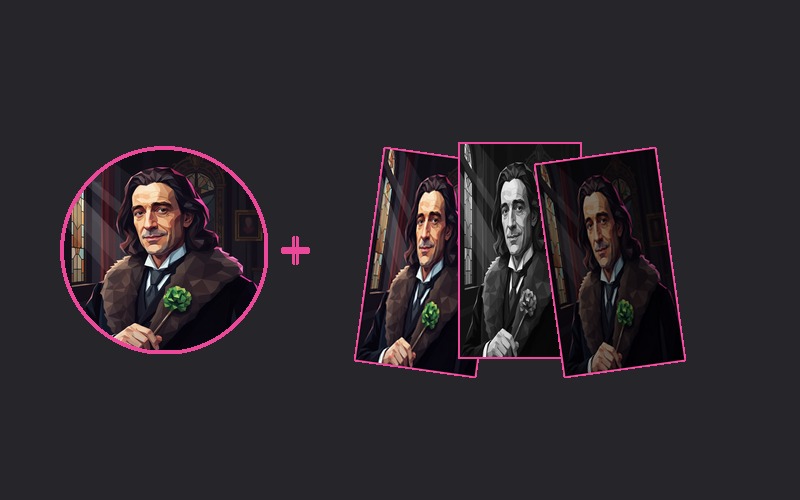
NEW Wallpaper Pack
$266 exclusive phone wallpapers, low-poly, neon blueprint, vintage engraving, minimalist, abstract, and cinematic.
 BEST VALUE
 Complete Bundle
$44Everything: the 24-chapter Deep Dive report + 6 exclusive wallpapers. Best value.
 EXCLUSIVE
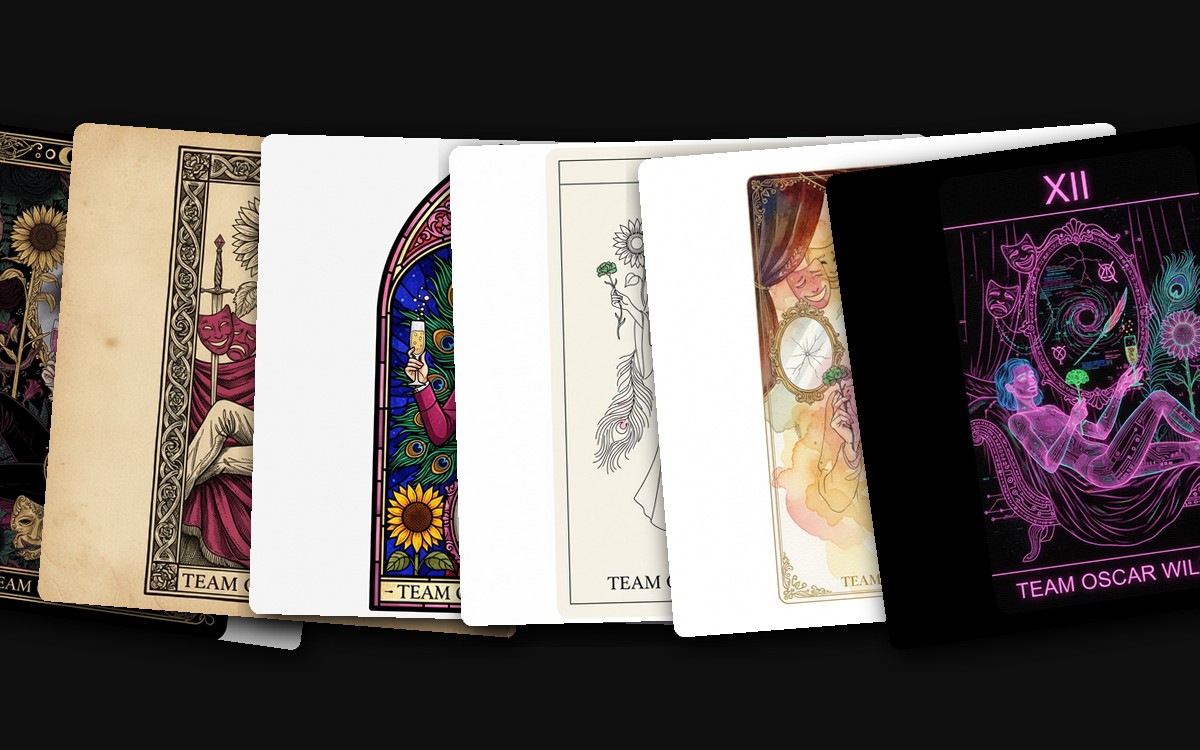
 Tarot Card Collection
$496 premium print-quality tarot cards in 6 stunning styles: Dark Botanical, Vintage Woodcut, Minimalist Line, Neon Mystic, Stained Glass, Watercolor Dream. Collector edition.
Pay what you want, starting at $1. Every contribution keeps this quiz free, ad-free, and accessible to everyone. Schools and NGOs get everything at no cost. This is self-knowledge for the people, not profit.
Frequently Asked Questions
What personality type is Team Oscar Wilde?
Team Oscar Wilde is the The Bon Vivants type (EXDA): Epicurean · Empiricist · Sisyphean · Agora. You believe that the best ideas emerge from good company, good food, and honest conversation. Your empiricism isn't cold: it's warm, grounded in lived experience, tested against real human beings, refined through genuine connection.
Who are famous Team Oscar Wilde members?
Famous Team Oscar Wilde members include Carl Sagan (Warm, grounded in evidence, refined and communicated science with infectious enthusiasm); Anthony Bourdain (Warm empiricist who refined food writing through lived experience, deeply sociable); Julia Child (Joyful, learned by doing, refined French cooking technique for an American audience); David Attenborough (Warm, observation-based, spent a lifetime refining nature documentary tradition); Dolly Parton (Grounded in lived experience, warm and generous, refines tradition publicly); Stephen Fry (Warm public intellectual who refines thought through conversation, charm, and lived experience).
What is Team Oscar Wilde's rival?
Team Oscar Wilde's rival is Team Newton (The Architects). You test through experience. They reason from axioms. You refine what exists. They create new systems. You thrive in company. They work in solitude.
How does the personality quiz work?
The quiz has 12 questions mapping 4 binary axes with 3 forced-choice questions each. Binary forced-choice nearly eliminates faking (d=0.06, Cao & Drasgow 2019). Two items per scale is the validated minimum for criterion validity (Crede et al. 2012); we use three per axis because an odd number cannot tie, so no axis needs a tie-break rule that would favour one pole. See our full methodology. Results are free, instant, and no email is required.
Go Deeper Into Team Oscar Wilde
Get to know Team Oscar Wilde strengths and superpowers, find out who Team Oscar Wilde is most compatible with, and read the full guide to Team Oscar Wilde relationships and love.
At work, explore the best careers for Team Oscar Wilde and learn how Team Oscar Wilde handles stress. For the everyday, see Team Oscar Wilde in daily life and meet the famous Team Oscar Wilde members.

Get your full Team Oscar Wilde report, free
Your Team Oscar Wilde deep dive: 24 chapters on strengths, blind spots, compatibility, career, money, and stress. One email and it is yours.
One email. One confirmation click and the PDF is yours. No spam, leave anytime.