
Strengths & Weaknesses
Team Schopenhauer - The Scouts
What Makes You Unique
You are the solitary aesthete, passionate about beauty, rigorous about logic, obsessive about refinement, and utterly alone in your pursuit. Your Epicurean core means you're driven by genuine feeling, not obligation. Your Rationalist wiring means your aesthetic judgments have the precision of mathematical proofs. Your Sisyphean drive means you refine your vision endlessly, each iteration closer to the truth you can sense but never fully capture. And your Solitary nature means this refinement happens in a private world nobody else can enter.
The tension in your combination is between your passionate engagement with beauty (Epicurean) and your intellectual detachment from the world (Rationalist-Solitary). You feel deeply but analyze mercilessly. You love art but can explain exactly why most of it fails. This combination produces work of extraordinary depth, but also a melancholy that comes from seeing the gap between what is and what could be, and knowing you'll spend your life trying to close it.
Your Strengths
Aesthetic Precision
Your sense of beauty isn't vague: it's exact. You can articulate why something works or doesn't with the precision of a surgeon. This makes your aesthetic judgments uniquely valuable.
Singular Vision
Your work has a consistency and depth that comes from decades of refining one perspective. Where others scatter, you focus. Where others follow trends, you deepen your own path.
Emotional-Intellectual Synthesis
You feel and think simultaneously. Your Epicurean passion feeds your Rationalist analysis, producing insights that are both emotionally resonant and logically rigorous.
Self-Contained Creativity
You need nothing from the outside world to produce your best work. Your inner life is rich enough to fuel decades of creative output.
Honest Perception
You see the world without the comfortable filters most people apply. This honesty produces work that is sometimes painful and always true.
Patient Mastery
Your Sisyphean dedication to craft means your skills compound over decades. You're the artist who's better at sixty than at thirty because you never stopped refining.
Honest Weaknesses
Melancholic Spiral
Your clear-eyed perception of the gap between reality and ideal can become self-reinforcing sadness. The beauty you pursue is always just out of reach, and that awareness can become crippling.
Total Isolation
Your Solitary-Rationalist combination can cut you off from the human contact that nourishes creativity. The work improves, but the person withers.
Contempt for Mediocrity
Your high standards can shade into contempt for people who don't share them. Not everyone sees what you see, and that doesn't make them wrong.
Perfectionist Stagnation
Your refusal to share imperfect work means the world may never see your best thinking. The gap between your private mastery and your public output can be tragic.
Your Shadow Side
The patterns you fall into when you're not at your best. Uncomfortable, but knowing them is the first step.
Ego Traps
You confuse intensity with depth. Your ego tells you that feeling things strongly makes you more alive than people who feel things quietly. But volume isn't depth, sometimes the quietest conviction is the most profound.
You believe that being logical makes you objective. Your ego tells you that your conclusions are bias-free because they're built from premises, not feelings. But your choice of premises IS the bias: you just can't see it because it looks like logic.
You believe that your high standards make you virtuous. Your ego tells you that caring more about quality than anyone else makes you better than them. It doesn't: it makes you slower, and sometimes the difference between your 'perfect' and their 'good enough' is invisible to everyone except you.
You believe that needing people is weakness. Your ego tells you that self-sufficiency is the highest virtue, and anyone who needs social connection is less evolved than you. But humans are social animals, your isolation isn't enlightenment, it's avoidance with a philosophical justification.
Toxic Patterns
You abandon things (and people) when the excitement fades. You chase the spark, and when it dims, in a project, a friendship, a career, you start looking for the next one. You call it 'following your passion.' Others call it 'unreliable.'
You argue to win, not to understand. Your intellectual precision becomes a weapon: you dismantle people's positions with surgical efficiency, then wonder why they stop talking to you. Being right and being kind are different skills.
You use perfectionism to control situations and people. Your standards become rules that others must follow, and 'not good enough' becomes your way of maintaining power. You call it quality control. Others call it micromanagement.
You ghost people without explanation. When a relationship becomes uncomfortable, you simply disappear. No conversation, no closure, no conflict. You call it 'protecting your energy.' They call it 'being ghosted by someone they thought cared about them.'
Self-Sabotage
You avoid the boring work that makes exciting work possible. You'll start the novel but not edit it. You'll launch the business but not do the accounting. The gap between your vision and your execution is filled with things you found too tedious to finish.
You over-think everything until action becomes impossible. Your mind can build a perfect model of every scenario, including all the reasons not to act. Analysis becomes the activity, and the actual thing never gets done.
You never ship. You never finish. You never let go. Your work sits in a perpetual state of 'almost ready' because releasing it means accepting that it's imperfect, and imperfection feels like death to you.
You cut yourself off from the feedback that would make your work better. Working alone feels safe, but it also means no one challenges your assumptions, spots your blind spots, or tells you when you're wrong. Your echo chamber has an audience of one.
How You Think
You decide by asking 'what feels right?', not impulsively, but through authentic emotional intelligence. You trust your gut because your gut has been educated by experience.
You decide by asking 'what follows logically?': you reason from principles, not precedent. If the logic is sound, you'll go against popular opinion without hesitation.
You decide by asking 'what will stand the test of time?': you choose depth over breadth and quality over speed. You're willing to wait for the right answer.
You decide alone. You gather input selectively, then retreat to process it without pressure. Your best decisions come from quiet reflection, not group discussion.
How You Decide
Offered a lucrative commercial project that contradicts your aesthetic vision, you'd decline without hesitation. Your vision isn't for sale, and you'd rather be poor and authentic than rich and compromised.
A critic dismisses your work as pretentious. Your Epicurean side is hurt; your Rationalist side immediately evaluates whether the criticism has merit. If it doesn't, you dismiss it with a devastating rebuttal. If it does, you withdraw to revise, but you'll never admit they were right.
Discovering a peer whose work you deeply admire, you'd feel a complex mix of inspiration and envy. You'd study their work obsessively, not to copy but to understand what they achieved that you haven't, yet.
Keep exploring
 NEW
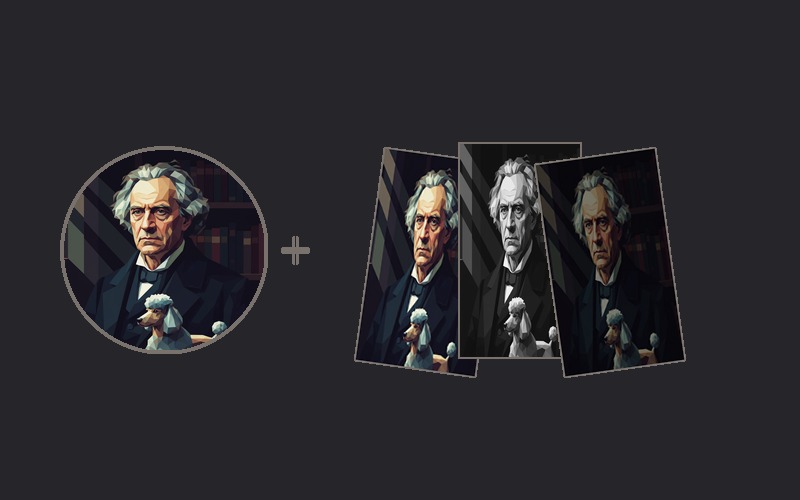
NEW Wallpaper Pack
$266 exclusive phone wallpapers, low-poly, neon blueprint, vintage engraving, minimalist, abstract, and cinematic.
 BEST VALUE
 Complete Bundle
$44Everything: the 24-chapter Deep Dive report + 6 exclusive wallpapers. Best value.
 EXCLUSIVE
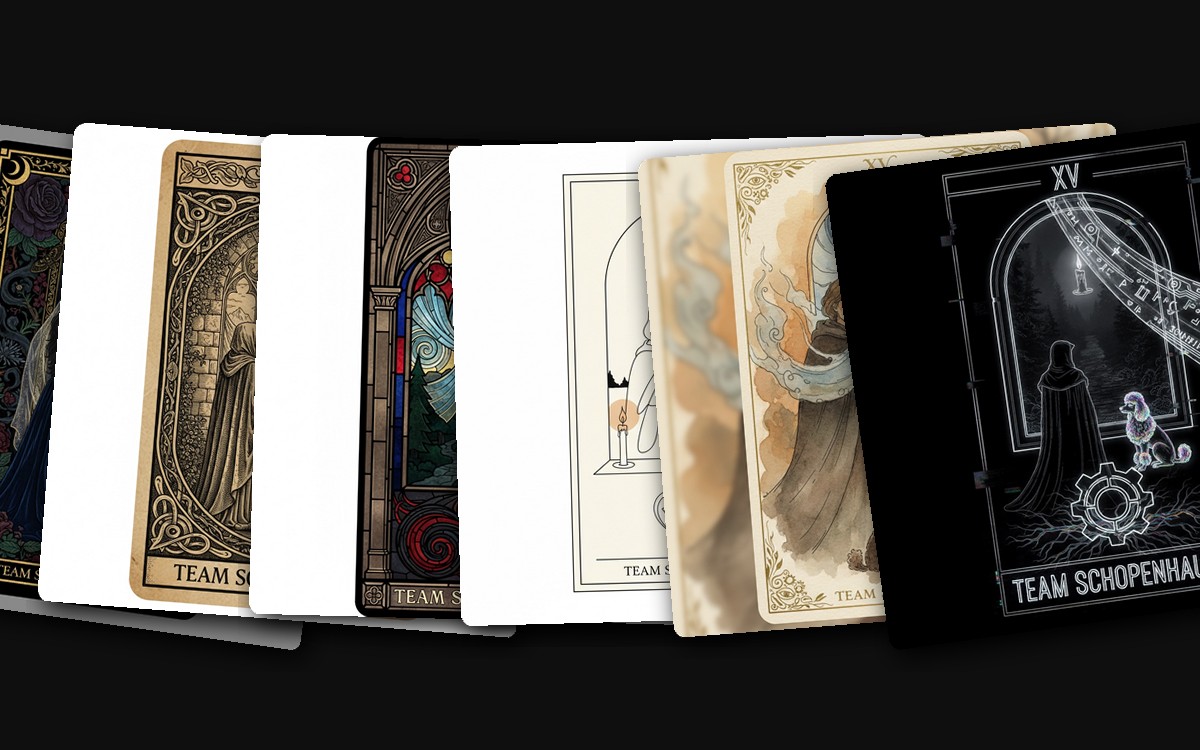
 Tarot Card Collection
$496 premium print-quality tarot cards in 6 stunning styles: Dark Botanical, Vintage Woodcut, Minimalist Line, Neon Mystic, Stained Glass, Watercolor Dream. Collector edition.
Pay what you want, starting at $1. Every contribution keeps this quiz free, ad-free, and accessible to everyone. Schools and NGOs get everything at no cost. This is self-knowledge for the people, not profit.