
Strengths & Weaknesses
Team Voltaire - The Analysts
What Makes You Unique
You are the fighter, passionate, principled, creative, and unapologetically public. Your Epicurean core means you fight for what you love, not from cold obligation. Your Rationalist wiring gives your arguments the structural integrity to survive opposition. Your Promethean drive means you don't just criticize the old order: you build its replacement. And your Agora nature means you do all of this on stage, in public, where it matters.
The tension in your combination is between the passion of your convictions (Epicurean) and the logic of your arguments (Rationalist). When these align, you're unstoppable, emotionally compelling AND logically airtight. When they misalign, you can use brilliant reasoning to justify positions that are actually emotional reactions. The challenge: knowing when your argument is serving truth and when it's serving your ego.
Your Strengths
Rhetorical Power
You combine logical rigor with emotional passion in a way that makes your arguments nearly impossible to resist. You don't just win debates: you change how people think.
Moral Courage
You say what needs to be said, to whoever needs to hear it, regardless of consequences. Your willingness to challenge authority is genuine, not performative.
Revolutionary Vision
You don't just critique the existing order: you articulate what should replace it. Your Promethean-Rationalist combination produces alternatives, not just complaints.
Public Energy
Your Epicurean-Agora combination makes you magnetic in public settings. You draw crowds, inspire movements, and create the kind of collective energy that changes history.
Intellectual Versatility
Your wit works across formats, essays, speeches, satire, debate. You can adapt your message to any medium without losing its force.
Principled Persistence
You don't abandon your positions under pressure. Exile, censorship, imprisonment, your convictions survive everything that's thrown at them.
Honest Weaknesses
Combative Default
Your first instinct in any disagreement is to fight. This serves you well against genuine injustice and terribly against your partner asking you to unload the dishwasher.
Ego-Logic Confusion
Your brilliant reasoning can be deployed in service of positions that are really about your ego. You're so good at arguing that you can convince yourself (and others) that any position is principled.
Burning Bridges
Your public confrontations create enemies. Not all of them are necessary. Some of the people you've alienated could have been allies if you'd chosen a private conversation over a public takedown.
Restless Discontent
Your Epicurean-Promethean combination means you're never satisfied with the current state of affairs. This drives progress but prevents contentment. Sometimes things are actually fine.
Your Shadow Side
The patterns you fall into when you're not at your best. Uncomfortable, but knowing them is the first step.
Ego Traps
You confuse intensity with depth. Your ego tells you that feeling things strongly makes you more alive than people who feel things quietly. But volume isn't depth, sometimes the quietest conviction is the most profound.
You believe that being logical makes you objective. Your ego tells you that your conclusions are bias-free because they're built from premises, not feelings. But your choice of premises IS the bias: you just can't see it because it looks like logic.
You believe that creating something new makes you more valuable than maintaining something old. Your ego ranks inventors above operators, pioneers above farmers. But the world runs on maintenance, not just breakthroughs.
You believe that being liked means being good. Your ego is fed by social approval, and your instinct to please can override your commitment to truth. You'll soften a harsh but necessary message because delivering it would cost you popularity.
Toxic Patterns
You abandon things (and people) when the excitement fades. You chase the spark, and when it dims, in a project, a friendship, a career, you start looking for the next one. You call it 'following your passion.' Others call it 'unreliable.'
You argue to win, not to understand. Your intellectual precision becomes a weapon: you dismantle people's positions with surgical efficiency, then wonder why they stop talking to you. Being right and being kind are different skills.
You leave a trail of abandoned projects and people. Each new thing feels like progress, but from the outside it looks like a pattern of broken promises. The people who relied on version 1.0 don't care about your excitement for version 2.0.
You create dependency. Your warmth and availability make people rely on you, and you subtly encourage that reliance because it makes you feel needed. Your generosity has a shadow: it keeps people close by keeping them dependent.
Self-Sabotage
You avoid the boring work that makes exciting work possible. You'll start the novel but not edit it. You'll launch the business but not do the accounting. The gap between your vision and your execution is filled with things you found too tedious to finish.
You over-think everything until action becomes impossible. Your mind can build a perfect model of every scenario, including all the reasons not to act. Analysis becomes the activity, and the actual thing never gets done.
You destroy things that are working because they bore you. A perfectly good career, relationship, or routine gets blown up not because it failed, but because it stopped being novel. You mistake boredom for a sign that something is wrong.
You outsource your judgment. You poll so many people before every decision that your own voice gets drowned out. You know what everyone else thinks but have lost track of what you think. Consensus becomes a substitute for conviction.
How You Think
You decide by asking 'what feels right?', not impulsively, but through authentic emotional intelligence. You trust your gut because your gut has been educated by experience.
You decide by asking 'what follows logically?': you reason from principles, not precedent. If the logic is sound, you'll go against popular opinion without hesitation.
You decide by asking 'what's the biggest opportunity?': you optimize for upside and novelty. Safe choices bore you; you'd rather take a calculated risk on something new.
You decide through dialogue. You test your thinking against other people's perspectives, synthesize the best ideas, and emerge with a decision that's stronger than any individual input.
How You Decide
A powerful institution threatens consequences if you publish your critique. You'd publish anyway, and you'd make the threat part of the story. Censorship is evidence that you're saying something important.
An ally makes a strategic argument for compromise on a principle you hold dear. You'd listen, consider the strategy, and probably reject it. Your principles aren't negotiable, even when the math says they should be.
Offered a choice between a secure position and a risky public platform, you'd take the platform every time. Security without a voice isn't safety: it's silence.
Keep exploring
 NEW
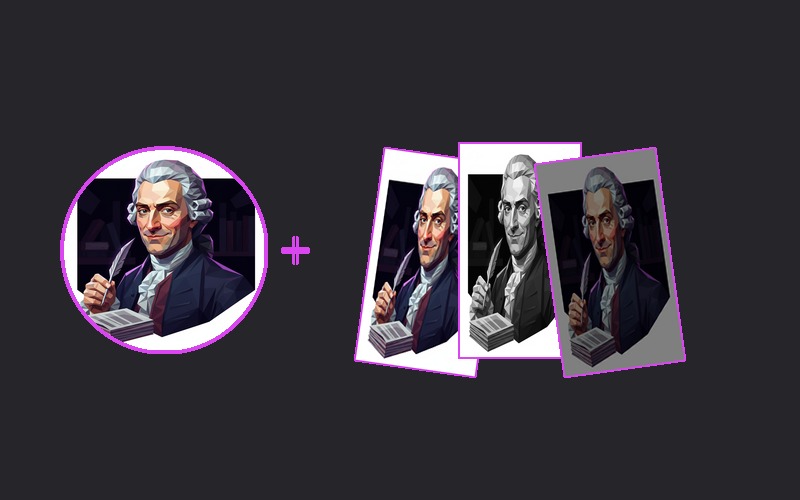
NEW Wallpaper Pack
$266 exclusive phone wallpapers, low-poly, neon blueprint, vintage engraving, minimalist, abstract, and cinematic.
 BEST VALUE
 Complete Bundle
$44Everything: the 24-chapter Deep Dive report + 6 exclusive wallpapers. Best value.
 EXCLUSIVE
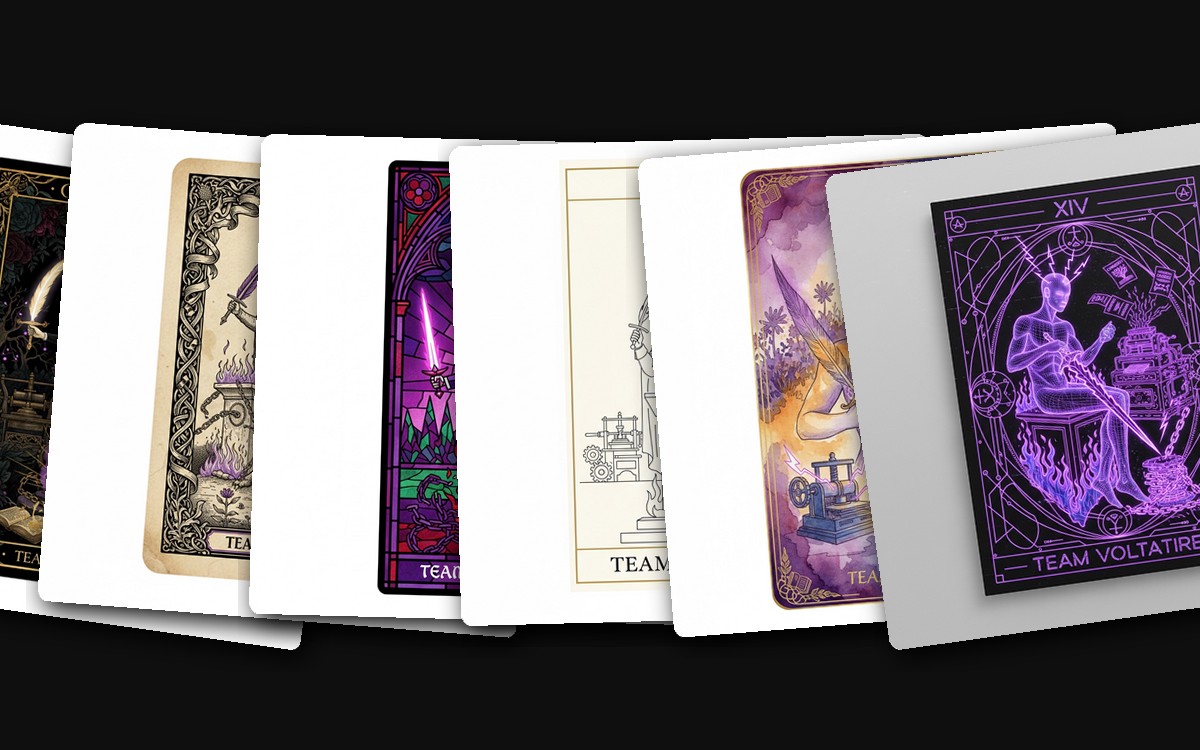
 Tarot Card Collection
$496 premium print-quality tarot cards in 6 stunning styles: Dark Botanical, Vintage Woodcut, Minimalist Line, Neon Mystic, Stained Glass, Watercolor Dream. Collector edition.
Pay what you want, starting at $1. Every contribution keeps this quiz free, ad-free, and accessible to everyone. Schools and NGOs get everything at no cost. This is self-knowledge for the people, not profit.