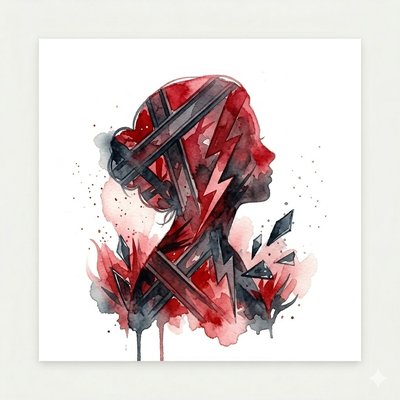
Under Stress
The Warrior - Fights for what matters
Your Stress Pattern
When you're stressed, your first instinct is to DO something, anything. Clean the house, start a project, help someone, fix a problem that isn't yours. This looks productive from the outside. From the inside, it's avoidance with good optics. The thing causing the stress doesn't get addressed because you're too busy being useful somewhere else.
Your stress signal is when you can't sit still. When every quiet moment feels intolerable, when you'd rather reorganize the garage than feel what you're feeling: that's your cue to stop. Not forever. Just long enough to ask: what am I running from?
When you're stressed, you want to leave. Not metaphorically, literally. New city, new job, new haircut, new life. The urge to shed your current reality is powerful, and sometimes it's the right call. But when escape becomes your default stress response, you carry the problem with you to every new destination.
Your stress signal is when you start fantasizing about a completely different life instead of addressing what's wrong with this one. When wanderlust becomes an escape hatch, the bravest thing you can do is stay and face the thing you're running from.
When you're stressed, your fire flares. You become more intense, more reactive, more emotionally charged. Small irritations become existential crises. Your reactions are bigger than the situation warrants, and you know it, which makes you angrier. The spiral accelerates.
Your stress signal is when you start fights about dishes when the real issue is that you feel unseen, or when you catastrophize minor setbacks into evidence that everything is falling apart. When your fire is burning out of control, you need something physical, exercise, cold water, deep breaths, to bring your nervous system back to baseline before you try to think.
When you're stressed, you grip your direction harder. You become more rigid, more certain, more unwilling to consider alternatives. This looks like strength, clear head, decisive action, but it's actually fear disguised as conviction. You're afraid that loosening your grip means losing your way.
Your stress signal is when other people's perspectives start feeling like attacks on your identity. When 'I disagree' triggers 'you don't understand me,' your compass has become a weapon. The healthiest response is to deliberately seek out a perspective that challenges your certainty. Not to adopt it, just to hold it alongside your own.
Your stress antidote is physical exertion followed by purpose-reconnection. When overwhelmed, run until you can think clearly, then ask: what battle actually matters right now?
Emotional Wellbeing
How your personality type experiences anxiety, burnout, and resilience.
Your Anxiety Signals
Your anxiety manifests as hyperactivity. You can't sit still, you make lists at 3am, you start solving problems that don't exist. Your body processes anxiety as urgency: everything needs to be done NOW.
Your anxiety manifests as restlessness. You scroll, you plan trips you won't take, you redecorate, you change your mind six times before lunch. The stillness required to process anxiety feels unbearable.
Your anxiety manifests as emotional volatility. Small triggers produce outsized reactions: you snap at people, cry at commercials, feel rage in traffic. Your nervous system is on high alert and every stimulus gets amplified.
Your anxiety manifests as moral urgency. Everything becomes a values question, what you eat, what you buy, how you spend your time. The compass spins faster and faster, trying to find the 'right' answer to every micro-decision.
Burnout Warning Signs
You stop being proactive and start being reactive. When the Torch burns out, you go from 'I'll handle it' to 'I don't care.' The shift is sudden and alarming, both to you and everyone around you.
You stop wanting to go anywhere. When the Wings clip, the person who was always moving suddenly can't get off the couch. This isn't laziness: it's your system crashing after running on exploration fumes for too long.
Your fire goes out. The person who felt everything at full volume suddenly feels nothing. This emotional numbness is terrifying because your entire identity is built on feeling deeply. When the fire dies, you don't know who you are.
You become cynical. When the Compass breaks, you stop believing your direction matters. The person who always knew what was right suddenly says 'what's the point?' This isn't apathy: it's grief for a sense of purpose that burned out.
Your Resilience Superpower
Your ability to act gives you a recovery tool most people lack: you can literally work your way back to feeling better. Physical action resets your nervous system. Use it intentionally, not reflexively.
Your adaptability means you bounce back faster than most. You're naturally wired to find new paths when old ones close. The key is making sure your recovery isn't just another form of running, sometimes you need to heal in place.
Your intensity is also your recovery engine. When you channel your fire into healing, through art, movement, connection, or purpose, your recovery is faster and more complete than most. Fire doesn't just destroy. It forges.
Your values give you a recovery framework. When you reconnect with WHY you care, the path forward becomes clear again. You don't need new purpose: you need to reconnect with the purpose you already have.
Health & Energy
Exercise Style
You need exercise that feels like doing something, hiking, martial arts, CrossFit, team sports. Pure cardio on a treadmill feels pointless to you. Your body needs a mission, not just movement.
You need exercise that's varied, surfing, trail running in new locations, dance classes, adventure sports. Doing the same workout twice in a row physically pains you.
You need exercise that lets you burn, HIIT, boxing, competitive sports, intense dance. Low-intensity steady-state exercise feels like it's wasting your time. You want to leave the gym having left everything on the floor.
You need exercise with purpose, training for a race, following a structured program, tracking metrics. Random gym sessions feel pointless. You want to know that today's workout serves tomorrow's goal.
Energy Patterns
You run hot until you crash. You don't have a gradual energy decline: you're at 100% until you're suddenly at 0%. Build recovery into your schedule before your body forces it.
Your energy comes in bursts tied to novelty. New environment? Boundless energy. Same routine for the third week? Walking through mud. Build variety INTO your routine rather than abandoning routines entirely.
Your energy is dramatic, high highs and low lows. You can out-energize anyone when you're on, but your crashes are equally dramatic. Learning to moderate instead of oscillate is your lifelong fitness challenge.
Your energy is focused and sustainable when you're aligned with your values. When your life is in integrity, your body has endless fuel. When something is off, ethical compromise, purposelessness, your energy collapses even if nothing physical has changed.
Wellness Tips
Your wellness blindspot is recovery. You treat rest as laziness. Build it into your routine as a non-negotiable task, because that's the only way you'll do it.
Your wellness blindspot is inconsistency. You'll train intensely for three weeks, then not exercise for two months. Find a practice that's varied enough to hold your interest but consistent enough to build actual fitness.
Your wellness blindspot is ignoring your body's limits. Your fire says 'more' when your body says 'stop.' Listen to the body. Training through injury isn't brave: it's your intensity overriding your intelligence.
Your wellness blindspot is rigidity. You can become so disciplined about your routine that missing one workout feels like moral failure. Flexibility is a form of strength, sometimes the body needs rest, and the plan can wait.
How You Communicate Under Pressure
You communicate through demonstration. 'Let me show you' is more natural to you than 'let me tell you.' You build trust through consistent action, not eloquent words. People know where they stand with you because your behavior is your message.
The gap in your communication is the emotional layer. You express care through effort, but some people need to hear the words. Practice saying 'I love you' or 'I'm worried about you' without immediately following it with an action item.
You communicate through stories and experiences. Every conversation with you is a journey: you bring references from different cultures, different disciplines, different corners of your adventurous life. People find you fascinating and energizing.
The gap is consistency of message. Your perspective evolves so quickly that people may struggle to follow your narrative thread. Practice grounding your stories in a consistent theme, even as the details change.
You communicate with your whole body. Your face, your voice, your posture: everything broadcasts your emotional state. This makes you incredibly authentic and compelling. When you're excited, the whole room catches fire. When you're angry, nobody misses it.
The gap is volume control. Not literal volume, emotional volume. You can accidentally silence quieter communicators by filling all the emotional space in a conversation. Practice leaving silence after you speak and explicitly inviting others to respond.
You communicate with purpose and clarity. Every conversation with you goes somewhere. You don't ramble, you don't hedge, and you don't say things you don't mean. This makes you trustworthy and efficient: people know that when you speak, it matters.
The gap is curiosity. Your clarity can come across as closed-mindedness. Practice asking 'tell me more' even when you already have an opinion. People will share more with you when they feel explored, not evaluated.
7-Day Growth Challenge
Small daily actions to build resilience and break your stress patterns.
Monday: Walk away from one fight today. Feel the freedom.
Tuesday: Ask 'what do you need from me?' and do exactly that, nothing more.
Wednesday: Practice gentle honesty instead of blunt honesty.
Thursday: Rest for 2 hours. On purpose. It's not retreat, it's reloading.
Friday: Compliment someone's approach even though you'd do it differently.
Saturday: Spend time in nature without a fitness goal. Just exist.
Sunday: Who did you fight for this week? Who did you fight with? What's the difference?
Growth Path
Choose one fight to walk away from this week
Choose one fight to walk away from this week. Feel what that freedom tastes like.
Ask someone: ‘What do you need from me right now?’
Ask someone: ‘What do you need from me right now?’, then actually do it.
Practice the difference between fighting FOR someo
Practice the difference between fighting FOR someone and fighting AT them.
Rest isn’t retreat
Rest isn’t retreat. Schedule it like you’d schedule training.
Keep exploring
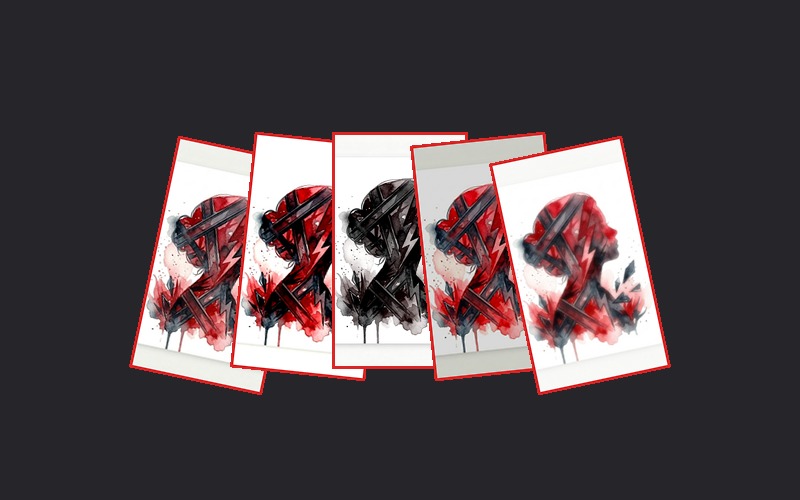 NEW
NEW Mood Wallpaper Pack
$266 mood wallpapers (Power, Storm, Calm, Love, Shield, Growth) + 3 affirmation lock screens. 9 exclusive phone backgrounds.
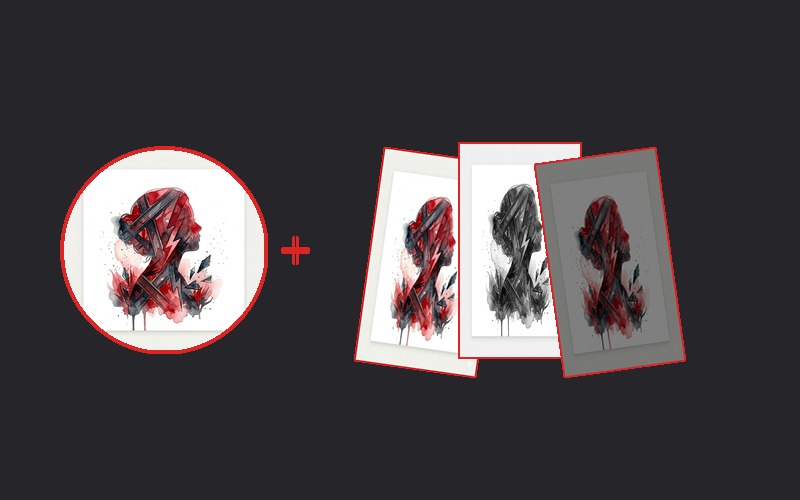 BEST VALUE
 Complete Bundle
$44Everything: your full archetype report + 9 exclusive wallpapers. Best value.
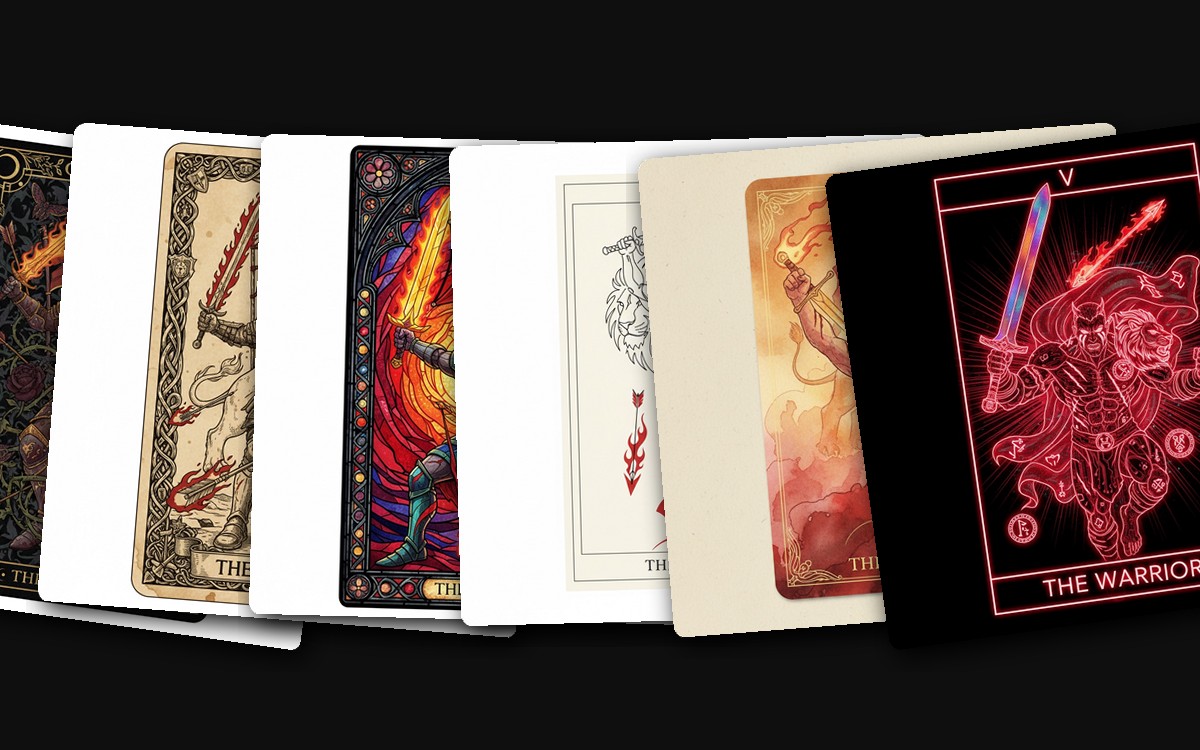 EXCLUSIVE
 Tarot Card Collection
$496 premium print-quality tarot cards in 6 stunning styles: Dark Botanical, Vintage Woodcut, Minimalist Line, Neon Mystic, Stained Glass, Watercolor Dream. Collector edition.
Pay what you want, starting at $1. Every contribution keeps this quiz free, ad-free, and accessible to everyone. Schools and NGOs get everything at no cost. This is self-knowledge for the people, not profit.