
Strengths & Weaknesses
Team Wittgenstein - The Treasure Hunters
What Makes You Unique
You are the perfectionist's perfectionist, disciplined, logical, obsessive about depth, and utterly alone in your pursuit. Your Stoic core means you endure the long grind without complaint. Your Rationalist wiring means your work has the precision of mathematics. Your Sisyphean drive means you're never done refining. And your Solitary nature means the only audience that matters is yourself, and you're the harshest critic alive.
The tension in your combination is between your impossibly high standards and your inability to get feedback. Your Solitary nature cuts you off from the outside perspective that might tell you 'this is done.' Your Sisyphean drive keeps pushing for another revision. Your Stoic discipline means you never run out of energy to keep refining. The result: extraordinary quality, at the cost of extraordinary isolation and the risk of never shipping anything at all.
Your Strengths
Unmatched Precision
Your work has a quality that comes from obsessive refinement. Where others ship at 90%, you push to 99%, and the difference is visible to anyone who pays attention.
Sustained Mastery
You get better at your craft every year because you never stop refining. Your expertise compounds over decades, reaching levels that no generalist can touch.
Intellectual Integrity
You don't cut corners and you don't fake competence. What you produce is genuine, thoroughly tested against your own demanding standards.
Self-Sufficient Output
You require almost nothing from others to produce excellent work. Give you a quiet room and a problem, and you'll return with something extraordinary.
Pattern Recognition
Your Rationalist depth combined with Sisyphean repetition gives you pattern-recognition abilities that border on intuition. You see structures others miss because you've looked longer.
Emotional Resilience
Your Stoic core means you can absorb setbacks, criticism, and failure without losing your center. You process difficulty through work, and the work always improves.
Honest Weaknesses
Perfectionist Paralysis
Your inability to declare work 'done' is your most significant limitation. Projects that should take months take years because your standard keeps rising as your skill improves.
Social Atrophy
Extended isolation erodes your social skills and reduces your network to near-zero. Opportunities pass you by because nobody knows what you're working on.
Self-Critical Spiral
Your internal critic has no off switch. You can spiral into self-assessment loops where nothing is ever good enough, and the act of evaluating your work replaces the act of producing it.
Rigidity
Your Stoic-Rationalist foundation can make you resistant to feedback that doesn't fit your framework. You may dismiss outside perspectives as uninformed when they're actually correct.
Your Shadow Side
The patterns you fall into when you're not at your best. Uncomfortable, but knowing them is the first step.
Ego Traps
You mistake emotional suppression for emotional strength. Your ego tells you that feeling nothing makes you superior to people who feel everything. It doesn't: it makes you a ticking bomb with excellent posture.
You believe that being logical makes you objective. Your ego tells you that your conclusions are bias-free because they're built from premises, not feelings. But your choice of premises IS the bias: you just can't see it because it looks like logic.
You believe that your high standards make you virtuous. Your ego tells you that caring more about quality than anyone else makes you better than them. It doesn't: it makes you slower, and sometimes the difference between your 'perfect' and their 'good enough' is invisible to everyone except you.
You believe that needing people is weakness. Your ego tells you that self-sufficiency is the highest virtue, and anyone who needs social connection is less evolved than you. But humans are social animals, your isolation isn't enlightenment, it's avoidance with a philosophical justification.
Toxic Patterns
You weaponize silence. When you're angry, you don't fight: you withdraw. You punish people by withholding your presence, your words, your engagement. You call it 'not being reactive.' They call it 'emotional abandonment.'
You argue to win, not to understand. Your intellectual precision becomes a weapon: you dismantle people's positions with surgical efficiency, then wonder why they stop talking to you. Being right and being kind are different skills.
You use perfectionism to control situations and people. Your standards become rules that others must follow, and 'not good enough' becomes your way of maintaining power. You call it quality control. Others call it micromanagement.
You ghost people without explanation. When a relationship becomes uncomfortable, you simply disappear. No conversation, no closure, no conflict. You call it 'protecting your energy.' They call it 'being ghosted by someone they thought cared about them.'
Self-Sabotage
You refuse help until you collapse. Your identity is so wrapped up in self-sufficiency that accepting support feels like failure. You'd rather burn out alone than admit you need someone.
You over-think everything until action becomes impossible. Your mind can build a perfect model of every scenario, including all the reasons not to act. Analysis becomes the activity, and the actual thing never gets done.
You never ship. You never finish. You never let go. Your work sits in a perpetual state of 'almost ready' because releasing it means accepting that it's imperfect, and imperfection feels like death to you.
You cut yourself off from the feedback that would make your work better. Working alone feels safe, but it also means no one challenges your assumptions, spots your blind spots, or tells you when you're wrong. Your echo chamber has an audience of one.
How You Think
You decide by asking 'what must be done?', duty and discipline override preference. You're comfortable with unpleasant decisions because you separate emotion from action.
You decide by asking 'what follows logically?': you reason from principles, not precedent. If the logic is sound, you'll go against popular opinion without hesitation.
You decide by asking 'what will stand the test of time?': you choose depth over breadth and quality over speed. You're willing to wait for the right answer.
You decide alone. You gather input selectively, then retreat to process it without pressure. Your best decisions come from quiet reflection, not group discussion.
How You Decide
Asked to present work-in-progress to stakeholders, you'd resist, fiercely. Showing unfinished work feels like showing up undressed. If forced, you'd caveat every slide with 'this isn't final' until the audience wonders if anything ever will be.
Discovering someone else published similar work to yours, but at lower quality, you'd feel a complex mix of vindication and frustration. You'd push your own work even further, determined to produce the definitive version, even if it takes another year.
Offered a collaboration with someone whose work you respect, you'd be torn. The intellectual stimulation appeals to your Rationalist side, but the loss of creative control terrifies your Solitary-Sisyphean core. You'd likely propose a very structured partnership with clearly defined boundaries.
Keep exploring
 NEW
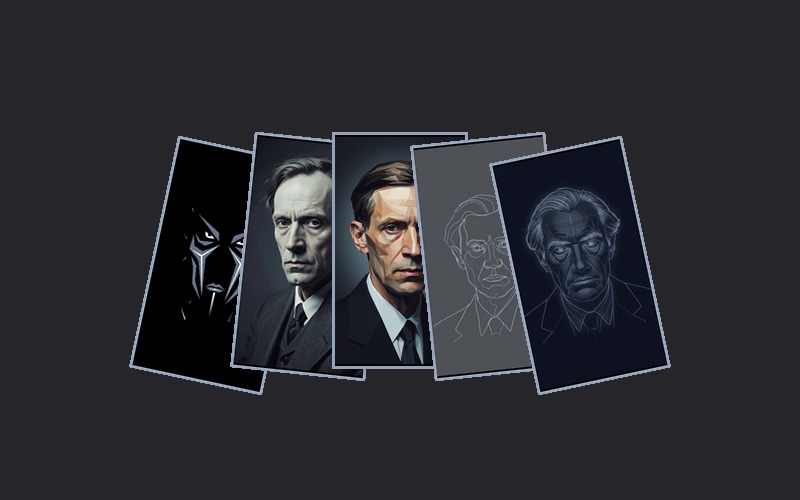
NEW Wallpaper Pack
$266 exclusive phone wallpapers, low-poly, neon blueprint, vintage engraving, minimalist, abstract, and cinematic.
 BEST VALUE
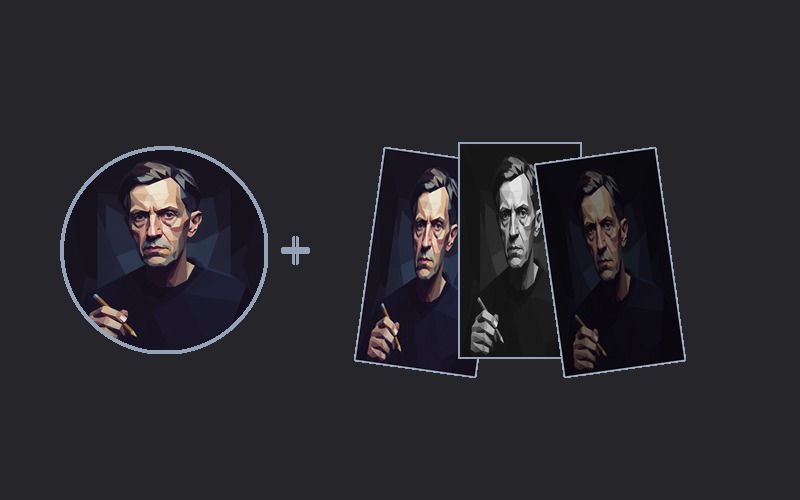
 Complete Bundle
$44Everything: the 24-chapter Deep Dive report + 6 exclusive wallpapers. Best value.
 EXCLUSIVE
 Tarot Card Collection
$496 premium print-quality tarot cards in 6 stunning styles: Dark Botanical, Vintage Woodcut, Minimalist Line, Neon Mystic, Stained Glass, Watercolor Dream. Collector edition.
Pay what you want, starting at $1. Every contribution keeps this quiz free, ad-free, and accessible to everyone. Schools and NGOs get everything at no cost. This is self-knowledge for the people, not profit.