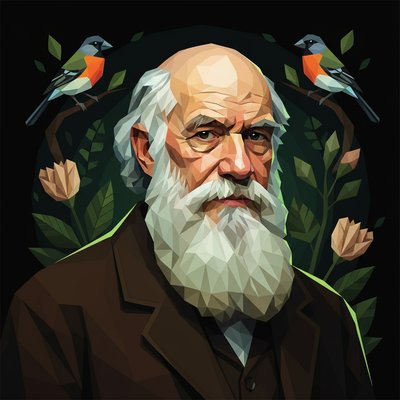
达尔文队(SXDI)属于漫游建造者,是一种stoic、empiricist、sisyphean、solitary型人格。 核心特质:耐心, 善于观察, 严谨, 执着, 沉静。 知名成员包括孟德尔, 芭芭拉·麦克林托克, 第谷·布拉赫。 在 mypeeps.ai 用我们免费的 12 道题性格测试找到你的类型,它以同行评审研究为支撑。
这就是你
你的耐心并非美德,而是你的超能力。当世界追逐着一个又一个新奇事物时,你仍在观察,仍在收集数据,仍在打磨三年前的发现。你深知,真相只向那些耐心等待的人显现。
你不需要人群来验证你的观察。一本笔记本,一个安静的角落,以及多年的细致专注,这就是你的实验室。你将一件事物打磨得如此深入,以至于你能看到他人无法想象的模式。深度本身就是奖赏。
世人称之为痴迷,你称之为严谨。每个细节都至关重要,因为你深知,突破并非源于灵光一现,而是来自那终于水到渠成的万次细致观察。
你的特质
你并不孤单
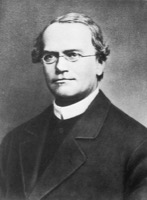





你的独特之处
You are curiosity incarnate, driven by genuine passion for discovery, grounded by insistence on evidence, propelled toward the new, and processing it all in magnificent solitude. Your Epicurean core means you're driven by love of the work, not obligation. Your Empiricist wiring means your breakthroughs are built on observation, not speculation. Your Promethean drive means you're never satisfied with the current explanation. And your Solitary nature means your best thinking happens far from the crowd.
The tension in your combination is between your Epicurean need for passion and your Solitary need for space. You need the work to excite you AND you need to be left alone to do it. When this balance works, you produce work of breathtaking originality, the kind of insights that can only come from someone who observed patiently, thought independently, and cared deeply. When it doesn't work, you become the brilliant recluse whose ideas never reach the world.
你的优势
Patient Observation
You notice what others overlook because you're willing to sit with uncertainty longer. Your breakthroughs come from watching, not from forcing.
Passionate Precision
You combine emotional engagement with empirical rigor. You care deeply about your work AND you hold it to evidence-based standards. This pairing is rare and powerful.
Independent Synthesis
You connect dots that no committee would ever connect because you think alone, without the gravitational pull of groupthink. Your insights are genuinely original.
Adaptive Resilience
Your Epicurean flexibility combined with your Empiricist reality-testing makes you highly adaptable. When the data says pivot, you pivot, without ego.
Deep Curiosity
You don't just want to know the answer: you want to understand why the answer is the answer. This second-order curiosity drives you deeper than most people go.
Authentic Engagement
When you share your work, the passion is real and the evidence is solid. People trust you because you're both believable and verifiable.
诚实的弱点
Avoidance Through Novelty
When the current project gets hard, you start a new one. Your Epicurean-Promethean combination makes shiny new problems irresistible, especially when the current one is boring or stuck.
Invisible Progress
Your Solitary processing means nobody sees your work until it's finished. This can mean months of silence followed by a revelation, which is great for science and terrible for stakeholder management.
Emotional Volatility
Your Epicurean core means your energy rises and falls with your interest level. When the passion fades, so does your momentum. Building discipline for the boring phases is your lifelong challenge.
Over-Isolation
Your Solitary preference can become avoidance. The difference between productive solitude and hiding from the world is intent, and you don't always notice when one becomes the other.
你如何做决定
Offered a prestigious position that requires networking and committee work, you'd decline unless you could negotiate protected research time. You'd rather be a lesser-known researcher who actually discovers things than a well-connected administrator who doesn't.
Your experiment produces an unexpected result that contradicts your hypothesis. You'd be delighted, genuinely excited, because the surprise means the world is more interesting than you thought. You'd redesign the experiment immediately, not to prove your original idea, but to follow the new trail.
A friend asks for urgent help during your most productive creative period. Your Solitary side wants to ignore the call; your Epicurean side cares deeply. You'd help, but you'd set a clear boundary on when you're coming back to your work.
契合度

Your shadow. Same Epicurean-Solitary core, but they refine (Sisyphean) where you explore (Promethean), and they reason (Rationalist) where you test (Empiricist). They'll call your work superficial; you'll call theirs stuck. Both of you are half right.

Same Empiricist-Promethean-Solitary structure, but they operate from duty (Stoic) where you operate from passion (Epicurean). Together, you're discipline plus drive.

Your closest sibling, same Epicurean-Empiricist-Promethean core, but they work publicly (Agora) where you work privately. They can amplify your discoveries to the world.

Same Epicurean-Empiricist base, but they perfect (Sisyphean) and collaborate (Agora) where you innovate alone. They can build the institution around your discovery.

Same Epicurean-Empiricist-Solitary foundation. The only difference: they refine (Sisyphean) and you create (Promethean). You start the story; they edit it down to its essence.
人际关系
You love with warmth (Epicurean) but need space (Solitary). You're the partner who plans the perfect weekend trip but also needs an afternoon alone to recharge. Your relationships thrive when your partner understands that your solitude isn't absence: it's the battery that powers your warmth. The danger is letting your Solitary default win so often that your Epicurean warmth never reaches the people who need it.
You keep a small circle and you keep it for decades. You're the friend people call at 3am because they know you'll pick up and you won't panic. The downside: you can be so self-contained that friends stop reaching out, assuming you don't need them. You do. You're just terrible at showing it.
Full relationship guide →职业与工作风格
你的职业画像
You belong in field research, natural sciences, exploratory journalism, or independent creative work, any career where you can wander, observe, and synthesize without a committee breathing down your neck. You're the person who finds the pattern nobody else saw because nobody else spent three years looking. Corporate hierarchy will suffocate you; academic freedom will liberate you. The ideal role has a generous deadline, a fascinating problem, and no mandatory meetings.
适合你的职业
Emergency medicine, crisis management, or military leadership, environments where emotional control is a survival skill, not a personality quirk.
Long-cycle engineering, infrastructure, or research science, work where the payoff is years away and most people would quit before seeing results.
Financial risk management, compliance, or quality assurance, roles that reward patience, vigilance, and the ability to say 'no' when everyone else says 'yes'.
Data science, lab research, or investigative journalism, work where truth is found through observation, not assertion.
Product management, operations, or process improvement, roles where 'what actually happened' matters more than 'what should have happened.'
Trades, craftsmanship, or hands-on engineering, careers where competence is measured by outcomes, not credentials.
Precision manufacturing, watchmaking, or surgical specialization, work where mastery is measured in thousandths of an inch and years of practice.
Editing, quality assurance, or restoration, careers where finding the flaw others missed is the highest form of expertise.
Academic research, archival work, or classical music, domains where depth is more respected than breadth and patience is the differentiator.
Software development, writing, or solo research, work where deep focus and uninterrupted thinking produce the best outcomes.
Remote or asynchronous roles, environments where your output matters more than your presence and nobody counts how many meetings you attended.
Forensic analysis, cryptography, or puzzle-solving, careers where the answer reveals itself to the person willing to sit with the problem longest.
应当避开的职业
High-energy sales or entertainment roles that demand constant emotional performance. You'll burn out pretending to be excited about things that don't move you.
Fast-pivoting startup culture where 'fail fast' means abandoning discipline for speed. Your superpower is endurance, not improvisation.
Pure strategy consulting or think-tank roles where ideas never get tested against reality. You'll feel like you're playing pretend.
Visionary leadership positions that demand you sell a future nobody can prove yet. You struggle to champion ideas before the evidence exists.
Growth-hacking, rapid prototyping, or 'move fast and break things' culture. Your instinct to perfect will be treated as a liability.
Generalist management roles where you're spread thin across ten domains instead of going deep in one. Breadth without depth feels like incompetence to you.
Open-plan office cultures with mandatory 'collaboration hours' and team-building retreats. You'll spend more energy managing your exhaustion than doing your work.
Client-facing roles that require constant social performance. You can do it, but it drains the battery that powers your real work.
你的工作风格
You thrive in structured environments with clear expectations and long time horizons. Open-plan offices drain you, not because of noise, but because of the constant performance of being 'present.' You do your best work when left alone with a hard problem and a deadline. Give you autonomy and accountability, and you'll outperform anyone in the building. Micromanage you, and you'll quietly disengage.
作为同事的你
You're the colleague everyone trusts but few truly know. You deliver consistently, you don't play politics, and you absorb pressure without complaint. The trap: people will load you up because you never push back. Learn to say 'I'm at capacity' before you're at breaking point, because once you break, you don't bend first.
压力之下
Under pressure, you go into 'just keep going' mode. You strip away everything non-essential, emotions, social obligations, personal needs, and focus entirely on the task. From the outside, this looks like superhuman composure. From the inside, it feels like slowly going numb. The longer the pressure lasts, the less you feel, until you can't distinguish genuine peace from emotional shutdown.
The danger isn't the stress itself: it's the delayed explosion. Stoics don't crack under pressure; they crack three months after the pressure ends, when they finally feel safe enough to process what they suppressed. Watch for the moment of relief: that's when the dam breaks. Build micro-processing habits during the stress, not after: a five-minute journal, a walk without a podcast, a honest answer to 'how are you actually doing?'
Under pressure, you default to data collection. When you don't know what to do, you gather more information, another analysis, another spreadsheet, another round of research. This feels productive, but past a certain point, you're not learning; you're stalling. The discomfort of acting on incomplete information is your biggest stress trigger, and the only cure is practice.
Your stress signal is overwork disguised as thoroughness. When you're staying late to 'double-check the numbers' for the third time, you're not being diligent: you're anxious. The fix: set decision deadlines before you start the research. 'I will decide by Friday with whatever I have.' Then actually do it. Your track record of good decisions on imperfect data is better than you think.
Under pressure, you tighten your grip. The standard goes up, the tolerance for imperfection goes down, and the pace slows to a crawl. You convince yourself that the problem is quality, 'if I just make this a little better, everything will be fine', when the real problem is that you're afraid of shipping something imperfect into a world that already feels too chaotic.
Your stress signal is control disguised as craft. When you start re-editing emails, reorganizing files that were already organized, or revising work that was already approved: you're not being thorough, you're managing anxiety through the illusion of control. The fix: name the fear. 'I'm afraid this isn't good enough' is honest. Once you say it, you can evaluate it. Usually, it's good enough. Ship it.
Under pressure, you disappear. Messages go unread, invitations get declined, and you retreat so deep into your own space that people start worrying about you. This isn't depression (though it can look like it): it's your nervous system's emergency protocol. You're trying to reduce input to a level you can process. The problem is that the people who could help are the ones you're cutting off.
Your stress signal is radio silence. When the Solitary goes dark, it means the pressure has exceeded their processing capacity. The fix is counterintuitive: reach out before you feel ready. Send a one-line text: 'I'm okay but overwhelmed. Need some space. Will check in Friday.' This buys you the solitude you need while keeping the lifeline intact. Silence worries people; a brief message sets boundaries without burning bridges.
Under pressure, your Epicurean side seeks new stimulation while your Solitary side withdraws completely, creating a confusing pattern where you disappear for days, then resurface with an entirely new project that has nothing to do with the original stressor. The fix: stay with the problem. Your best discoveries came from patient observation, not from escaping to something shinier.
高压下你如何沟通
You say less than you think. Your communication style is economical: you don't waste words, you don't perform emotions, and you don't repeat yourself. When you speak, it carries weight because people know you don't do it for show. The gap between what you feel and what you express is the largest of any type, and it's both your signature strength and your core vulnerability.
In conflicts, you go quiet, which most people interpret as either agreement or hostility, neither of which is accurate. You're processing. The problem is that your silence gives the other person nothing to work with, so they fill it with assumptions. Learning to say 'I need time to think about this, but I hear you' is the single most useful communication upgrade you can make.
You communicate through evidence. 'Here's what happened,' 'Here's what I observed,' 'Let me show you the data.' Your communication style builds credibility through specificity: you don't make vague claims, you bring receipts. People who value precision love working with you. People who value feeling heard can find you frustrating.
In conflicts, you instinctively reach for facts, which works brilliantly when the conflict is about what happened, and terribly when the conflict is about how someone felt. Learning to say 'I understand why that upset you' before 'but here's what the data shows' will transform your most difficult conversations. Lead with acknowledgment, then bring the evidence.
You communicate through depth. Your explanations are thorough, nuanced, and complete. You cover edge cases, acknowledge exceptions, and give people everything they need to understand the full picture. People who value precision respect you enormously. People who need the headline first may lose patience waiting for it.
In conflicts, you can over-explain, presenting such a comprehensive case that the other person feels overwhelmed rather than persuaded. Your instinct to be thorough can become a weapon when deployed in a disagreement. Learning to lead with your conclusion and then support it, instead of building to it, will make your thoroughness an asset in every conversation, not just the technical ones.
You communicate through considered, deliberate output. Emails are precise, messages are purposeful, and conversations are efficient. You don't do small talk easily, and you rarely think out loud. What comes out has already been processed, which means your communication is high-quality but low-frequency. People who work with you learn that when you speak, it matters.
In conflicts, you withdraw to process, which can leave the other person feeling abandoned. 'I need to think about this' is responsible, but 'I need to think about this and I'll come back to you by Wednesday' is relationship-saving. The Solitary's communication becomes powerful when it includes timelines and follow-through on the response, not just the retreat.
7 天成长挑战
Small daily actions to build resilience and break your stress patterns.
Monday: Share your work-in-progress with someone before it's finished. Show the messy version.
Tuesday: Spend 30 minutes on the boring part of your current project, the part you've been avoiding.
Wednesday: Call someone you haven't talked to in months. Reconnect, even briefly.
Thursday: Stick with your current project when the urge to start something new arises. Write down the new idea and return to it later.
Friday: Ask for help with something you've been doing alone. Accept the help without qualifying it.
Saturday: Go somewhere new, a neighborhood, a park, a bookshop you've never entered. Observe without agenda.
Sunday: Write down what you're most passionate about right now. Check: is this the same answer as last month? If not, ask why.
成长路径
Address: Avoidance Through Novelty
Your Epicurean-Promethean combination makes shiny new problems irresistible, especially when the current one is boring or stuck.
Address: Invisible Progress
This can mean months of silence followed by a revelation, which is great for science and terrible for stakeholder management.
Address: Emotional Volatility
Building discipline for the boring phases is your lifelong challenge.
Address: Over-Isolation
The difference between productive solitude and hiding from the world is intent, and you don't always notice when one becomes the other.
日常生活
You say less than you think. Your communication style is economical: you don't waste words, you don't perform emotions, and you don't repeat yourself. When you speak, it carries weight because people know you don't do it for show. The gap between what you feel and what you express is the largest of any type, and it's both your signature strength and your core vulnerability.
Communication, hobbies, pets & more →你的劲敌

你静默观察。他们公开辩论。你通过观察验证。他们从原则推理。你忍耐打磨。他们推倒重建。
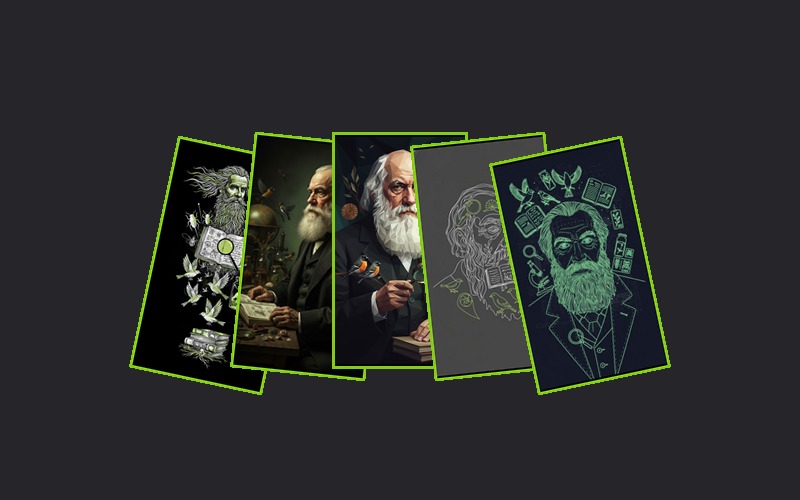 NEW
NEW Wallpaper Pack
$266 exclusive phone wallpapers, low-poly, neon blueprint, vintage engraving, minimalist, abstract, and cinematic.
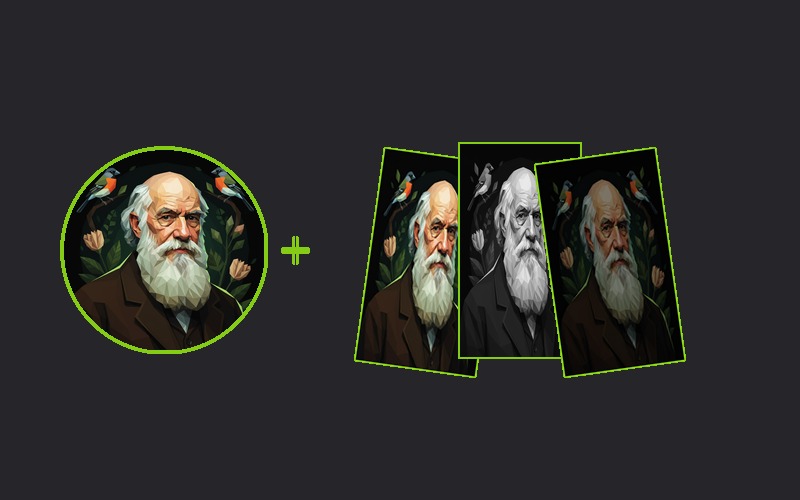 BEST VALUE
 Complete Bundle
$44Everything: the 24-chapter Deep Dive report + 6 exclusive wallpapers. Best value.
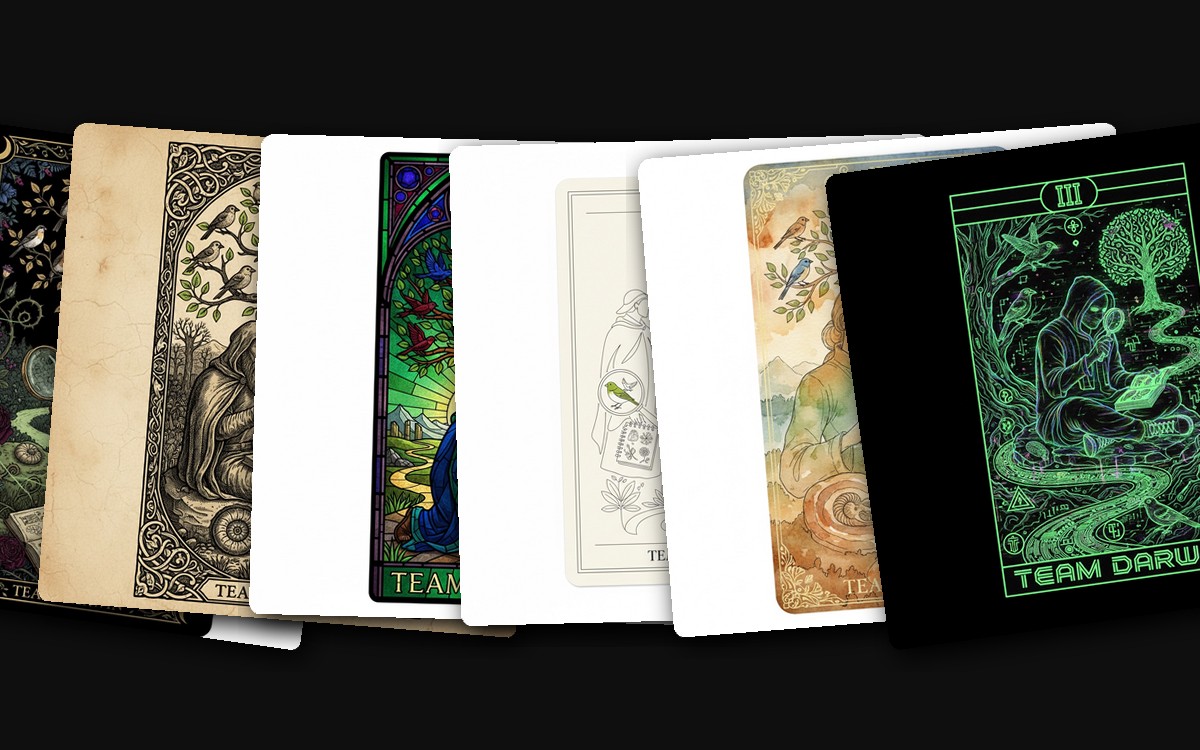 EXCLUSIVE
 Tarot Card Collection
$496 premium print-quality tarot cards in 6 stunning styles: Dark Botanical, Vintage Woodcut, Minimalist Line, Neon Mystic, Stained Glass, Watercolor Dream. Collector edition.
Pay what you want, starting at $1. Every contribution keeps this quiz free, ad-free, and accessible to everyone. Schools and NGOs get everything at no cost. This is self-knowledge for the people, not profit.
常见问题
达尔文队 属于哪种性格类型?
达尔文队 属于漫游建造者类型(SXDI):Stoic · Empiricist · Sisyphean · Solitary。你的耐心并非美德,而是你的超能力。当世界追逐着一个又一个新奇事物时,你仍在观察,仍在收集数据,仍在打磨三年前的发现。你深知,真相只向那些耐心等待的人显现。
达尔文队 有哪些知名成员?
达尔文队 的知名成员包括孟德尔 (独自八年杂交豌豆,耐心打磨一个数据集); 芭芭拉·麦克林托克 (独自数十年研究玉米遗传学,观察结果被忽视了三十年); 第谷·布拉赫 (一生进行了历史上最精确的天文观测); 简·奥斯汀 (独自严谨写作,以日益精进的笔触打磨同一个社会世界); 圣地亚哥 (独自忍耐、充满耐心的渔夫,精进自己的技艺(《老人与海》)); E.B.怀特 (隐居缅因州农场,数十年如一日地打磨他独特的散文风格)。
达尔文队 的劲敌是谁?
达尔文队 的劲敌是 伏尔泰队(分析家)。你静默观察。他们公开辩论。你通过观察验证。他们从原则推理。你忍耐打磨。他们推倒重建。
深入了解 达尔文队
了解达尔文队 的优势与超能力,看看达尔文队 最合得来的是谁,再读一读达尔文队 的关系与爱的完整指南。
在工作上,看看最适合 达尔文队 的职业,了解达尔文队 如何应对压力。日常方面,看看达尔文队 的日常,也认识一下达尔文队 的知名成员。

Get your full Team Darwin report, free
Your Team Darwin deep dive: 24 chapters on strengths, blind spots, compatibility, career, money, and stress. One email and it is yours.
One email. One confirmation click and the PDF is yours. No spam, leave anytime.