
康德队
体系构建者
SRPA
"有两件事物,越是长久地凝视,越能让我的内心充满常新且日益增长的惊奇与敬畏:我头顶的星空,以及我心中的道德律。"
康德队(SRPA)属于体系构建者,是一种stoic、rationalist、promethean、agora型人格。 核心特质:系统性, 自律, 颠覆性, 精密, 心系大众。 知名成员包括诺姆·乔姆斯基, 露丝·巴德·金斯伯格, 汉娜·阿伦特。 在 mypeeps.ai 用我们免费的 12 道题性格测试找到你的类型,它以同行评审研究为支撑。
这就是你
你构建的框架,能彻底改变人们的思维方式。你依靠的不是浮夸的发明或戏剧性的实验,而是那些结构精妙的思想,一旦有人领悟,便再也无法以旧有方式看待世界。
纪律是你的方法,革命是你的成果。你每天准时投入工作,思维如钟表般精密,提出的思想足以颠覆数百年来的传统智慧。日常即是反叛,因为唯有持之以恒,方能洞察秋毫。
你坚信思想属于每一个人。因此,你笔耕不辍,诲人不倦,并积极参与公共讨论,因为世上最强大的体系,若无人理解,便毫无价值。你让复杂变得易于理解,却不流于简单化。这本身就是一种艺术。
你的特质
你并不孤单






你的独特之处
You are the public revolutionary, building new frameworks of thought with clockwork discipline, then sharing them with anyone who will listen. Your Stoic core means you show up every day, regardless of inspiration. Your Rationalist wiring means your ideas have the structural integrity to survive scrutiny. Your Promethean drive means you're not content to teach the old: you need to create the new. And your Agora nature means you believe ideas belong to everyone, not just their creator.
The tension in your combination is between the solitary act of creation and the social imperative to share. Your best ideas emerge from deep, disciplined reasoning, but they only matter when they reach other people. You're constantly balancing the need for uninterrupted thinking with the pull of public engagement. When this resolves well, you produce ideas that change culture. When it resolves poorly, you produce ideas that nobody had time to finish thinking through.
你的优势
Framework Building
You create mental models and systems of thought that become the default lens through which others see the world. Your frameworks outlast you.
Public Intellectual Courage
You don't just think revolutionary thoughts: you defend them in public, against opposition, with the full weight of your reasoning.
Disciplined Creativity
Your Stoic core prevents your Promethean ideas from remaining fantasies. You actually build, write, and ship your revolutionary frameworks.
Accessible Complexity
Your Agora nature drives you to make your complex ideas understandable. You don't dumb down: you translate up.
Principled Consistency
You hold yourself to the same standards you set for others. Your moral authority comes from living your philosophy, not just teaching it.
Institutional Vision
You can see how ideas become institutions, universities, legal systems, governance structures. You think in timescales that most people can't imagine.
诚实的弱点
Intellectual Rigidity
Once you've built a framework, you can be reluctant to abandon it even when the evidence demands it. Your Stoic discipline can become stubbornness in the face of new information.
Over-Systematization
Not everything can be captured in a framework. Your Rationalist instinct to systematize can drain the life out of experiences that resist categorization, art, love, grief.
Public Pressure
Your Agora nature makes you crave engagement, but your Stoic-Promethean work requires solitude. You can burn out trying to be both the creator and the communicator simultaneously.
Moral Absolutism
Your principled nature can shade into inflexibility. You can hold people to standards they didn't agree to, and judge them for failing tests they didn't know they were taking.
你如何做决定
A colleague proposes a practical solution that works but violates your principles. You'd push back, not because the solution doesn't work, but because precedent matters. Today's expedient shortcut becomes tomorrow's institutional failure.
Invited to speak at a prestigious event but with restrictions on your content. You'd decline unless the restrictions were lifted, then write an essay about why those restrictions exist. Your principles aren't negotiable, even for status.
A student challenges your framework with a compelling counter-argument. You'd engage deeply, publicly, and if they were right, you'd revise your framework in the next lecture. Being wrong in public doesn't scare you, being wrong in private does.
契合度

Same Stoic-Rationalist-Promethean core, but they work alone where you work publicly. You can bring their ideas to the world.

Same Rationalist-Promethean-Agora structure, but they run on passion where you run on duty. Together, you bring both heart and spine to revolutionary ideas.

Same Stoic-Rationalist-Agora base, but they refine tradition (Sisyphean) where you create new systems (Promethean). The keeper of the old and the builder of the new, natural partners.

Same Stoic-Agora foundation but they're Empiricist-Sisyphean where you're Rationalist-Promethean. They test and maintain what you theorize and create.
人际关系
You're the partner who brings structure and communication to relationships. Your Stoic side makes you reliable; your Agora side makes you engaged and present. You believe in working on the relationship as a system, discussing expectations, establishing patterns, building shared principles. The growth edge: not everything in love responds to rational analysis. Sometimes the answer is 'I don't know' and that has to be enough.
You keep a small circle and you keep it for decades. You're the friend people call at 3am because they know you'll pick up and you won't panic. The downside: you can be so self-contained that friends stop reaching out, assuming you don't need them. You do. You're just terrible at showing it.
Full relationship guide →职业与工作风格
你的职业画像
You belong in roles that combine intellectual rigor with public impact, academic leadership, public policy, legal reform, or institutional design. You're the person who writes the framework that organizations adopt for decades. Your ideal role has a platform, an audience, and enough unstructured time to think deeply. Avoid roles that are all execution and no creation, or all vision and no implementation.
适合你的职业
Emergency medicine, crisis management, or military leadership, environments where emotional control is a survival skill, not a personality quirk.
Long-cycle engineering, infrastructure, or research science, work where the payoff is years away and most people would quit before seeing results.
Financial risk management, compliance, or quality assurance, roles that reward patience, vigilance, and the ability to say 'no' when everyone else says 'yes'.
Systems architecture, theoretical research, or strategic planning, work where building mental models is the actual job, not a side effect.
Law, philosophy, or policy design, careers where rigorous reasoning and first-principles thinking produce better outcomes than precedent.
Algorithm design, mathematics, or structural engineering, domains where the elegance of the solution matters as much as whether it works.
R&D, invention, or early-stage startups, environments where creating something that doesn't exist yet is the entire point.
Creative arts, game design, or speculative architecture, work where imagination is the primary tool and constraints are suggestions.
Venture capital, trend forecasting, or innovation consulting, roles that reward spotting what's next before anyone else does.
Team leadership, community building, or facilitation, roles where connecting people and synthesizing perspectives is the work itself.
Consulting, diplomatic roles, or stakeholder management, careers where navigating between different groups and building consensus creates value.
Teaching, public speaking, or media, work where your ability to communicate complex ideas to diverse audiences is your competitive edge.
应当避开的职业
High-energy sales or entertainment roles that demand constant emotional performance. You'll burn out pretending to be excited about things that don't move you.
Fast-pivoting startup culture where 'fail fast' means abandoning discipline for speed. Your superpower is endurance, not improvisation.
Highly social roles in HR, community management, or customer service where emotional intelligence outweighs logical analysis.
Chaotic startup environments where 'just try it' trumps 'think it through.' You need space to reason before you act.
Maintenance engineering, operations, or support roles where the goal is keeping existing systems running. You'll feel like you're dying slowly.
Heavily regulated industries (banking, healthcare compliance) where innovation requires 18 months of approvals. Your pace and their pace will never align.
Isolated technical roles with minimal human interaction. You can do the work, but you'll feel disconnected from its purpose without people to share it with.
Highly competitive, zero-sum environments where collaboration is punished. Your instinct to share and build together will be exploited.
你的工作风格
You thrive in structured environments with clear expectations and long time horizons. Open-plan offices drain you, not because of noise, but because of the constant performance of being 'present.' You do your best work when left alone with a hard problem and a deadline. Give you autonomy and accountability, and you'll outperform anyone in the building. Micromanage you, and you'll quietly disengage.
作为同事的你
You're the colleague everyone trusts but few truly know. You deliver consistently, you don't play politics, and you absorb pressure without complaint. The trap: people will load you up because you never push back. Learn to say 'I'm at capacity' before you're at breaking point, because once you break, you don't bend first.
压力之下
Under pressure, you go into 'just keep going' mode. You strip away everything non-essential, emotions, social obligations, personal needs, and focus entirely on the task. From the outside, this looks like superhuman composure. From the inside, it feels like slowly going numb. The longer the pressure lasts, the less you feel, until you can't distinguish genuine peace from emotional shutdown.
The danger isn't the stress itself: it's the delayed explosion. Stoics don't crack under pressure; they crack three months after the pressure ends, when they finally feel safe enough to process what they suppressed. Watch for the moment of relief: that's when the dam breaks. Build micro-processing habits during the stress, not after: a five-minute journal, a walk without a podcast, a honest answer to 'how are you actually doing?'
Under pressure, you retreat into your own head. The world gets too chaotic, so you build increasingly elaborate mental models to contain it. The framework becomes a bunker, safe, logical, completely disconnected from the messy reality outside. You can spend days theorizing about a problem without taking a single concrete action to solve it.
Your stress signal is intellectual arrogance, the quiet conviction that you've already figured it out and execution is someone else's problem. When you catch yourself thinking 'if they'd just listen to me, this would be solved,' pause. That's not clarity; that's stress wearing a mask. The most powerful thing a stressed Rationalist can do is get their hands dirty. Build something, fix something, talk to a real user. Theory without reality-testing becomes delusion under pressure.
Under pressure, you start new things. Project A is stuck? Begin project B. Project B hits a wall? Sketch out project C. Each pivot feels like progress because you're moving, generating, creating, but your energy is fragmenting into smaller and smaller pieces. The pile of 80%-finished work grows while nothing actually ships.
Your stress signal is hyperactivity that produces nothing. You're busy, frantically, impressively busy, but if someone asked what you completed this week, you'd struggle to name one thing. The fix is brutal and simple: pick one thing, finish it, then move on. Write it on a sticky note. Look at it every hour. The Promethean who learns to finish under pressure is more dangerous than any competitor.
Under pressure, you talk more. You process by externalizing, calling friends, scheduling meetings, thinking out loud with anyone who'll listen. This feels productive because you're engaged, you're connecting, you're 'working on it.' But past a certain point, you're not processing; you're ruminating through other people's ears. The conversation becomes a loop, not a path.
Your stress signal is over-socializing. When you're scheduling your fourth coffee of the day to 'talk through' the same problem, you've crossed from processing into avoidance. The fix: one conversation, then one decision. Talk it through with one trusted person, write down the conclusion, and act on it. Your social instincts become your superpower again once they're directed toward action instead of repetition.
Under pressure, your Promethean side wants to leap to a new framework while your Stoic side insists on completing the current one. Meanwhile, your Agora nature drives you to process the stress publicly, which can overwhelm your colleagues. Your stress antidote: write the new idea down, finish the current work, and save the public processing for one trusted advisor.
高压下你如何沟通
You say less than you think. Your communication style is economical: you don't waste words, you don't perform emotions, and you don't repeat yourself. When you speak, it carries weight because people know you don't do it for show. The gap between what you feel and what you express is the largest of any type, and it's both your signature strength and your core vulnerability.
In conflicts, you go quiet, which most people interpret as either agreement or hostility, neither of which is accurate. You're processing. The problem is that your silence gives the other person nothing to work with, so they fill it with assumptions. Learning to say 'I need time to think about this, but I hear you' is the single most useful communication upgrade you can make.
You communicate through structure. Your explanations have beginnings, middles, and ends. You define terms, you build from premises, and you arrive at conclusions through visible reasoning. People who think like you find this deeply satisfying. People who don't can feel like they're being lectured rather than talked to.
In conflicts, you try to find the logical core of the disagreement, which is useful but can feel invalidating when the other person's issue is emotional. You can be so focused on 'what's actually true' that you miss 'what's actually wrong.' The Rationalist who learns to validate feelings before restructuring the argument becomes someone people actually want to disagree with, because it always leads somewhere productive.
You communicate through vision. Your natural mode is painting a picture of what could exist, the future, the possibility, the 'imagine if.' This makes you inspiring and sometimes infuriating. People follow your vision when they believe it's achievable, and tune out when it feels like fantasy. The line between the two is details, the more specific you can be, the more persuasive you become.
In conflicts, you tend to leap past the current problem to the solution, which can feel dismissive to someone who needs the current problem acknowledged. 'Okay but here's what we should do instead' can land as 'your feelings about this don't matter.' Slow down. Acknowledge the present before you paint the future.
You communicate through connection. Your natural mode is dialogue: you share ideas in progress, invite reactions, and refine in real-time. This makes you collaborative and easy to work with, but it can also make you hard to pin down. Your first statement on any topic is rarely your final one, because you're still thinking. People who understand this love brainstorming with you. People who don't can find you inconsistent.
In conflicts, your instinct is to talk it through, which is healthy until it becomes over-processing. You can hold the same conversation multiple times with different people, seeking the validation that one person couldn't give you. The Agora who learns to resolve conflicts in fewer, deeper conversations instead of many shallow ones becomes exceptional at both harmony and truth.
7 天成长挑战
Small daily actions to build resilience and break your stress patterns.
Monday: Spend two hours in deep work before checking any messages. Protect the creative space.
Tuesday: Have a conversation where you don't teach or explain. Just listen and ask questions.
Wednesday: Identify one belief you hold from principle alone, without evidence. Examine it honestly.
Thursday: Create something small and share it immediately, no perfectionism, no framework. Just an idea, raw.
Friday: Thank someone whose practical work makes your theoretical work possible. They deserve recognition.
Saturday: Do something impractical and irrational. Break your own rules for a day.
Sunday: Write down what you learned this week that you didn't know on Monday. Stay a student.
成长路径
Address: Intellectual Rigidity
Your Stoic discipline can become stubbornness in the face of new information.
Address: Over-Systematization
Your Rationalist instinct to systematize can drain the life out of experiences that resist categorization, art, love, grief.
Address: Public Pressure
You can burn out trying to be both the creator and the communicator simultaneously.
Address: Moral Absolutism
You can hold people to standards they didn't agree to, and judge them for failing tests they didn't know they were taking.
日常生活
You say less than you think. Your communication style is economical: you don't waste words, you don't perform emotions, and you don't repeat yourself. When you speak, it carries weight because people know you don't do it for show. The gap between what you feel and what you express is the largest of any type, and it's both your signature strength and your core vulnerability.
Communication, hobbies, pets & more →你的劲敌

你从原则出发进行推理,他们则从经验中观察。你积极参与公共讨论,他们则退隐著述。你构建新的框架,他们则提炼原始真理。
 NEW
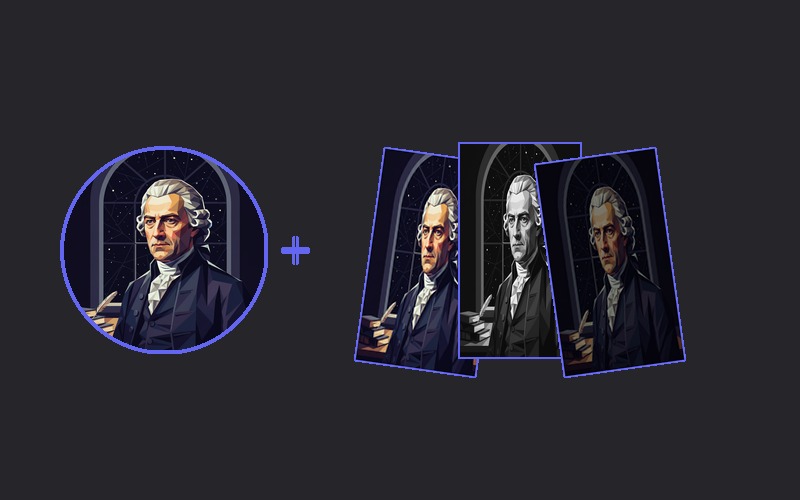
NEW Wallpaper Pack
$266 exclusive phone wallpapers, low-poly, neon blueprint, vintage engraving, minimalist, abstract, and cinematic.
 BEST VALUE
 Complete Bundle
$44Everything: the 24-chapter Deep Dive report + 6 exclusive wallpapers. Best value.
 EXCLUSIVE
 Tarot Card Collection
$496 premium print-quality tarot cards in 6 stunning styles: Dark Botanical, Vintage Woodcut, Minimalist Line, Neon Mystic, Stained Glass, Watercolor Dream. Collector edition.
Pay what you want, starting at $1. Every contribution keeps this quiz free, ad-free, and accessible to everyone. Schools and NGOs get everything at no cost. This is self-knowledge for the people, not profit.
常见问题
康德队 属于哪种性格类型?
康德队 属于体系构建者类型(SRPA):Stoic · Rationalist · Promethean · Agora。你构建的框架,能彻底改变人们的思维方式。你依靠的不是浮夸的发明或戏剧性的实验,而是那些结构精妙的思想,一旦有人领悟,便再也无法以旧有方式看待世界。
康德队 有哪些知名成员?
康德队 的知名成员包括诺姆·乔姆斯基 (从纯理论层面彻底革新了语言学,随后成为最杰出的公共知识分子。); 露丝·巴德·金斯伯格 (通过严谨的法律推理,构建了革命性的性别平等框架。); 汉娜·阿伦特 (从第一性原理出发,创建了全新的政治框架,并积极著述和公开辩论。); 约翰·罗尔斯 (从理性原则出发,创建了全新的正义框架,并深入参与公共讨论。); 史波克 (自律,基于逻辑推理,提出新颖的解决方案,服务大众(《星际迷航》)。); 尤尔根·哈贝马斯 (构建了革命性的公共话语理论,同时积极参与公共辩论。)。
康德队 的劲敌是谁?
康德队 的劲敌是 海明威队(现实主义者)。你从原则出发进行推理,他们则从经验中观察。你积极参与公共讨论,他们则退隐著述。你构建新的框架,他们则提炼原始真理。
深入了解 康德队
了解康德队 的优势与超能力,看看康德队 最合得来的是谁,再读一读康德队 的关系与爱的完整指南。
在工作上,看看最适合 康德队 的职业,了解康德队 如何应对压力。日常方面,看看康德队 的日常,也认识一下康德队 的知名成员。

Get your full Team Kant report, free
Your Team Kant deep dive: 24 chapters on strengths, blind spots, compatibility, career, money, and stress. One email and it is yours.
One email. One confirmation click and the PDF is yours. No spam, leave anytime.