
苏格拉底队(ERDA)属于战略家,是一种epicurean、rationalist、sisyphean、agora型人格。 核心特质:魅力非凡, 善于提问, 机智, 热爱生活, 辩证。 知名成员包括马克·吐温, 多萝西·帕克, 奥普拉·温弗瑞。 在 mypeeps.ai 用我们免费的 12 道题性格测试找到你的类型,它以同行评审研究为支撑。
这就是你
你不提供答案,你提出问题。你的问题精准犀利,总能让人猛然醒悟,原来自己以为懂的,其实从未真正理解。这不是花招,而是一种天赋。你能给予他人最慷慨的馈赠,就是帮助他们清晰思考。
你热爱生活,以至于无法不加批判地接受它。每一个假设,都是一个等待被提出的问题。每一个传统,都是一个等待被验证的论点。你这样做并非为了刁难,而是因为未经审视的人生确实不值得一过,你希望每个人都能活出有价值的人生。
你的舞台是公共广场。谈话是你的实验室,对话是你的方法,而他人惊讶的表情则是你的奖赏。你通过世界上最古老的技术,两人真诚的交谈,来提炼真理。奇妙的是,这永不过时。
你的特质
你并不孤单
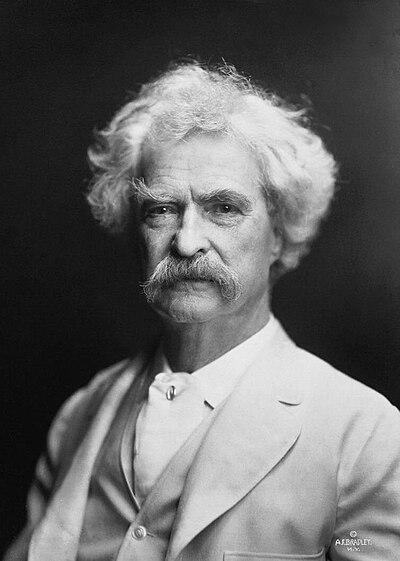


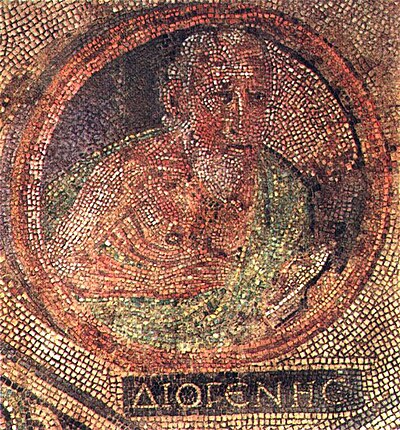


你的独特之处
You are the eternal questioner, passionate about truth, rigorous in reasoning, devoted to the craft of dialogue, and always in the middle of the crowd. Your Epicurean core means you genuinely love the process of inquiry: it's not work for you, it's play. Your Rationalist wiring means your questions have precision: they're not random; they're designed to expose hidden assumptions. Your Sisyphean drive means you never tire of asking the same fundamental questions, each time going deeper. And your Agora nature means you do this in public, with other people, because truth that's found alone hasn't been tested.
The tension in your combination is between your love of questioning (Epicurean-Promethean would seek answers) and your devotion to the process (Sisyphean). You don't actually want the answer: you want the question to become more precise, more honest, more useful. This can frustrate people who want conclusions, solutions, action. For you, the examined life IS the action. The conversation IS the work.
你的优势
Catalytic Questioning
Your questions don't seek information: they create insight. A single well-placed question from you can change someone's entire understanding of a problem.
Dialogic Intelligence
You think best in conversation. Your ideas sharpen through dialogue in a way that solitary thinking can't match. Other people's minds are your lab equipment.
Warm Rigor
Your Epicurean warmth makes your Rationalist precision feel caring rather than cold. People trust your questions because they can feel that you care about the answer.
Persistent Depth
Your Sisyphean nature means you stay with questions long after others have moved on. This persistence produces insights that surface-level inquiry never reaches.
Public Wisdom
Your Agora nature means your insights are shared, tested, and refined in community. Your wisdom isn't private: it's collective.
Intellectual Joy
You actually enjoy thinking, not as a means to an end, but as an end in itself. This joy makes you infectious. People want to think with you because it's genuinely fun.
诚实的弱点
Analysis Paralysis
Your devotion to the question can prevent you from ever arriving at an answer. At some point, you have to stop examining and start acting.
Socratic Annoyance
Your relentless questioning can exhaust people who aren't wired for philosophical dialogue. Not everyone wants their assumptions examined over dinner.
Action Deficit
You can spend so long examining life that you forget to live it. The examined life is worth living, but only if you actually live it.
Indirect Communication
You ask questions when you should make statements. Your Socratic method can feel manipulative when what the situation calls for is a direct answer.
你如何做决定
A friend asks for advice. Instead of giving it, you ask them five questions that help them discover the answer themselves. They're grateful, but they also wish you'd occasionally just tell them what to do.
A group debates a controversial topic with increasing hostility. You'd step in not to take a side, but to reframe the question in a way that makes both sides realize they're arguing about different things. Your superpower is depolarization.
Faced with a major life decision, you'd talk to twelve people, read three books, journal for a week, and then probably ask one more question before deciding. Your process is thorough, but the deadline might have passed by then.
契合度

Same Rationalist-Sisyphean-Agora structure, driven by duty (Stoic) where you're driven by passion (Epicurean). You both teach publicly but with different fuel sources.

Same Epicurean-Rationalist-Agora fire, but they create (Promethean) where you refine (Sisyphean). They burn it down; you examine what's left.

Same Epicurean-Sisyphean-Agora structure, but they observe (Empiricist) where you reason (Rationalist). Both of you love the public square; you just use different tools.

Same Agora engagement but different in every other way: they're Stoic-Empiricist-Promethean. Your questions test their discoveries; their evidence challenges your reasoning.
人际关系
You bring warmth, curiosity, and intellectual engagement to relationships that keeps them from ever becoming stale. You genuinely want to know your partner, not the surface version, the deep version. But your Rationalist questioning can feel like interrogation to someone who just wants to be loved, not understood. The growth edge: sometimes 'I love you' is a better response than 'Why do you think that is?'
You're the friend who remembers birthdays, plans adventures, and makes people feel special. You collect friends easily because your energy is magnetic. The downside: you can spread yourself thin, maintaining fifty friendships at surface level instead of ten at depth. The friendships that sustain you long-term are the ones where you can be tired and boring and still loved.
Full relationship guide →职业与工作风格
你的职业画像
You belong in roles where inquiry itself is productive, teaching, facilitation, philosophical counseling, mediation, or investigative roles. You're the therapist whose questions change lives, the teacher whose class transforms thinking, the facilitator whose meetings actually produce clarity. Avoid roles that demand quick answers, value certainty over curiosity, or treat questions as obstacles to be overcome rather than tools to be wielded.
适合你的职业
Creative direction, brand strategy, or UX design, roles where emotional authenticity and taste drive outcomes, not just data.
Teaching, coaching, or mentorship, work where your contagious enthusiasm becomes someone else's breakthrough. Your energy is a force multiplier.
Entrepreneurship, content creation, or product innovation, environments where passion sustains you through the grind better than a paycheck ever could.
Systems architecture, theoretical research, or strategic planning, work where building mental models is the actual job, not a side effect.
Law, philosophy, or policy design, careers where rigorous reasoning and first-principles thinking produce better outcomes than precedent.
Algorithm design, mathematics, or structural engineering, domains where the elegance of the solution matters as much as whether it works.
Precision manufacturing, watchmaking, or surgical specialization, work where mastery is measured in thousandths of an inch and years of practice.
Editing, quality assurance, or restoration, careers where finding the flaw others missed is the highest form of expertise.
Academic research, archival work, or classical music, domains where depth is more respected than breadth and patience is the differentiator.
Team leadership, community building, or facilitation, roles where connecting people and synthesizing perspectives is the work itself.
Consulting, diplomatic roles, or stakeholder management, careers where navigating between different groups and building consensus creates value.
Teaching, public speaking, or media, work where your ability to communicate complex ideas to diverse audiences is your competitive edge.
应当避开的职业
Highly procedural roles in compliance, accounting, or bureaucratic institutions. The repetition will deaden the thing that makes you exceptional.
Toxic hustle culture that confuses burnout with dedication. You need to love the work, 'just push through' isn't in your operating system.
Highly social roles in HR, community management, or customer service where emotional intelligence outweighs logical analysis.
Chaotic startup environments where 'just try it' trumps 'think it through.' You need space to reason before you act.
Growth-hacking, rapid prototyping, or 'move fast and break things' culture. Your instinct to perfect will be treated as a liability.
Generalist management roles where you're spread thin across ten domains instead of going deep in one. Breadth without depth feels like incompetence to you.
Isolated technical roles with minimal human interaction. You can do the work, but you'll feel disconnected from its purpose without people to share it with.
Highly competitive, zero-sum environments where collaboration is punished. Your instinct to share and build together will be exploited.
你的工作风格
You need meaning in your work, not just a mission statement, actual, daily meaning. You perform best when you believe in what you're building and the people you're building it with. Flexibility matters more to you than hierarchy. You'll take a pay cut to work on something that matters. The danger is chasing novelty when the current work gets hard, build checkpoints that force you to finish before you pivot.
作为同事的你
You're the colleague who raises morale and makes the team actually want to show up. Your enthusiasm is contagious and your emotional intelligence catches problems before they become crises. The trap: you may avoid necessary conflict because it threatens the positive atmosphere you've built. Sometimes the most caring thing is the hard conversation.
压力之下
Under pressure, you seek escape through stimulation. New projects, new environments, new conversations, anything to replace the heavy feeling with something lighter. This isn't laziness; it's your nervous system's way of self-regulating. The problem is that the thing causing the stress is still there when you come back, and now it's bigger because you've been away.
Your stress recovery superpower is that you're actually good at asking for help, better than most types. Use it. The Epicurean who reaches out to their support system during a crisis recovers faster than the one who tries to distract their way through it. Your emotional honesty is an asset, not a vulnerability. The people who love you want to help, let them.
Under pressure, you retreat into your own head. The world gets too chaotic, so you build increasingly elaborate mental models to contain it. The framework becomes a bunker, safe, logical, completely disconnected from the messy reality outside. You can spend days theorizing about a problem without taking a single concrete action to solve it.
Your stress signal is intellectual arrogance, the quiet conviction that you've already figured it out and execution is someone else's problem. When you catch yourself thinking 'if they'd just listen to me, this would be solved,' pause. That's not clarity; that's stress wearing a mask. The most powerful thing a stressed Rationalist can do is get their hands dirty. Build something, fix something, talk to a real user. Theory without reality-testing becomes delusion under pressure.
Under pressure, you tighten your grip. The standard goes up, the tolerance for imperfection goes down, and the pace slows to a crawl. You convince yourself that the problem is quality, 'if I just make this a little better, everything will be fine', when the real problem is that you're afraid of shipping something imperfect into a world that already feels too chaotic.
Your stress signal is control disguised as craft. When you start re-editing emails, reorganizing files that were already organized, or revising work that was already approved: you're not being thorough, you're managing anxiety through the illusion of control. The fix: name the fear. 'I'm afraid this isn't good enough' is honest. Once you say it, you can evaluate it. Usually, it's good enough. Ship it.
Under pressure, you talk more. You process by externalizing, calling friends, scheduling meetings, thinking out loud with anyone who'll listen. This feels productive because you're engaged, you're connecting, you're 'working on it.' But past a certain point, you're not processing; you're ruminating through other people's ears. The conversation becomes a loop, not a path.
Your stress signal is over-socializing. When you're scheduling your fourth coffee of the day to 'talk through' the same problem, you've crossed from processing into avoidance. The fix: one conversation, then one decision. Talk it through with one trusted person, write down the conclusion, and act on it. Your social instincts become your superpower again once they're directed toward action instead of repetition.
Under pressure, you question more, and harder. Your conversations become more probing, your reasoning more relentless, and your tolerance for vague answers disappears. This Socratic overdrive can alienate the people who are trying to help you. Your stress antidote: stop questioning and start stating. 'I'm overwhelmed' is more useful in a crisis than 'What do you think is really going on here?'
高压下你如何沟通
You communicate with your whole self, words, tone, facial expressions, energy. People don't just hear what you're saying; they feel it. This makes you compelling, persuasive, and easy to connect with. You build rapport faster than almost any other type because your emotional transparency signals safety. People trust you quickly because they can see what you're feeling.
In conflicts, you lead with emotion, which is both your gift and your risk. Your honesty cuts through pretense, but it can also escalate situations that needed a cooler approach. The Epicurean who learns to express emotion without being driven by it becomes an extraordinary communicator. Feel everything; say what matters; filter through purpose, not impulse.
You communicate through structure. Your explanations have beginnings, middles, and ends. You define terms, you build from premises, and you arrive at conclusions through visible reasoning. People who think like you find this deeply satisfying. People who don't can feel like they're being lectured rather than talked to.
In conflicts, you try to find the logical core of the disagreement, which is useful but can feel invalidating when the other person's issue is emotional. You can be so focused on 'what's actually true' that you miss 'what's actually wrong.' The Rationalist who learns to validate feelings before restructuring the argument becomes someone people actually want to disagree with, because it always leads somewhere productive.
You communicate through depth. Your explanations are thorough, nuanced, and complete. You cover edge cases, acknowledge exceptions, and give people everything they need to understand the full picture. People who value precision respect you enormously. People who need the headline first may lose patience waiting for it.
In conflicts, you can over-explain, presenting such a comprehensive case that the other person feels overwhelmed rather than persuaded. Your instinct to be thorough can become a weapon when deployed in a disagreement. Learning to lead with your conclusion and then support it, instead of building to it, will make your thoroughness an asset in every conversation, not just the technical ones.
You communicate through connection. Your natural mode is dialogue: you share ideas in progress, invite reactions, and refine in real-time. This makes you collaborative and easy to work with, but it can also make you hard to pin down. Your first statement on any topic is rarely your final one, because you're still thinking. People who understand this love brainstorming with you. People who don't can find you inconsistent.
In conflicts, your instinct is to talk it through, which is healthy until it becomes over-processing. You can hold the same conversation multiple times with different people, seeking the validation that one person couldn't give you. The Agora who learns to resolve conflicts in fewer, deeper conversations instead of many shallow ones becomes exceptional at both harmony and truth.
7 天成长挑战
Small daily actions to build resilience and break your stress patterns.
Monday: Answer a question directly. No counter-question, no Socratic method. Just a straight answer.
Tuesday: Make a decision in under five minutes. Go with your instinct. Don't examine it.
Wednesday: Do something without analyzing why you're doing it. Just act.
Thursday: Tell someone what you think instead of asking what they think. State a position.
Friday: Sit with an unanswered question without trying to resolve it. Practice not knowing.
Saturday: Have a conversation about nothing important. Small talk. Let it be light.
Sunday: Write down one thing you've decided this week. Not a question, a conclusion. Own it.
成长路径
Address: Analysis Paralysis
At some point, you have to stop examining and start acting.
Address: Socratic Annoyance
Not everyone wants their assumptions examined over dinner.
Address: Action Deficit
The examined life is worth living, but only if you actually live it.
Address: Indirect Communication
Your Socratic method can feel manipulative when what the situation calls for is a direct answer.
日常生活
You communicate with your whole self, words, tone, facial expressions, energy. People don't just hear what you're saying; they feel it. This makes you compelling, persuasive, and easy to connect with. You build rapport faster than almost any other type because your emotional transparency signals safety. People trust you quickly because they can see what you're feeling.
Communication, hobbies, pets & more →你的劲敌

你在人群中质疑,他们独自建造。你辩证推理,他们实证检验。你提炼旧有,他们创造新颖。
 NEW
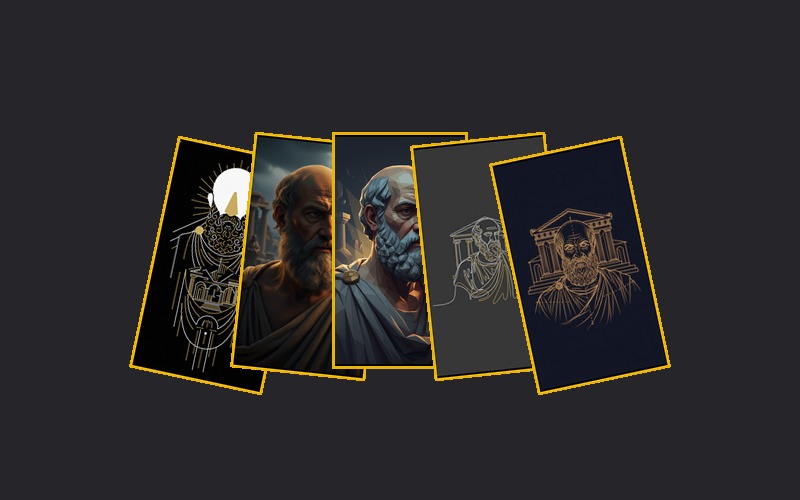
NEW Wallpaper Pack
$266 exclusive phone wallpapers, low-poly, neon blueprint, vintage engraving, minimalist, abstract, and cinematic.
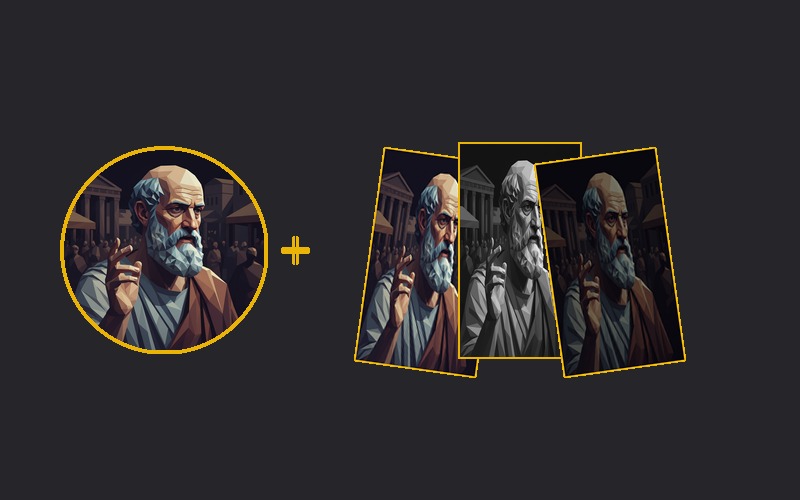 BEST VALUE
 Complete Bundle
$44Everything: the 24-chapter Deep Dive report + 6 exclusive wallpapers. Best value.
 EXCLUSIVE
 Tarot Card Collection
$496 premium print-quality tarot cards in 6 stunning styles: Dark Botanical, Vintage Woodcut, Minimalist Line, Neon Mystic, Stained Glass, Watercolor Dream. Collector edition.
Pay what you want, starting at $1. Every contribution keeps this quiz free, ad-free, and accessible to everyone. Schools and NGOs get everything at no cost. This is self-knowledge for the people, not profit.
常见问题
苏格拉底队 属于哪种性格类型?
苏格拉底队 属于战略家类型(ERDA):Epicurean · Rationalist · Sisyphean · Agora。你不提供答案,你提出问题。你的问题精准犀利,总能让人猛然醒悟,原来自己以为懂的,其实从未真正理解。这不是花招,而是一种天赋。你能给予他人最慷慨的馈赠,就是帮助他们清晰思考。
苏格拉底队 有哪些知名成员?
苏格拉底队 的知名成员包括马克·吐温 (热爱生活的机智之人,运用幽默质疑一切,是最具苏格拉底精神的美国作家。); 多萝西·帕克 (舌锋犀利的质疑者,凭借其辛辣的公开机智揭露虚伪。); 奥普拉·温弗瑞 (充满激情的公众人物,通过质疑数百万人来深化理解。); 第欧根尼 (居于木桶之中,当面质疑亚历山大大帝,挑战一切传统习俗。); 乔恩·斯图尔特 (温暖、热爱生活的公众质疑者,通过苏格拉底式喜剧提升政治对话。); 玛雅·安吉洛 (热爱生活的公众之声,以温暖、诗意和彻底的真诚质疑不公。)。
苏格拉底队 的劲敌是谁?
苏格拉底队 的劲敌是 特斯拉队(匠人大师)。你在人群中质疑,他们独自建造。你辩证推理,他们实证检验。你提炼旧有,他们创造新颖。
深入了解 苏格拉底队
了解苏格拉底队 的优势与超能力,看看苏格拉底队 最合得来的是谁,再读一读苏格拉底队 的关系与爱的完整指南。
在工作上,看看最适合 苏格拉底队 的职业,了解苏格拉底队 如何应对压力。日常方面,看看苏格拉底队 的日常,也认识一下苏格拉底队 的知名成员。

Get your full Team Socrates report, free
Your Team Socrates deep dive: 24 chapters on strengths, blind spots, compatibility, career, money, and stress. One email and it is yours.
One email. One confirmation click and the PDF is yours. No spam, leave anytime.