Under Stress
The Guardian - Fierce protector, steady flame
Your Stress Pattern
When you're stressed, your first instinct is to DO something, anything. Clean the house, start a project, help someone, fix a problem that isn't yours. This looks productive from the outside. From the inside, it's avoidance with good optics. The thing causing the stress doesn't get addressed because you're too busy being useful somewhere else.
Your stress signal is when you can't sit still. When every quiet moment feels intolerable, when you'd rather reorganize the garage than feel what you're feeling: that's your cue to stop. Not forever. Just long enough to ask: what am I running from?
When you're stressed, you grab onto what's familiar. Old routines, old places, old coping mechanisms. This feels safe and stabilizing. But if the stress is caused by something that requires change, your retreat to the familiar can keep you stuck in the exact pattern that's hurting you.
Your stress signal is when you start sentences with 'I've always...' or 'That's just how I am.' When your identity becomes a shield against growth, your roots have become chains. The healthiest thing you can do under stress is try one new thing, just one, and notice that the ground doesn't collapse.
When you're stressed, your fire flares. You become more intense, more reactive, more emotionally charged. Small irritations become existential crises. Your reactions are bigger than the situation warrants, and you know it, which makes you angrier. The spiral accelerates.
Your stress signal is when you start fights about dishes when the real issue is that you feel unseen, or when you catastrophize minor setbacks into evidence that everything is falling apart. When your fire is burning out of control, you need something physical, exercise, cold water, deep breaths, to bring your nervous system back to baseline before you try to think.
When you're stressed, you grip your direction harder. You become more rigid, more certain, more unwilling to consider alternatives. This looks like strength, clear head, decisive action, but it's actually fear disguised as conviction. You're afraid that loosening your grip means losing your way.
Your stress signal is when other people's perspectives start feeling like attacks on your identity. When 'I disagree' triggers 'you don't understand me,' your compass has become a weapon. The healthiest response is to deliberately seek out a perspective that challenges your certainty. Not to adopt it, just to hold it alongside your own.
When truly overwhelmed, go back to basics: feed someone, fix something, hold someone close. Your stress response is to act, and that instinct is correct, just make sure you're addressing the real issue, not a proxy.
Emotional Wellbeing
How your personality type experiences anxiety, burnout, and resilience.
Your Anxiety Signals
Your anxiety manifests as hyperactivity. You can't sit still, you make lists at 3am, you start solving problems that don't exist. Your body processes anxiety as urgency: everything needs to be done NOW.
Your anxiety manifests as control over your immediate environment. You reorganize, you tighten routines, you check on people. If the outside world is unstable, you make your personal world as predictable as possible.
Your anxiety manifests as emotional volatility. Small triggers produce outsized reactions: you snap at people, cry at commercials, feel rage in traffic. Your nervous system is on high alert and every stimulus gets amplified.
Your anxiety manifests as moral urgency. Everything becomes a values question, what you eat, what you buy, how you spend your time. The compass spins faster and faster, trying to find the 'right' answer to every micro-decision.
Burnout Warning Signs
You stop being proactive and start being reactive. When the Torch burns out, you go from 'I'll handle it' to 'I don't care.' The shift is sudden and alarming, both to you and everyone around you.
You stop reaching out. When the Roots wither, you isolate, but it doesn't look like withdrawal because you're still physically present. You're just emotionally unavailable, going through the motions of connection without actually connecting.
Your fire goes out. The person who felt everything at full volume suddenly feels nothing. This emotional numbness is terrifying because your entire identity is built on feeling deeply. When the fire dies, you don't know who you are.
You become cynical. When the Compass breaks, you stop believing your direction matters. The person who always knew what was right suddenly says 'what's the point?' This isn't apathy: it's grief for a sense of purpose that burned out.
Your Resilience Superpower
Your ability to act gives you a recovery tool most people lack: you can literally work your way back to feeling better. Physical action resets your nervous system. Use it intentionally, not reflexively.
Your support network is your recovery system. You've invested so deeply in relationships that when you finally let people know you're struggling, the response is overwhelming. Let them help.
Your intensity is also your recovery engine. When you channel your fire into healing, through art, movement, connection, or purpose, your recovery is faster and more complete than most. Fire doesn't just destroy. It forges.
Your values give you a recovery framework. When you reconnect with WHY you care, the path forward becomes clear again. You don't need new purpose: you need to reconnect with the purpose you already have.
Health & Energy
Exercise Style
You need exercise that feels like doing something, hiking, martial arts, CrossFit, team sports. Pure cardio on a treadmill feels pointless to you. Your body needs a mission, not just movement.
You need exercise that's consistent and community-oriented, walking groups, regular gym buddies, team sports with the same people every week. The routine matters as much as the exercise.
You need exercise that lets you burn, HIIT, boxing, competitive sports, intense dance. Low-intensity steady-state exercise feels like it's wasting your time. You want to leave the gym having left everything on the floor.
You need exercise with purpose, training for a race, following a structured program, tracking metrics. Random gym sessions feel pointless. You want to know that today's workout serves tomorrow's goal.
Energy Patterns
You run hot until you crash. You don't have a gradual energy decline: you're at 100% until you're suddenly at 0%. Build recovery into your schedule before your body forces it.
Your energy is steady and sustainable. You don't have dramatic peaks and crashes: you have a reliable engine that runs all day. The risk is that you never push into the higher gears because comfortable feels good enough.
Your energy is dramatic, high highs and low lows. You can out-energize anyone when you're on, but your crashes are equally dramatic. Learning to moderate instead of oscillate is your lifelong fitness challenge.
Your energy is focused and sustainable when you're aligned with your values. When your life is in integrity, your body has endless fuel. When something is off, ethical compromise, purposelessness, your energy collapses even if nothing physical has changed.
Wellness Tips
Your wellness blindspot is recovery. You treat rest as laziness. Build it into your routine as a non-negotiable task, because that's the only way you'll do it.
Your wellness blindspot is comfort eating. Food is love, community, and tradition for you, which is beautiful until it becomes your primary coping mechanism. Notice when you're eating to feel grounded vs eating to avoid feeling.
Your wellness blindspot is ignoring your body's limits. Your fire says 'more' when your body says 'stop.' Listen to the body. Training through injury isn't brave: it's your intensity overriding your intelligence.
Your wellness blindspot is rigidity. You can become so disciplined about your routine that missing one workout feels like moral failure. Flexibility is a form of strength, sometimes the body needs rest, and the plan can wait.
How You Communicate Under Pressure
You communicate through demonstration. 'Let me show you' is more natural to you than 'let me tell you.' You build trust through consistent action, not eloquent words. People know where they stand with you because your behavior is your message.
The gap in your communication is the emotional layer. You express care through effort, but some people need to hear the words. Practice saying 'I love you' or 'I'm worried about you' without immediately following it with an action item.
You communicate through reliability. Your words have weight because you've always backed them up. People trust your promises because you've never broken one (or if you have, you fixed it). Your communication style is steady, warm, and grounding.
The gap is that you can default to 'safe' conversations. You know how to make people comfortable, but sometimes growth requires discomfort. Practice sharing an opinion that might create friction. Your relationships are strong enough to handle it.
You communicate with your whole body. Your face, your voice, your posture: everything broadcasts your emotional state. This makes you incredibly authentic and compelling. When you're excited, the whole room catches fire. When you're angry, nobody misses it.
The gap is volume control. Not literal volume, emotional volume. You can accidentally silence quieter communicators by filling all the emotional space in a conversation. Practice leaving silence after you speak and explicitly inviting others to respond.
You communicate with purpose and clarity. Every conversation with you goes somewhere. You don't ramble, you don't hedge, and you don't say things you don't mean. This makes you trustworthy and efficient: people know that when you speak, it matters.
The gap is curiosity. Your clarity can come across as closed-mindedness. Practice asking 'tell me more' even when you already have an opinion. People will share more with you when they feel explored, not evaluated.
7-Day Growth Challenge
Small daily actions to build resilience and break your stress patterns.
Monday: Ask someone for help with something you'd normally do yourself. Notice how the world doesn't end.
Tuesday: Write down three things you need that you haven't asked for. Circle one and ask for it today.
Wednesday: Let someone make a mistake without intervening. Watch what they learn from it.
Thursday: Do something purely for your own enjoyment with no one else to take care of.
Friday: Tell someone 'I trust you to handle this', and mean it.
Saturday: Spend two hours alone doing absolutely nothing productive. Feel what comes up.
Sunday: Reflect: When did protecting someone actually hold them back this week?
Growth Path
Practice receiving help
Practice receiving help. Your strength grows when you let others carry weight too.
Check in with yourself: are you protecting someone
Check in with yourself: are you protecting someone because they need it, or because you need to feel needed?
Schedule unstructured time with no one to take car
Schedule unstructured time with no one to take care of. Your soul needs fuel too.
Tell someone you trust: ‘I’m not okay.’ Watch how
Tell someone you trust: ‘I’m not okay.’ Watch how the world doesn’t end.
Keep exploring
 NEW
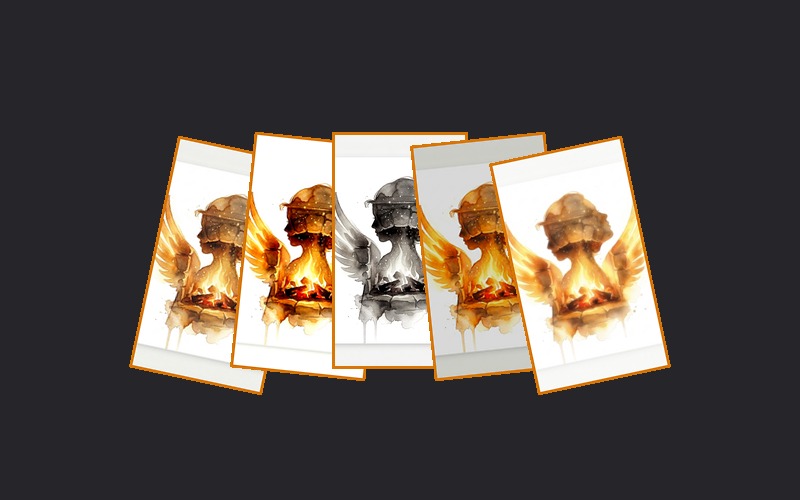
NEW Mood Wallpaper Pack
$266 mood wallpapers (Power, Storm, Calm, Love, Shield, Growth) + 3 affirmation lock screens. 9 exclusive phone backgrounds.
 BEST VALUE
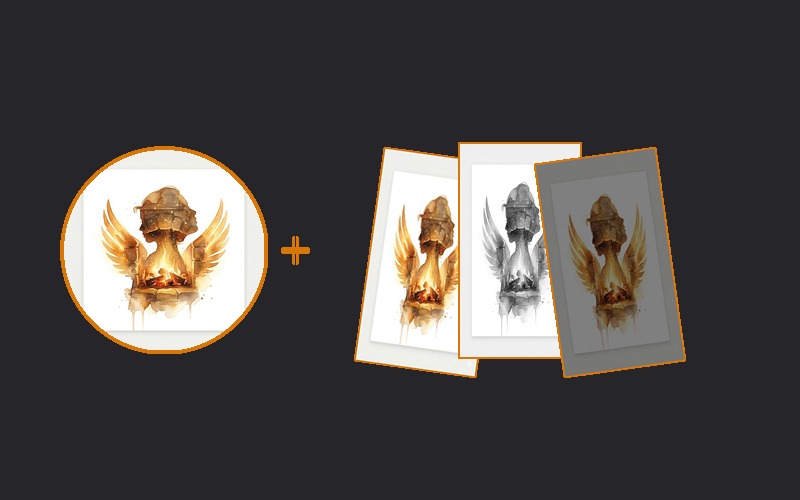
 Complete Bundle
$44Everything: your full archetype report + 9 exclusive wallpapers. Best value.
 EXCLUSIVE
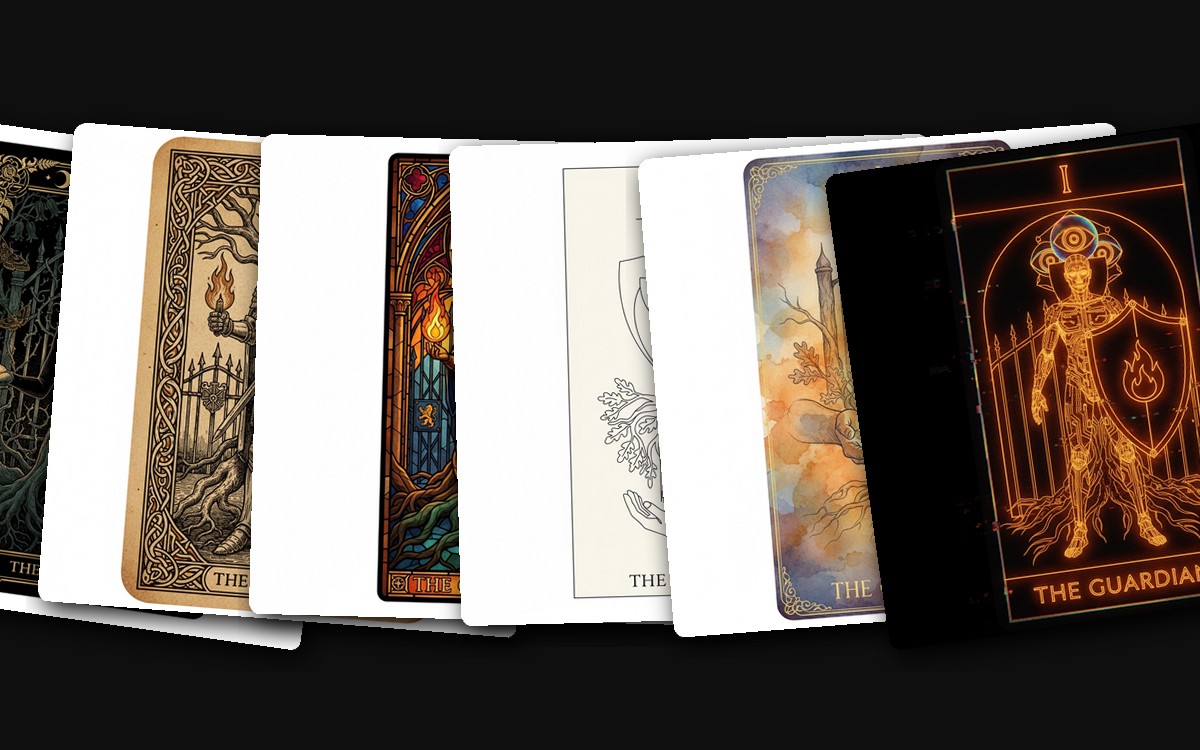
 Tarot Card Collection
$496 premium print-quality tarot cards in 6 stunning styles: Dark Botanical, Vintage Woodcut, Minimalist Line, Neon Mystic, Stained Glass, Watercolor Dream. Collector edition.
Pay what you want, starting at $1. Every contribution keeps this quiz free, ad-free, and accessible to everyone. Schools and NGOs get everything at no cost. This is self-knowledge for the people, not profit.