Strengths & Weaknesses
Team Socrates - The Strategists
What Makes You Unique
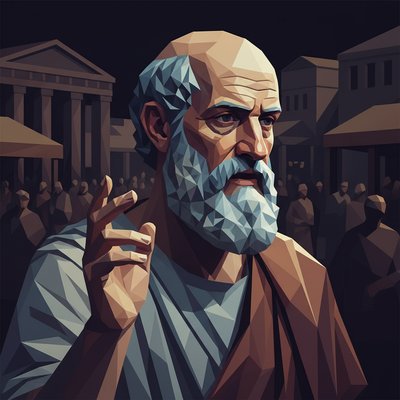
You are the eternal questioner, passionate about truth, rigorous in reasoning, devoted to the craft of dialogue, and always in the middle of the crowd. Your Epicurean core means you genuinely love the process of inquiry: it's not work for you, it's play. Your Rationalist wiring means your questions have precision: they're not random; they're designed to expose hidden assumptions. Your Sisyphean drive means you never tire of asking the same fundamental questions, each time going deeper. And your Agora nature means you do this in public, with other people, because truth that's found alone hasn't been tested.
The tension in your combination is between your love of questioning (Epicurean-Promethean would seek answers) and your devotion to the process (Sisyphean). You don't actually want the answer: you want the question to become more precise, more honest, more useful. This can frustrate people who want conclusions, solutions, action. For you, the examined life IS the action. The conversation IS the work.
Your Strengths
Catalytic Questioning
Your questions don't seek information: they create insight. A single well-placed question from you can change someone's entire understanding of a problem.
Dialogic Intelligence
You think best in conversation. Your ideas sharpen through dialogue in a way that solitary thinking can't match. Other people's minds are your lab equipment.
Warm Rigor
Your Epicurean warmth makes your Rationalist precision feel caring rather than cold. People trust your questions because they can feel that you care about the answer.
Persistent Depth
Your Sisyphean nature means you stay with questions long after others have moved on. This persistence produces insights that surface-level inquiry never reaches.
Public Wisdom
Your Agora nature means your insights are shared, tested, and refined in community. Your wisdom isn't private: it's collective.
Intellectual Joy
You actually enjoy thinking, not as a means to an end, but as an end in itself. This joy makes you infectious. People want to think with you because it's genuinely fun.
Honest Weaknesses
Analysis Paralysis
Your devotion to the question can prevent you from ever arriving at an answer. At some point, you have to stop examining and start acting.
Socratic Annoyance
Your relentless questioning can exhaust people who aren't wired for philosophical dialogue. Not everyone wants their assumptions examined over dinner.
Action Deficit
You can spend so long examining life that you forget to live it. The examined life is worth living, but only if you actually live it.
Indirect Communication
You ask questions when you should make statements. Your Socratic method can feel manipulative when what the situation calls for is a direct answer.
Your Shadow Side
The patterns you fall into when you're not at your best. Uncomfortable, but knowing them is the first step.
Ego Traps
You confuse intensity with depth. Your ego tells you that feeling things strongly makes you more alive than people who feel things quietly. But volume isn't depth, sometimes the quietest conviction is the most profound.
You believe that being logical makes you objective. Your ego tells you that your conclusions are bias-free because they're built from premises, not feelings. But your choice of premises IS the bias: you just can't see it because it looks like logic.
You believe that your high standards make you virtuous. Your ego tells you that caring more about quality than anyone else makes you better than them. It doesn't: it makes you slower, and sometimes the difference between your 'perfect' and their 'good enough' is invisible to everyone except you.
You believe that being liked means being good. Your ego is fed by social approval, and your instinct to please can override your commitment to truth. You'll soften a harsh but necessary message because delivering it would cost you popularity.
Toxic Patterns
You abandon things (and people) when the excitement fades. You chase the spark, and when it dims, in a project, a friendship, a career, you start looking for the next one. You call it 'following your passion.' Others call it 'unreliable.'
You argue to win, not to understand. Your intellectual precision becomes a weapon: you dismantle people's positions with surgical efficiency, then wonder why they stop talking to you. Being right and being kind are different skills.
You use perfectionism to control situations and people. Your standards become rules that others must follow, and 'not good enough' becomes your way of maintaining power. You call it quality control. Others call it micromanagement.
You create dependency. Your warmth and availability make people rely on you, and you subtly encourage that reliance because it makes you feel needed. Your generosity has a shadow: it keeps people close by keeping them dependent.
Self-Sabotage
You avoid the boring work that makes exciting work possible. You'll start the novel but not edit it. You'll launch the business but not do the accounting. The gap between your vision and your execution is filled with things you found too tedious to finish.
You over-think everything until action becomes impossible. Your mind can build a perfect model of every scenario, including all the reasons not to act. Analysis becomes the activity, and the actual thing never gets done.
You never ship. You never finish. You never let go. Your work sits in a perpetual state of 'almost ready' because releasing it means accepting that it's imperfect, and imperfection feels like death to you.
You outsource your judgment. You poll so many people before every decision that your own voice gets drowned out. You know what everyone else thinks but have lost track of what you think. Consensus becomes a substitute for conviction.
How You Think
You decide by asking 'what feels right?', not impulsively, but through authentic emotional intelligence. You trust your gut because your gut has been educated by experience.
You decide by asking 'what follows logically?': you reason from principles, not precedent. If the logic is sound, you'll go against popular opinion without hesitation.
You decide by asking 'what will stand the test of time?': you choose depth over breadth and quality over speed. You're willing to wait for the right answer.
You decide through dialogue. You test your thinking against other people's perspectives, synthesize the best ideas, and emerge with a decision that's stronger than any individual input.
How You Decide
A friend asks for advice. Instead of giving it, you ask them five questions that help them discover the answer themselves. They're grateful, but they also wish you'd occasionally just tell them what to do.
A group debates a controversial topic with increasing hostility. You'd step in not to take a side, but to reframe the question in a way that makes both sides realize they're arguing about different things. Your superpower is depolarization.
Faced with a major life decision, you'd talk to twelve people, read three books, journal for a week, and then probably ask one more question before deciding. Your process is thorough, but the deadline might have passed by then.
Keep exploring
 NEW
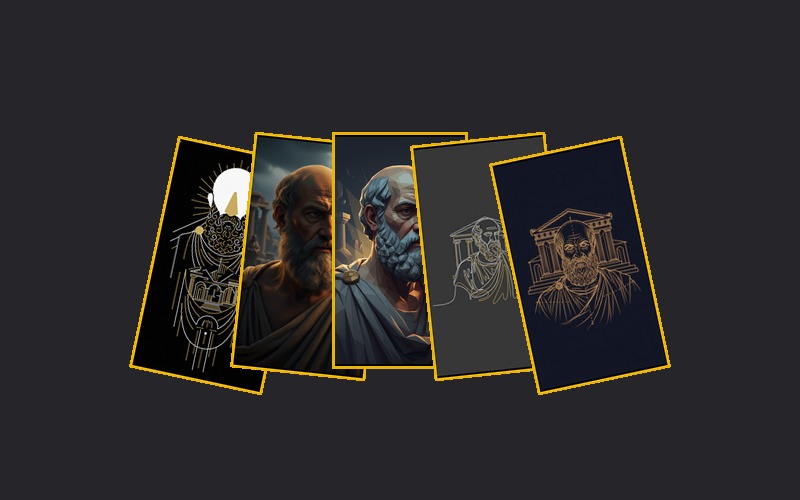
NEW Wallpaper Pack
$266 exclusive phone wallpapers, low-poly, neon blueprint, vintage engraving, minimalist, abstract, and cinematic.
 BEST VALUE
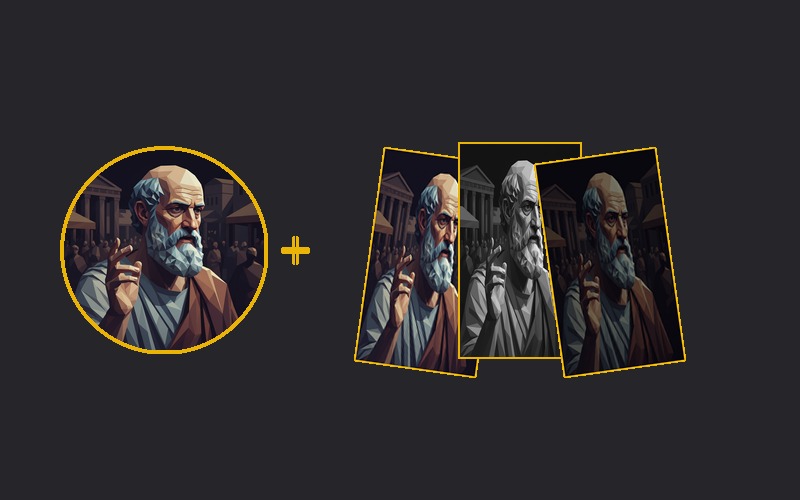
 Complete Bundle
$44Everything: the 24-chapter Deep Dive report + 6 exclusive wallpapers. Best value.
 EXCLUSIVE
 Tarot Card Collection
$496 premium print-quality tarot cards in 6 stunning styles: Dark Botanical, Vintage Woodcut, Minimalist Line, Neon Mystic, Stained Glass, Watercolor Dream. Collector edition.
Pay what you want, starting at $1. Every contribution keeps this quiz free, ad-free, and accessible to everyone. Schools and NGOs get everything at no cost. This is self-knowledge for the people, not profit.