Strengths & Weaknesses
Team Tesla - The Craftmasters
What Makes You Unique
You are discipline channeled through experiment toward invention, processed in solitude. This is the rarest and most potent combination on the board, the person who creates the future alone in a workshop, driven not by passion but by duty to the work itself. Where other creators need an audience, you need a workbench. Where other innovators need inspiration, you need data. Your Stoic core keeps you going when the project should have killed you. Your Empiricist wiring means every breakthrough is earned through trial and error, not epiphany. And your Promethean drive means you're never building the same thing twice.
The tension in your combination is between creation and patience. Your Promethean side wants to leap to the next thing, but your Stoic-Empiricist core insists on doing it right. This creates an internal tug-of-war that, when resolved, produces work of extraordinary quality and originality. When unresolved, it produces isolation and frustration, the inventor who can't explain why no one else sees what they see.
Your Strengths
Relentless Focus
You can sustain deep work on a single problem longer than almost anyone. Where others context-switch and multitask, you drill down until you hit the core. This is your superpower in any domain that rewards depth.
Evidence-Based Innovation
You don't just dream up ideas: you test them. Every prototype teaches you something, and you iterate faster alone than most teams do together. Your innovations are grounded, not speculative.
Emotional Steadiness
You don't panic. In crises, your heart rate stays the same while everyone else is spiraling. This makes you the person people rely on when everything is falling apart.
Self-Sufficiency
You need remarkably little from others to produce remarkable work. Give you a problem, a deadline, and solitude, and you'll outperform entire departments.
Patient Persistence
You understand that the best work takes time. You don't rush to ship; you rush to learn. This patience produces breakthroughs that faster, flashier people miss.
Intellectual Independence
You form your own conclusions from your own evidence. You're not swayed by trends, opinions, or authority, only by what you've observed and verified yourself.
Honest Weaknesses
Emotional Isolation
Your combination of Stoic suppression and Solitary withdrawal means people often have no idea what you're feeling. This isn't strength: it's a communication gap that costs you relationships, opportunities, and support you actually need.
Perfectionist Paralysis
Your Empiricist side wants more data, your Stoic side wants to do it right, and your Solitary side won't show it until it's perfect. This triple-lock can keep you from shipping work that's already better than anyone else's.
Delegation Resistance
You believe (often correctly) that you can do it better alone. But this ceiling is real, the work you can't do alone is the work that defines your career's upper limit.
Social Invisibility
Your work speaks for itself, but it whispers. You're terrible at self-promotion, networking, and the kind of visibility that turns good work into recognized work. The world rewards what it sees, not what it knows.
Your Shadow Side
The patterns you fall into when you're not at your best. Uncomfortable, but knowing them is the first step.
Ego Traps
You mistake emotional suppression for emotional strength. Your ego tells you that feeling nothing makes you superior to people who feel everything. It doesn't: it makes you a ticking bomb with excellent posture.
You believe that having evidence makes you right. Your ego tells you that data-backed opinions are inherently superior to intuition-backed ones. But evidence can be cherry-picked, and the most important truths are often the ones you can't measure.
You believe that creating something new makes you more valuable than maintaining something old. Your ego ranks inventors above operators, pioneers above farmers. But the world runs on maintenance, not just breakthroughs.
You believe that needing people is weakness. Your ego tells you that self-sufficiency is the highest virtue, and anyone who needs social connection is less evolved than you. But humans are social animals, your isolation isn't enlightenment, it's avoidance with a philosophical justification.
Toxic Patterns
You weaponize silence. When you're angry, you don't fight: you withdraw. You punish people by withholding your presence, your words, your engagement. You call it 'not being reactive.' They call it 'emotional abandonment.'
You dismiss people's feelings as irrational. When someone tells you how they feel, your instinct is to fact-check rather than empathize. 'But that's not what happened' may be true and still be the wrong response.
You leave a trail of abandoned projects and people. Each new thing feels like progress, but from the outside it looks like a pattern of broken promises. The people who relied on version 1.0 don't care about your excitement for version 2.0.
You ghost people without explanation. When a relationship becomes uncomfortable, you simply disappear. No conversation, no closure, no conflict. You call it 'protecting your energy.' They call it 'being ghosted by someone they thought cared about them.'
Self-Sabotage
You refuse help until you collapse. Your identity is so wrapped up in self-sufficiency that accepting support feels like failure. You'd rather burn out alone than admit you need someone.
You wait for certainty that never comes. You collect data until the deadline passes, the opportunity closes, or the relationship ends, all because you couldn't act without being sure. Certainty is a luxury; courage is a requirement.
You destroy things that are working because they bore you. A perfectly good career, relationship, or routine gets blown up not because it failed, but because it stopped being novel. You mistake boredom for a sign that something is wrong.
You cut yourself off from the feedback that would make your work better. Working alone feels safe, but it also means no one challenges your assumptions, spots your blind spots, or tells you when you're wrong. Your echo chamber has an audience of one.
How You Think
You decide by asking 'what must be done?', duty and discipline override preference. You're comfortable with unpleasant decisions because you separate emotion from action.
You decide by asking 'what does the evidence show?': you gather data, test assumptions, and choose the option with the strongest track record. You're slow to decide but rarely wrong.
You decide by asking 'what's the biggest opportunity?': you optimize for upside and novelty. Safe choices bore you; you'd rather take a calculated risk on something new.
You decide alone. You gather input selectively, then retreat to process it without pressure. Your best decisions come from quiet reflection, not group discussion.
How You Decide
A colleague pitches a flashy but untested approach to a critical project. You'd quietly decline, run your own smaller experiment on the side, and present the results only after you had data. You don't argue with enthusiasm: you let evidence do the arguing.
Offered a promotion that means managing people instead of building things. You'd hesitate, not because you can't lead, but because leadership means meetings, visibility, and less time at the workbench. You'd only accept if the role still protected your deep work time.
Your prototype fails publicly. While others scramble to assign blame or pivot to something safer, you'd go home, analyze what broke, and come back tomorrow with version two. Failure isn't a setback for you: it's data.
Keep exploring
 NEW
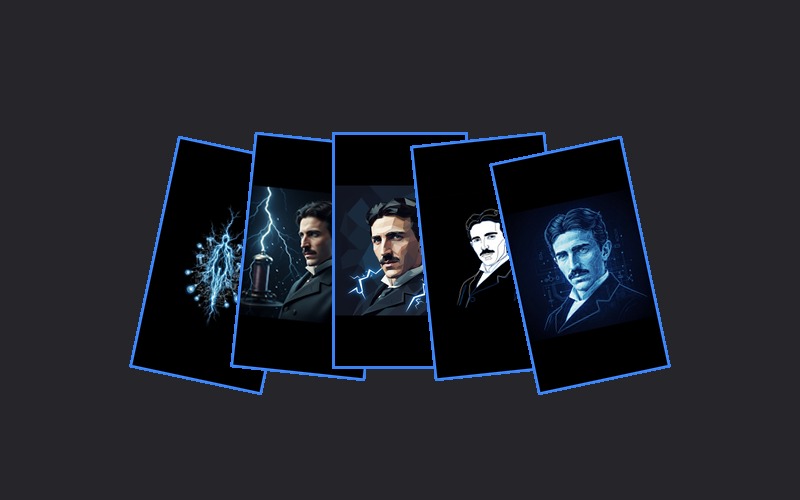
NEW Wallpaper Pack
$266 exclusive phone wallpapers, low-poly, neon blueprint, vintage engraving, minimalist, abstract, and cinematic.
 BEST VALUE
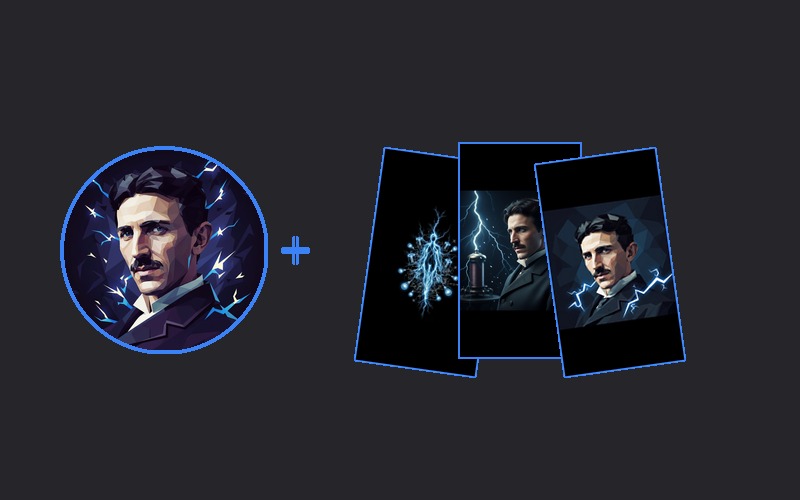
 Complete Bundle
$44Everything: the 24-chapter Deep Dive report + 6 exclusive wallpapers. Best value.
 EXCLUSIVE
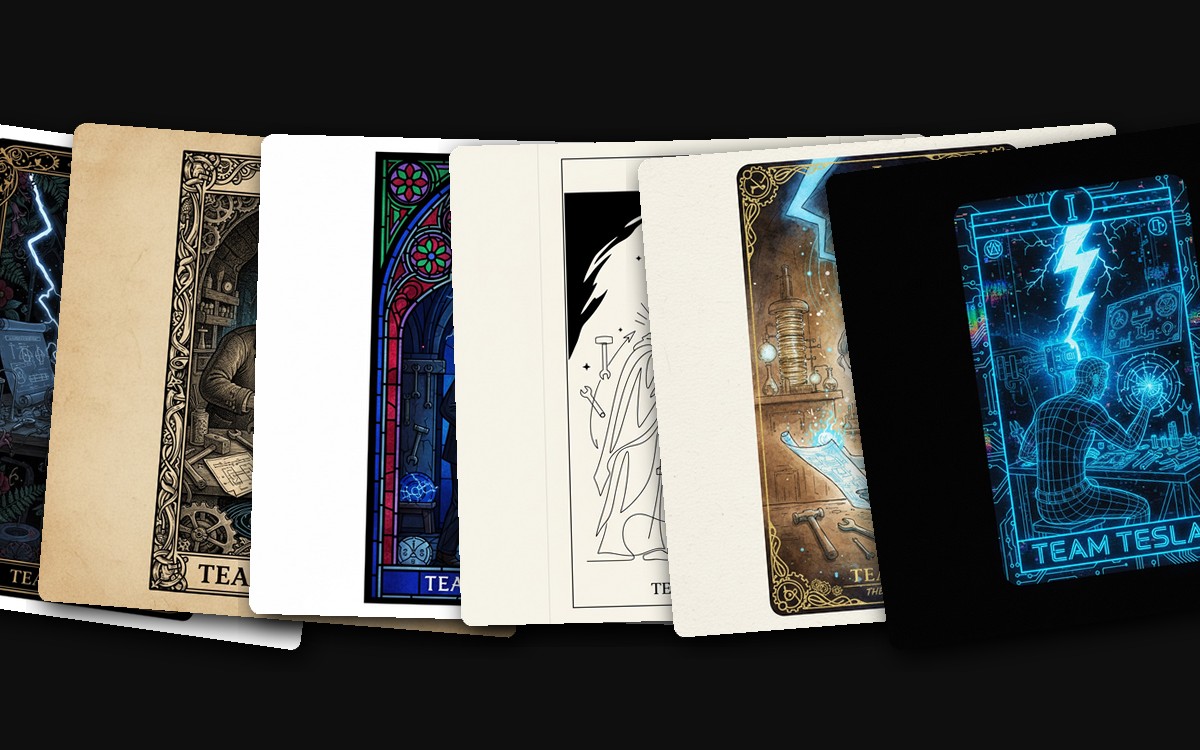
 Tarot Card Collection
$496 premium print-quality tarot cards in 6 stunning styles: Dark Botanical, Vintage Woodcut, Minimalist Line, Neon Mystic, Stained Glass, Watercolor Dream. Collector edition.
Pay what you want, starting at $1. Every contribution keeps this quiz free, ad-free, and accessible to everyone. Schools and NGOs get everything at no cost. This is self-knowledge for the people, not profit.