
Career & Money
Team Confucius - The Anthropologists
Your Career Profile
You belong in roles that combine deep expertise with teaching or mentorship, academic scholarship, judicial service, institutional leadership, or any domain where preserving and transmitting knowledge is the primary function. You're the professor who's been teaching the same course for twenty years and it's better every time. Avoid fast-moving, trend-driven industries where experience is devalued and novelty is worshipped.
Careers That Fit
Emergency medicine, crisis management, or military leadership, environments where emotional control is a survival skill, not a personality quirk.
Long-cycle engineering, infrastructure, or research science, work where the payoff is years away and most people would quit before seeing results.
Financial risk management, compliance, or quality assurance, roles that reward patience, vigilance, and the ability to say 'no' when everyone else says 'yes'.
Systems architecture, theoretical research, or strategic planning, work where building mental models is the actual job, not a side effect.
Law, philosophy, or policy design, careers where rigorous reasoning and first-principles thinking produce better outcomes than precedent.
Algorithm design, mathematics, or structural engineering, domains where the elegance of the solution matters as much as whether it works.
Precision manufacturing, watchmaking, or surgical specialization, work where mastery is measured in thousandths of an inch and years of practice.
Editing, quality assurance, or restoration, careers where finding the flaw others missed is the highest form of expertise.
Academic research, archival work, or classical music, domains where depth is more respected than breadth and patience is the differentiator.
Team leadership, community building, or facilitation, roles where connecting people and synthesizing perspectives is the work itself.
Consulting, diplomatic roles, or stakeholder management, careers where navigating between different groups and building consensus creates value.
Teaching, public speaking, or media, work where your ability to communicate complex ideas to diverse audiences is your competitive edge.
Careers to Avoid
High-energy sales or entertainment roles that demand constant emotional performance. You'll burn out pretending to be excited about things that don't move you.
Fast-pivoting startup culture where 'fail fast' means abandoning discipline for speed. Your superpower is endurance, not improvisation.
Highly social roles in HR, community management, or customer service where emotional intelligence outweighs logical analysis.
Chaotic startup environments where 'just try it' trumps 'think it through.' You need space to reason before you act.
Growth-hacking, rapid prototyping, or 'move fast and break things' culture. Your instinct to perfect will be treated as a liability.
Generalist management roles where you're spread thin across ten domains instead of going deep in one. Breadth without depth feels like incompetence to you.
Isolated technical roles with minimal human interaction. You can do the work, but you'll feel disconnected from its purpose without people to share it with.
Highly competitive, zero-sum environments where collaboration is punished. Your instinct to share and build together will be exploited.
Your Work Style
You thrive in structured environments with clear expectations and long time horizons. Open-plan offices drain you, not because of noise, but because of the constant performance of being 'present.' You do your best work when left alone with a hard problem and a deadline. Give you autonomy and accountability, and you'll outperform anyone in the building. Micromanage you, and you'll quietly disengage.
You want to understand the system before you work within it. You're the person who reads the documentation before touching the code, maps the org chart before scheduling meetings, and builds a framework before writing the first line. You thrive when given complex problems and the time to think. Your frustration point is environments that reward speed over correctness and confidence over competence.
You want to go deep. One domain, one craft, one problem, mastered over years, not months. You're the person who's still improving at something everyone else declared 'good enough' three iterations ago. You thrive in environments that value expertise and craftsmanship. Your frustration point is organizations that rotate people through roles every 18 months, treating depth as a luxury they can't afford.
You think out loud and you think best with others. Your workspace is wherever the conversation is happening, the whiteboard, the video call, the coffee shop. You energize through dialogue and wilt in isolation. You're the person who turns a solo task into a collaboration because you genuinely believe two heads are better than one. The organizations that get the best from you give you a team to lead and a problem that requires consensus.
Your Money Philosophy
How You Spend
You spend deliberately, rarely impulsively. You'd rather have a full emergency fund than a new gadget. Your relationship with money is disciplined, which is a strength until it becomes stinginess disguised as virtue.
You think about money systemically. You understand compound interest, opportunity cost, and tax optimization intuitively. You'd rather build a financial system once than make individual decisions repeatedly. The danger: you can optimize yourself out of enjoying your money.
You buy quality and keep things forever. You'd rather spend more on one excellent item than replace cheap ones repeatedly. Your possessions are curated, maintained, and deeply valued. You're the person who still uses the wallet they bought ten years ago.
You spend on people. Dinners, gifts, experiences, hosting, your money flows outward toward connection. Your generosity is genuine and sometimes unsustainable. You'd rather be broke and surrounded by happy friends than rich and alone.
Financial Blind Spots
You under-invest in experiences and relationships because the ROI isn't measurable. The dinner with friends, the vacation, the gift that says 'I was thinking of you', these feel wasteful to you, but they're investments in the things that actually matter.
You can be so focused on the optimal financial strategy that you miss the human element. Money is a tool for living, not a system to be perfected. Sometimes the 'suboptimal' choice, the generous gift, the spontaneous trip, is the right one.
You can be penny-wise and pound-foolish in reverse, spending too much on premium quality where standard would do. Not every purchase needs to be 'the best.' Sometimes good enough is genuinely good enough.
You over-spend on social obligations and under-invest in yourself. The round of drinks, the birthday gift, the 'let me get this one': it adds up. Learning to say 'let's split it' isn't cheap, it's sustainable.
Money Strengths
Long-term financial planning. You can delay gratification for decades, build savings methodically, and resist lifestyle inflation. Your financial discipline is your quiet superpower.
Financial architecture. You build systems (automatic savings, investment portfolios, tax strategies) that work without daily attention. Your money works while you think.
Low waste, high value. You don't accumulate things you don't need, and what you own serves you well. Your financial footprint is smaller than it looks because you extract maximum value from every purchase.
Generous resource allocation. You use money as a tool for building relationships and community, which creates social capital that pays dividends no investment account can match.
You as a Colleague
You're the colleague everyone trusts but few truly know. You deliver consistently, you don't play politics, and you absorb pressure without complaint. The trap: people will load you up because you never push back. Learn to say 'I'm at capacity' before you're at breaking point, because once you break, you don't bend first.
You're the colleague who sees the system everyone else is trapped inside. You can redesign processes, identify structural problems, and propose solutions that address root causes instead of symptoms. The trap: your theoretical elegance can miss practical realities. The best framework in the world fails if the people using it don't understand it. Translate your thinking into their language.
You're the colleague who catches the mistakes everyone else missed. You maintain quality standards that make the entire team look good. Your thoroughness protects the organization from errors that would cost far more than the time you spent preventing them. The trap: perfectionism can slow the team when speed matters. Learn to calibrate your quality standard to the stakes, not everything needs to be flawless.
You're the colleague who makes teams function. You facilitate, you mediate, you translate between departments that don't speak each other's language. Your social intelligence is an organizational asset. The trap: consensus-seeking can become conflict-avoidance. When you sense disagreement, your instinct is to smooth it over, but some disagreements need to be aired, not managed.
Keep exploring
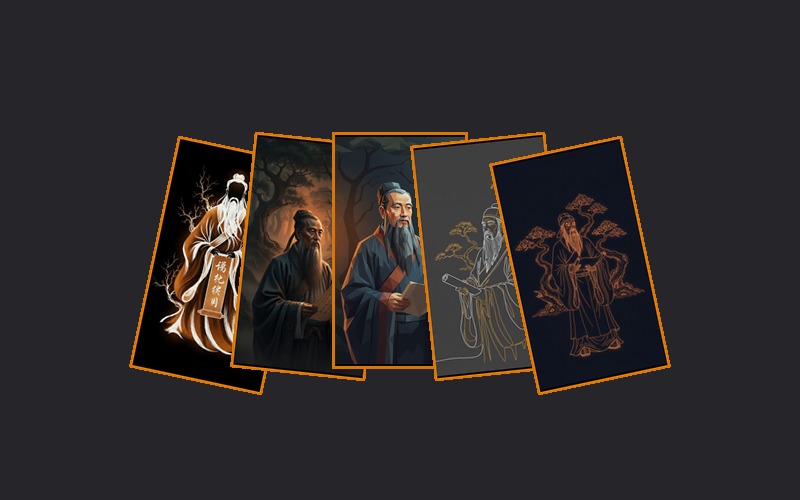 NEW
NEW Wallpaper Pack
$266 exclusive phone wallpapers, low-poly, neon blueprint, vintage engraving, minimalist, abstract, and cinematic.
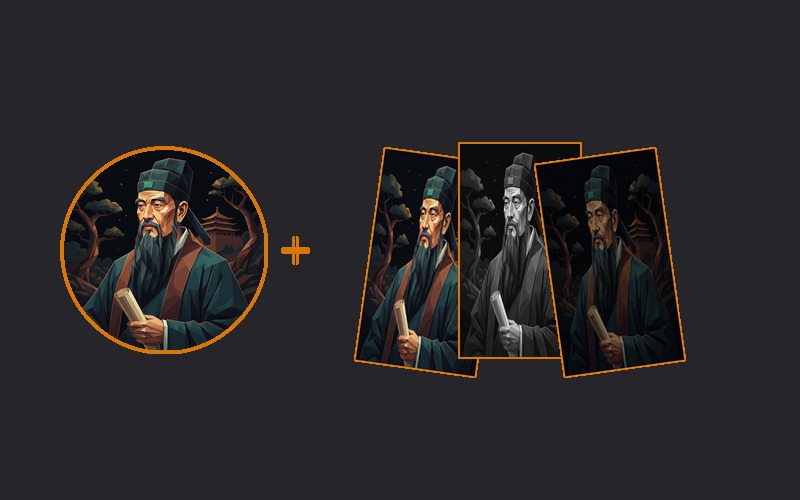 BEST VALUE
 Complete Bundle
$44Everything: the 24-chapter Deep Dive report + 6 exclusive wallpapers. Best value.
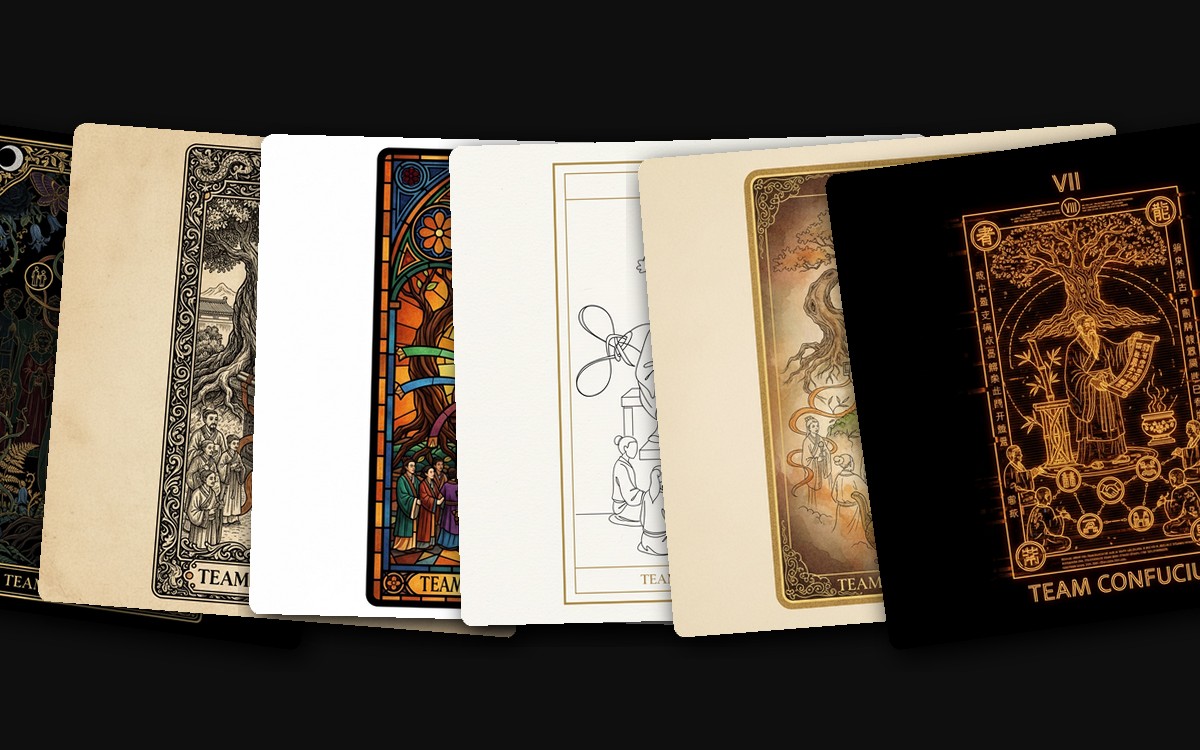 EXCLUSIVE
 Tarot Card Collection
$496 premium print-quality tarot cards in 6 stunning styles: Dark Botanical, Vintage Woodcut, Minimalist Line, Neon Mystic, Stained Glass, Watercolor Dream. Collector edition.
Pay what you want, starting at $1. Every contribution keeps this quiz free, ad-free, and accessible to everyone. Schools and NGOs get everything at no cost. This is self-knowledge for the people, not profit.