
Daily Life
Team Confucius - How you live, create, and communicate
How You Communicate
You say less than you think. Your communication style is economical: you don't waste words, you don't perform emotions, and you don't repeat yourself. When you speak, it carries weight because people know you don't do it for show. The gap between what you feel and what you express is the largest of any type, and it's both your signature strength and your core vulnerability.
In conflicts, you go quiet, which most people interpret as either agreement or hostility, neither of which is accurate. You're processing. The problem is that your silence gives the other person nothing to work with, so they fill it with assumptions. Learning to say 'I need time to think about this, but I hear you' is the single most useful communication upgrade you can make.
You communicate through structure. Your explanations have beginnings, middles, and ends. You define terms, you build from premises, and you arrive at conclusions through visible reasoning. People who think like you find this deeply satisfying. People who don't can feel like they're being lectured rather than talked to.
In conflicts, you try to find the logical core of the disagreement, which is useful but can feel invalidating when the other person's issue is emotional. You can be so focused on 'what's actually true' that you miss 'what's actually wrong.' The Rationalist who learns to validate feelings before restructuring the argument becomes someone people actually want to disagree with, because it always leads somewhere productive.
You communicate through depth. Your explanations are thorough, nuanced, and complete. You cover edge cases, acknowledge exceptions, and give people everything they need to understand the full picture. People who value precision respect you enormously. People who need the headline first may lose patience waiting for it.
In conflicts, you can over-explain, presenting such a comprehensive case that the other person feels overwhelmed rather than persuaded. Your instinct to be thorough can become a weapon when deployed in a disagreement. Learning to lead with your conclusion and then support it, instead of building to it, will make your thoroughness an asset in every conversation, not just the technical ones.
You communicate through connection. Your natural mode is dialogue: you share ideas in progress, invite reactions, and refine in real-time. This makes you collaborative and easy to work with, but it can also make you hard to pin down. Your first statement on any topic is rarely your final one, because you're still thinking. People who understand this love brainstorming with you. People who don't can find you inconsistent.
In conflicts, your instinct is to talk it through, which is healthy until it becomes over-processing. You can hold the same conversation multiple times with different people, seeking the validation that one person couldn't give you. The Agora who learns to resolve conflicts in fewer, deeper conversations instead of many shallow ones becomes exceptional at both harmony and truth.
Hobbies & Creativity
Your Creative Style
Disciplined and structured. You approach creativity like a craft: daily practice, incremental improvement, mastery through repetition. You're the person who writes 500 words every morning regardless of inspiration.
Structural and systematic. You create through patterns, music theory, architectural design, game mechanics, procedural art. Your creativity has a logical backbone that other types might miss.
Deep and refined. You choose one medium and spend years mastering it. Your 10,000th hour looks different from your 100th in ways only an expert would notice. You care about details that most people can't perceive.
Collaborative and performative. You create WITH people, jam sessions, writing groups, community projects, collaborative art. Your creativity is amplified by dialogue, feedback, and audience.
Hobbies That Fit
Martial arts, woodworking, calligraphy, distance running, chess, meditation, journaling. Activities that reward discipline and improve through practice.
Programming, board game design, chess, music composition (theory-heavy), architecture models, mathematical puzzles, philosophy reading, strategy games. Activities that reward systematic thinking.
Instrument mastery, leatherworking, calligraphy, fine woodworking, restoration, model building, competitive baking, classical painting technique. Activities that reward patience and precision.
Team sports, book clubs, board game nights, community theater, choir, collaborative cooking, social dancing, volunteering. Activities that combine creation with connection.
Hobby Traps
You turn hobbies into obligations. The guitar practice becomes a chore, the meditation becomes a KPI. Remember: hobbies exist for joy, not productivity.
You intellectualize creativity until the joy disappears. The music becomes all theory, the writing becomes all structure, the cooking becomes all chemistry. Let yourself make something ugly. The imperfect thing you finished is worth more than the perfect thing you planned.
You turn recreation into another performance standard. The hobby that was supposed to relax you now stresses you because you can't do it well enough. Lower the bar. Hobbies are allowed to be mediocre: that's what makes them hobbies.
You never develop a solo skill because everything is social. The ability to sit alone with a craft, no audience, no feedback, no collaboration, builds a kind of creative depth that group activities can't provide.
Your Pet Personality
Ideal Pet
A loyal, low-drama companion that respects your space. A well-trained dog (think: German Shepherd, Akita) or a cat that doesn't need constant attention. You want reliability, not performance.
A cat. Independent, low-maintenance, and doesn't require you to perform enthusiasm. Alternatively, a chess-playing octopus, if that were possible, you'd have one. You want a pet that thinks, not one that needs.
A pet that rewards long-term investment. A well-trained dog whose obedience reflects years of patient work, or a bonsai tree (yes, it counts) that you've been shaping for a decade. You want craft, not convenience.
A dog. A social, expressive, community-building dog that introduces you to other dog owners at the park. Your pet is a social catalyst, the reason you stop and talk to the neighbor, the excuse to organize the group walk.
You as a Pet Owner
You'll be the most consistent pet owner anyone has ever seen. Feeding schedule: precise. Vet appointments: never missed. Emotional bonding: deep but expressed through care, not cuddles.
You'll develop a theoretical framework for your pet's behavior within the first month. You understand why your cat does what it does better than the cat does. The relationship is one of mutual intellectual respect.
Your pet is the best-behaved animal in any room. You've put in the work, the consistent training, the balanced diet, the meticulous grooming. Other pet owners ask for your advice. You deflect, but you're quietly proud.
Your dog has more friends than most people's dogs. You know every dog owner in the neighborhood by name. Dog park trips become community events. Your pet doesn't just have an owner: it has a social coordinator.
Recommended Reading
'The Analects' by Confucius, the source text for principled teaching
'The Art of Learning' by Josh Waitzkin, mastery as a lifelong process
'Educated' by Tara Westover, the power and responsibility of transmitted knowledge
Keep exploring
 NEW
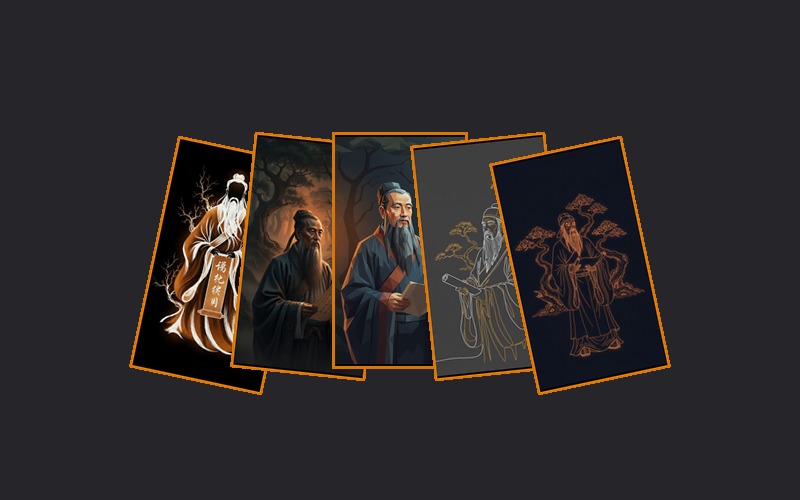
NEW Wallpaper Pack
$266 exclusive phone wallpapers, low-poly, neon blueprint, vintage engraving, minimalist, abstract, and cinematic.
 BEST VALUE
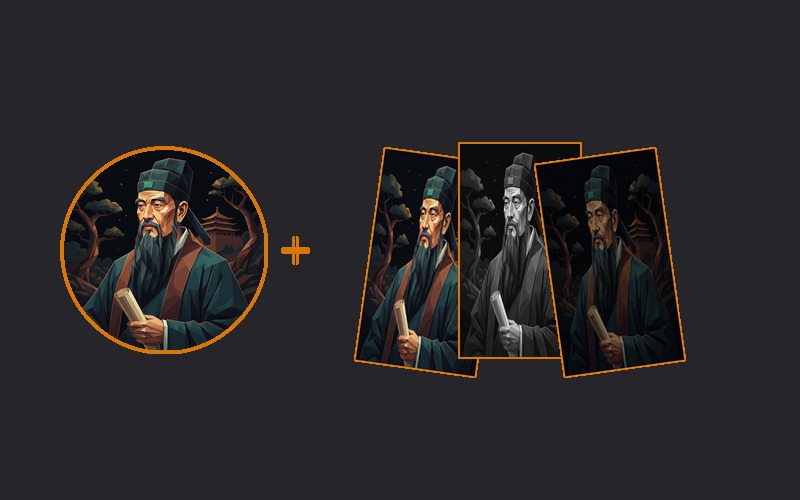
 Complete Bundle
$44Everything: the 24-chapter Deep Dive report + 6 exclusive wallpapers. Best value.
 EXCLUSIVE
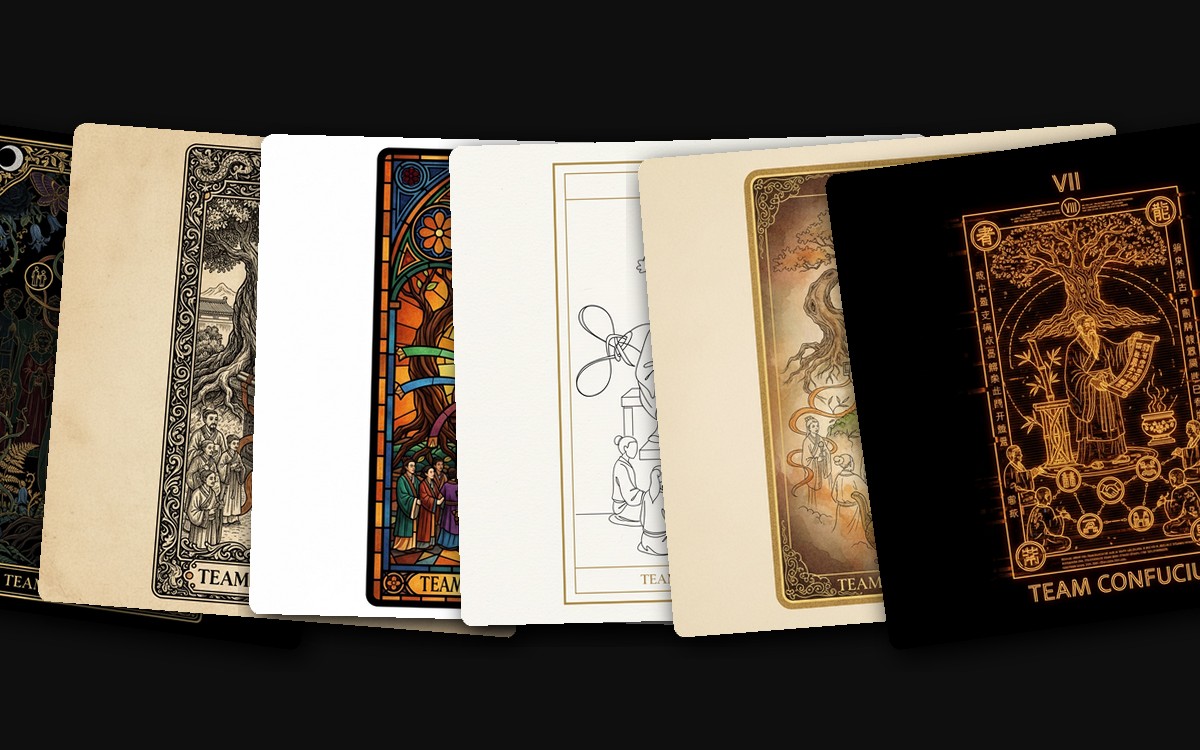
 Tarot Card Collection
$496 premium print-quality tarot cards in 6 stunning styles: Dark Botanical, Vintage Woodcut, Minimalist Line, Neon Mystic, Stained Glass, Watercolor Dream. Collector edition.
Pay what you want, starting at $1. Every contribution keeps this quiz free, ad-free, and accessible to everyone. Schools and NGOs get everything at no cost. This is self-knowledge for the people, not profit.