
Strengths & Weaknesses
Team Da Vinci - The Tinkerers
What Makes You Unique
You are curiosity without a leash, passionate, hands-on, endlessly inventive, and gloriously scattered. Your Epicurean core means you're driven by wonder, not duty. Your Empiricist wiring means every idea gets tested against reality. Your Promethean drive means you're never satisfied with the current state of knowledge. And your Solitary nature means your best discoveries happen in the private chaos of your own workshop.
The tension in your combination is between your limitless curiosity (Promethean-Epicurean) and your need for evidence (Empiricist). You want to explore everything, but you also want to prove everything, and you can't do both in one lifetime. The result is notebooks full of brilliant observations, half-finished prototypes, and connections between fields that nobody else has made. Your greatest risk is dying with your best ideas in your head.
Your Strengths
Polymathic Curiosity
You see connections between fields that specialists miss because you're the only person who's looked at both. Your cross-pollination of ideas produces genuinely novel solutions.
Hands-On Innovation
You don't just theorize: you build, test, sketch, prototype. Your Empiricist grounding means your creativity produces real things, not just interesting thoughts.
Passionate Engagement
When you're interested in something, your energy is boundless. Your Epicurean warmth combined with Empiricist rigor makes you both inspiring and credible.
Independent Discovery
You find things that nobody was looking for because you explore without a roadmap. Your Solitary nature protects your curiosity from the gravitational pull of consensus.
Visual-Spatial Intelligence
You think in images, diagrams, and spatial relationships. Your notebooks aren't written: they're drawn. This gives you a unique perspective that word-based thinkers can't access.
Adaptive Problem-Solving
Your Epicurean flexibility combined with Empiricist reality-testing makes you exceptionally good at improvising solutions when the original plan fails.
Honest Weaknesses
Chronic Non-Completion
Your notebooks are full of brilliant starts and almost no finishes. Your Promethean drive toward the new constantly pulls you away from the hard work of completing the old.
Social Invisibility
Your Solitary nature means your discoveries often stay in your workshop. The world benefits from your ideas only when someone else finds them and publishes them, sometimes centuries later.
Focus Fragmentation
Eleven open projects means none get your full attention. Your breadth of curiosity, while genuinely valuable, prevents the depth of focus that produces your best work.
Emotional Inconsistency
Your Epicurean energy ebbs and flows with your interest level. When the passion fades, so does your productivity, and you don't have a Stoic discipline system to fill the gap.
Your Shadow Side
The patterns you fall into when you're not at your best. Uncomfortable, but knowing them is the first step.
Ego Traps
You confuse intensity with depth. Your ego tells you that feeling things strongly makes you more alive than people who feel things quietly. But volume isn't depth, sometimes the quietest conviction is the most profound.
You believe that having evidence makes you right. Your ego tells you that data-backed opinions are inherently superior to intuition-backed ones. But evidence can be cherry-picked, and the most important truths are often the ones you can't measure.
You believe that creating something new makes you more valuable than maintaining something old. Your ego ranks inventors above operators, pioneers above farmers. But the world runs on maintenance, not just breakthroughs.
You believe that needing people is weakness. Your ego tells you that self-sufficiency is the highest virtue, and anyone who needs social connection is less evolved than you. But humans are social animals, your isolation isn't enlightenment, it's avoidance with a philosophical justification.
Toxic Patterns
You abandon things (and people) when the excitement fades. You chase the spark, and when it dims, in a project, a friendship, a career, you start looking for the next one. You call it 'following your passion.' Others call it 'unreliable.'
You dismiss people's feelings as irrational. When someone tells you how they feel, your instinct is to fact-check rather than empathize. 'But that's not what happened' may be true and still be the wrong response.
You leave a trail of abandoned projects and people. Each new thing feels like progress, but from the outside it looks like a pattern of broken promises. The people who relied on version 1.0 don't care about your excitement for version 2.0.
You ghost people without explanation. When a relationship becomes uncomfortable, you simply disappear. No conversation, no closure, no conflict. You call it 'protecting your energy.' They call it 'being ghosted by someone they thought cared about them.'
Self-Sabotage
You avoid the boring work that makes exciting work possible. You'll start the novel but not edit it. You'll launch the business but not do the accounting. The gap between your vision and your execution is filled with things you found too tedious to finish.
You wait for certainty that never comes. You collect data until the deadline passes, the opportunity closes, or the relationship ends, all because you couldn't act without being sure. Certainty is a luxury; courage is a requirement.
You destroy things that are working because they bore you. A perfectly good career, relationship, or routine gets blown up not because it failed, but because it stopped being novel. You mistake boredom for a sign that something is wrong.
You cut yourself off from the feedback that would make your work better. Working alone feels safe, but it also means no one challenges your assumptions, spots your blind spots, or tells you when you're wrong. Your echo chamber has an audience of one.
How You Think
You decide by asking 'what feels right?', not impulsively, but through authentic emotional intelligence. You trust your gut because your gut has been educated by experience.
You decide by asking 'what does the evidence show?': you gather data, test assumptions, and choose the option with the strongest track record. You're slow to decide but rarely wrong.
You decide by asking 'what's the biggest opportunity?': you optimize for upside and novelty. Safe choices bore you; you'd rather take a calculated risk on something new.
You decide alone. You gather input selectively, then retreat to process it without pressure. Your best decisions come from quiet reflection, not group discussion.
How You Decide
A colleague insists you choose one of your eleven projects to focus on. You'd spend a week agonizing, then quietly continue working on three of them while officially committing to one. Your curiosity doesn't respond to organizational constraints.
Discovering a fascinating tangent during a research project with a tight deadline. You'd follow the tangent, telling yourself it might be relevant, and deal with the deadline later. The tangent almost always produces something valuable. The deadline almost always suffers.
Asked to teach your process to others, you'd struggle, because your process is 'follow whatever's most interesting right now,' and that doesn't translate into a repeatable methodology.
Keep exploring
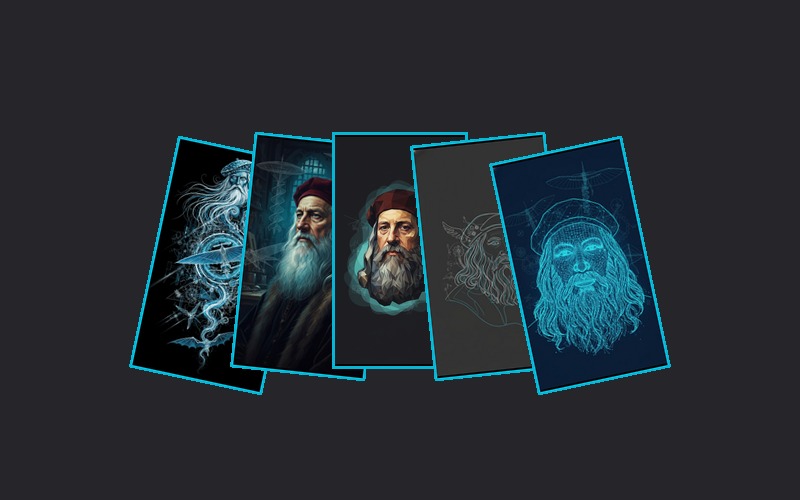 NEW
NEW Wallpaper Pack
$266 exclusive phone wallpapers, low-poly, neon blueprint, vintage engraving, minimalist, abstract, and cinematic.
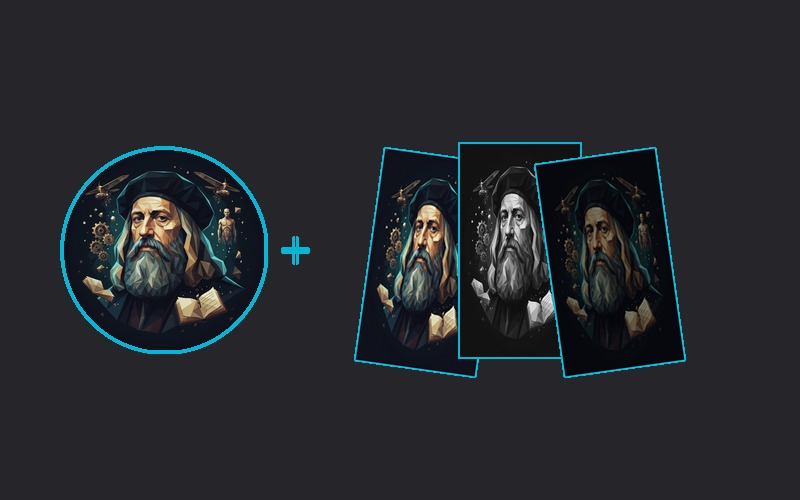 BEST VALUE
 Complete Bundle
$44Everything: the 24-chapter Deep Dive report + 6 exclusive wallpapers. Best value.
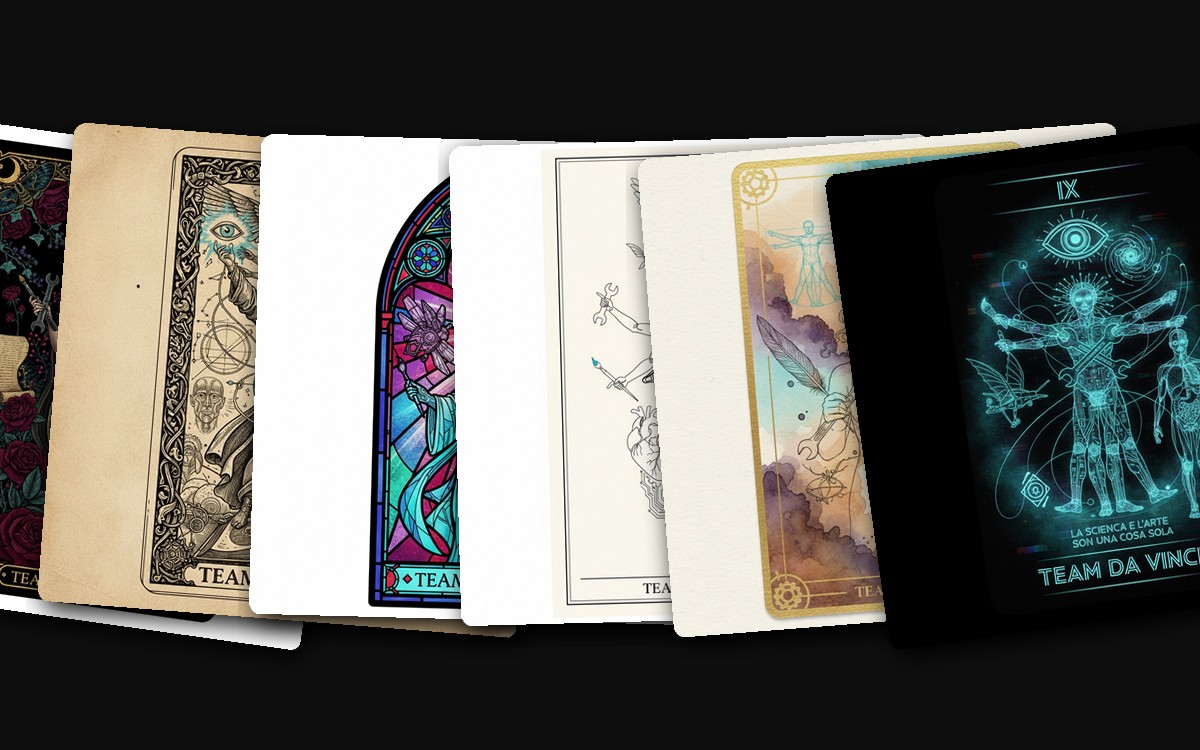 EXCLUSIVE
 Tarot Card Collection
$496 premium print-quality tarot cards in 6 stunning styles: Dark Botanical, Vintage Woodcut, Minimalist Line, Neon Mystic, Stained Glass, Watercolor Dream. Collector edition.
Pay what you want, starting at $1. Every contribution keeps this quiz free, ad-free, and accessible to everyone. Schools and NGOs get everything at no cost. This is self-knowledge for the people, not profit.