
Career & Money
Team Galileo - The Artisan Scholars
Your Career Profile
You belong in roles that combine rigorous investigation with public communication, science journalism, research leadership, public policy informed by data, or any field where being both correct and compelling is the differentiator. You're wasted in pure research with no audience, and you're dangerous in pure communication with no evidence. The sweet spot is roles where you own both the discovery and the explanation.
Careers That Fit
Emergency medicine, crisis management, or military leadership, environments where emotional control is a survival skill, not a personality quirk.
Long-cycle engineering, infrastructure, or research science, work where the payoff is years away and most people would quit before seeing results.
Financial risk management, compliance, or quality assurance, roles that reward patience, vigilance, and the ability to say 'no' when everyone else says 'yes'.
Data science, lab research, or investigative journalism, work where truth is found through observation, not assertion.
Product management, operations, or process improvement, roles where 'what actually happened' matters more than 'what should have happened.'
Trades, craftsmanship, or hands-on engineering, careers where competence is measured by outcomes, not credentials.
R&D, invention, or early-stage startups, environments where creating something that doesn't exist yet is the entire point.
Creative arts, game design, or speculative architecture, work where imagination is the primary tool and constraints are suggestions.
Venture capital, trend forecasting, or innovation consulting, roles that reward spotting what's next before anyone else does.
Team leadership, community building, or facilitation, roles where connecting people and synthesizing perspectives is the work itself.
Consulting, diplomatic roles, or stakeholder management, careers where navigating between different groups and building consensus creates value.
Teaching, public speaking, or media, work where your ability to communicate complex ideas to diverse audiences is your competitive edge.
Careers to Avoid
High-energy sales or entertainment roles that demand constant emotional performance. You'll burn out pretending to be excited about things that don't move you.
Fast-pivoting startup culture where 'fail fast' means abandoning discipline for speed. Your superpower is endurance, not improvisation.
Pure strategy consulting or think-tank roles where ideas never get tested against reality. You'll feel like you're playing pretend.
Visionary leadership positions that demand you sell a future nobody can prove yet. You struggle to champion ideas before the evidence exists.
Maintenance engineering, operations, or support roles where the goal is keeping existing systems running. You'll feel like you're dying slowly.
Heavily regulated industries (banking, healthcare compliance) where innovation requires 18 months of approvals. Your pace and their pace will never align.
Isolated technical roles with minimal human interaction. You can do the work, but you'll feel disconnected from its purpose without people to share it with.
Highly competitive, zero-sum environments where collaboration is punished. Your instinct to share and build together will be exploited.
Your Work Style
You thrive in structured environments with clear expectations and long time horizons. Open-plan offices drain you, not because of noise, but because of the constant performance of being 'present.' You do your best work when left alone with a hard problem and a deadline. Give you autonomy and accountability, and you'll outperform anyone in the building. Micromanage you, and you'll quietly disengage.
You want to touch the work. Reports about the work don't satisfy you: you want to see the data, run the test, talk to the customer. You're the person who says 'let me check' while everyone else is guessing. You thrive in iterative environments where feedback loops are short and results are measurable. Your frustration point is organizations that make decisions by committee and opinion rather than evidence.
You need a frontier. A green field. A blank canvas. You're most productive in the first 80% of any project, the concept, the prototype, the proof of concept. After that, your attention wanders. The smartest thing you can do is build teams that include people who love the last 20%. Your workspace is probably messy, your browser has 40 tabs open, and you have three unfinished projects that are each better than most people's finished ones.
You think out loud and you think best with others. Your workspace is wherever the conversation is happening, the whiteboard, the video call, the coffee shop. You energize through dialogue and wilt in isolation. You're the person who turns a solo task into a collaboration because you genuinely believe two heads are better than one. The organizations that get the best from you give you a team to lead and a problem that requires consensus.
Your Money Philosophy
How You Spend
You spend deliberately, rarely impulsively. You'd rather have a full emergency fund than a new gadget. Your relationship with money is disciplined, which is a strength until it becomes stinginess disguised as virtue.
You research every purchase. You compare prices, read reviews, wait for sales, and never buy on impulse. Your spreadsheet knows more about your finances than your partner does. This is efficient, and occasionally exhausting for everyone around you.
You invest in bets, the startup, the equipment for a new hobby, the course for a skill you might never use. Your spending follows your curiosity, which means your bank account tells the story of everything you've ever been excited about.
You spend on people. Dinners, gifts, experiences, hosting, your money flows outward toward connection. Your generosity is genuine and sometimes unsustainable. You'd rather be broke and surrounded by happy friends than rich and alone.
Financial Blind Spots
You under-invest in experiences and relationships because the ROI isn't measurable. The dinner with friends, the vacation, the gift that says 'I was thinking of you', these feel wasteful to you, but they're investments in the things that actually matter.
You over-optimize small purchases and under-think big ones. You'll spend an hour comparing $3 toothpaste but make a career change without calculating the financial impact. Zoom out occasionally.
You over-invest in potential and under-invest in stability. Every new project gets funding; no project gets maintenance budget. Your financial life has the same problem as your creative life: brilliant starts, shaky follow-through.
You over-spend on social obligations and under-invest in yourself. The round of drinks, the birthday gift, the 'let me get this one': it adds up. Learning to say 'let's split it' isn't cheap, it's sustainable.
Money Strengths
Long-term financial planning. You can delay gratification for decades, build savings methodically, and resist lifestyle inflation. Your financial discipline is your quiet superpower.
Data-driven financial decisions. You track spending, compare returns, and make evidence-based investment choices. Your finances are probably in better shape than you give yourself credit for.
Risk tolerance. You're comfortable with financial uncertainty in a way that most people aren't. This makes you a natural entrepreneur and an above-average investor, as long as you don't bet everything on one idea.
Generous resource allocation. You use money as a tool for building relationships and community, which creates social capital that pays dividends no investment account can match.
You as a Colleague
You're the colleague everyone trusts but few truly know. You deliver consistently, you don't play politics, and you absorb pressure without complaint. The trap: people will load you up because you never push back. Learn to say 'I'm at capacity' before you're at breaking point, because once you break, you don't bend first.
You're the colleague who grounds the team in reality. When everyone is excited about a plan, you're the one checking whether the numbers actually work. This makes you essential and occasionally unpopular. The trap: being right isn't enough: you need to learn to deliver truth in a way people can hear. Evidence wrapped in empathy lands better than evidence alone.
You're the colleague who starts things. New initiatives, new approaches, new ways of thinking about old problems. You energize teams that have gone stale and challenge assumptions that nobody else questions. The trap: you can leave a trail of started-but-not-finished projects that frustrate the people who have to maintain them. Pair your vision with a plan for who finishes what you start.
You're the colleague who makes teams function. You facilitate, you mediate, you translate between departments that don't speak each other's language. Your social intelligence is an organizational asset. The trap: consensus-seeking can become conflict-avoidance. When you sense disagreement, your instinct is to smooth it over, but some disagreements need to be aired, not managed.
Keep exploring
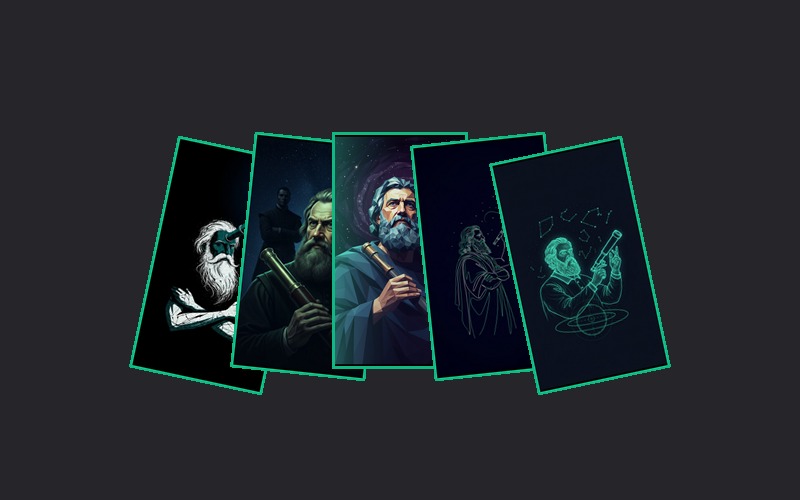 NEW
NEW Wallpaper Pack
$266 exclusive phone wallpapers, low-poly, neon blueprint, vintage engraving, minimalist, abstract, and cinematic.
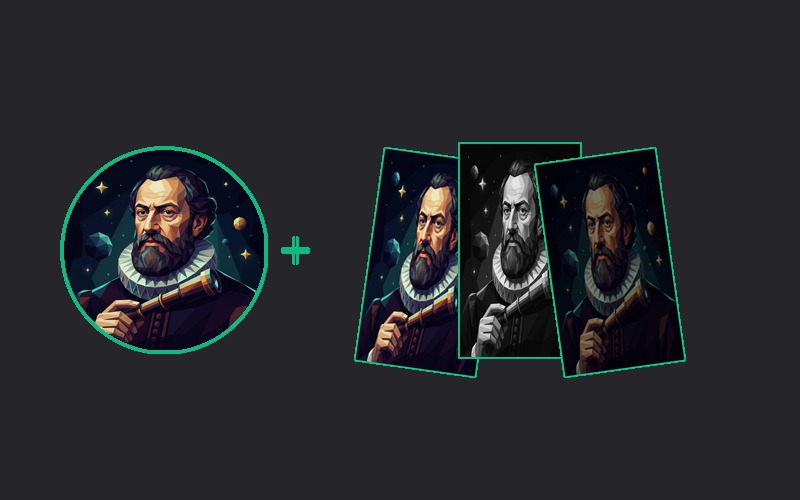 BEST VALUE
 Complete Bundle
$44Everything: the 24-chapter Deep Dive report + 6 exclusive wallpapers. Best value.
 EXCLUSIVE
 Tarot Card Collection
$496 premium print-quality tarot cards in 6 stunning styles: Dark Botanical, Vintage Woodcut, Minimalist Line, Neon Mystic, Stained Glass, Watercolor Dream. Collector edition.
Pay what you want, starting at $1. Every contribution keeps this quiz free, ad-free, and accessible to everyone. Schools and NGOs get everything at no cost. This is self-knowledge for the people, not profit.