
Daily Life
Team Galileo - How you live, create, and communicate
How You Communicate
You say less than you think. Your communication style is economical: you don't waste words, you don't perform emotions, and you don't repeat yourself. When you speak, it carries weight because people know you don't do it for show. The gap between what you feel and what you express is the largest of any type, and it's both your signature strength and your core vulnerability.
In conflicts, you go quiet, which most people interpret as either agreement or hostility, neither of which is accurate. You're processing. The problem is that your silence gives the other person nothing to work with, so they fill it with assumptions. Learning to say 'I need time to think about this, but I hear you' is the single most useful communication upgrade you can make.
You communicate through evidence. 'Here's what happened,' 'Here's what I observed,' 'Let me show you the data.' Your communication style builds credibility through specificity: you don't make vague claims, you bring receipts. People who value precision love working with you. People who value feeling heard can find you frustrating.
In conflicts, you instinctively reach for facts, which works brilliantly when the conflict is about what happened, and terribly when the conflict is about how someone felt. Learning to say 'I understand why that upset you' before 'but here's what the data shows' will transform your most difficult conversations. Lead with acknowledgment, then bring the evidence.
You communicate through vision. Your natural mode is painting a picture of what could exist, the future, the possibility, the 'imagine if.' This makes you inspiring and sometimes infuriating. People follow your vision when they believe it's achievable, and tune out when it feels like fantasy. The line between the two is details, the more specific you can be, the more persuasive you become.
In conflicts, you tend to leap past the current problem to the solution, which can feel dismissive to someone who needs the current problem acknowledged. 'Okay but here's what we should do instead' can land as 'your feelings about this don't matter.' Slow down. Acknowledge the present before you paint the future.
You communicate through connection. Your natural mode is dialogue: you share ideas in progress, invite reactions, and refine in real-time. This makes you collaborative and easy to work with, but it can also make you hard to pin down. Your first statement on any topic is rarely your final one, because you're still thinking. People who understand this love brainstorming with you. People who don't can find you inconsistent.
In conflicts, your instinct is to talk it through, which is healthy until it becomes over-processing. You can hold the same conversation multiple times with different people, seeking the validation that one person couldn't give you. The Agora who learns to resolve conflicts in fewer, deeper conversations instead of many shallow ones becomes exceptional at both harmony and truth.
Hobbies & Creativity
Your Creative Style
Disciplined and structured. You approach creativity like a craft: daily practice, incremental improvement, mastery through repetition. You're the person who writes 500 words every morning regardless of inspiration.
Observational and documentary. You create by recording what you see, photography, field notes, sketching from life, data visualization. Your creativity is grounded in the real, not the imagined.
Experimental and prolific. You try everything, combine unexpected elements, and produce a volume of work that makes up in novelty what it sometimes lacks in polish. Your creative process looks chaotic; the results are often brilliant.
Collaborative and performative. You create WITH people, jam sessions, writing groups, community projects, collaborative art. Your creativity is amplified by dialogue, feedback, and audience.
Hobbies That Fit
Martial arts, woodworking, calligraphy, distance running, chess, meditation, journaling. Activities that reward discipline and improve through practice.
Photography, birdwatching, cooking (precise recipes), hiking with a field guide, amateur astronomy, DIY electronics, gardening. Activities that reward observation and hands-on engagement.
3D printing, game modding, experimental cooking, mixed media art, improv comedy, startup side projects, hackathons, creative writing. Activities that reward experimentation and tolerate failure.
Team sports, book clubs, board game nights, community theater, choir, collaborative cooking, social dancing, volunteering. Activities that combine creation with connection.
Hobby Traps
You turn hobbies into obligations. The guitar practice becomes a chore, the meditation becomes a KPI. Remember: hobbies exist for joy, not productivity.
You over-optimize the gear instead of doing the activity. You research the perfect camera for six months instead of taking photos with the one you have. The best equipment is the one you actually use.
You have 47 unfinished projects and you're about to start number 48. The thrill of beginning is your drug. Challenge: pick your best half-finished project and complete it. The completion will teach you something the starting never could.
You never develop a solo skill because everything is social. The ability to sit alone with a craft, no audience, no feedback, no collaboration, builds a kind of creative depth that group activities can't provide.
Your Pet Personality
Ideal Pet
A loyal, low-drama companion that respects your space. A well-trained dog (think: German Shepherd, Akita) or a cat that doesn't need constant attention. You want reliability, not performance.
Something you can learn from. An aquarium (complex ecosystem to observe), a terrarium with reptiles, or a working dog breed that you can train and study. You see pet ownership as an ongoing experiment in interspecies communication.
Something unusual. A parrot (trainable, surprising, never boring), a ferret (chaotic energy matches yours), or a rescue with a complicated backstory that you're determined to rehabilitate. You don't want a normal pet.
A dog. A social, expressive, community-building dog that introduces you to other dog owners at the park. Your pet is a social catalyst, the reason you stop and talk to the neighbor, the excuse to organize the group walk.
You as a Pet Owner
You'll be the most consistent pet owner anyone has ever seen. Feeding schedule: precise. Vet appointments: never missed. Emotional bonding: deep but expressed through care, not cuddles.
You'll research your pet's breed, diet, and behavior more thoroughly than most veterinarians. You know the optimal temperature for your terrarium to the tenth of a degree. Your pet is the best-informed animal on the street.
You'll cycle through pet interests the way you cycle through projects. The parrot gets intensive training for three months, then the ferret cage gets an elaborate renovation, then you're reading about beekeeping. Your pets are never bored.
Your dog has more friends than most people's dogs. You know every dog owner in the neighborhood by name. Dog park trips become community events. Your pet doesn't just have an owner: it has a social coordinator.
Recommended Reading
'The Structure of Scientific Revolutions' by Thomas Kuhn, how paradigms shift and why it matters
'Cosmos' by Carl Sagan , making the universe accessible without dumbing it down
'Surely You're Joking, Mr. Feynman!', curiosity, rigor, and the joy of discovery
Keep exploring
 NEW
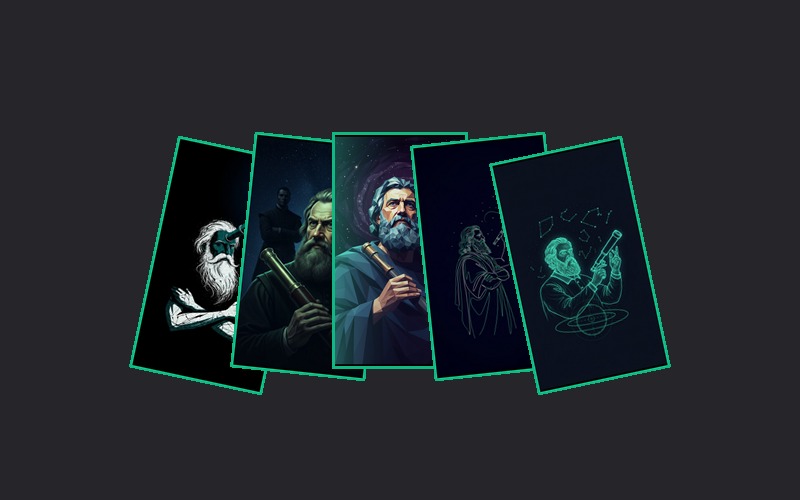
NEW Wallpaper Pack
$266 exclusive phone wallpapers, low-poly, neon blueprint, vintage engraving, minimalist, abstract, and cinematic.
 BEST VALUE
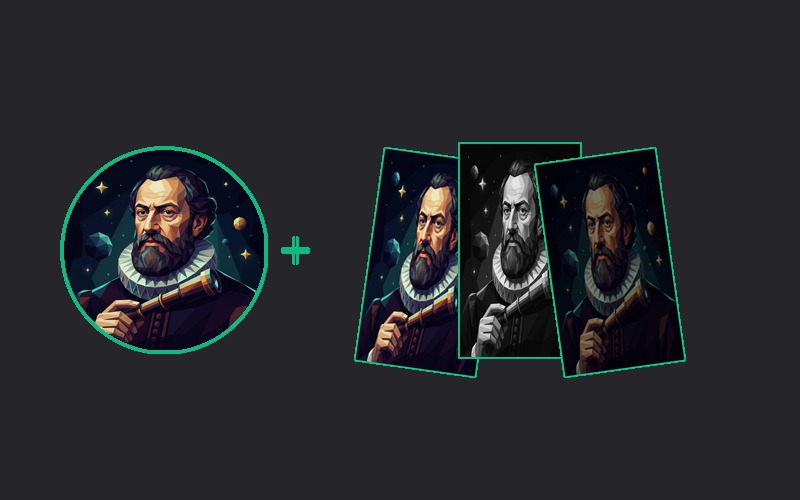
 Complete Bundle
$44Everything: the 24-chapter Deep Dive report + 6 exclusive wallpapers. Best value.
 EXCLUSIVE
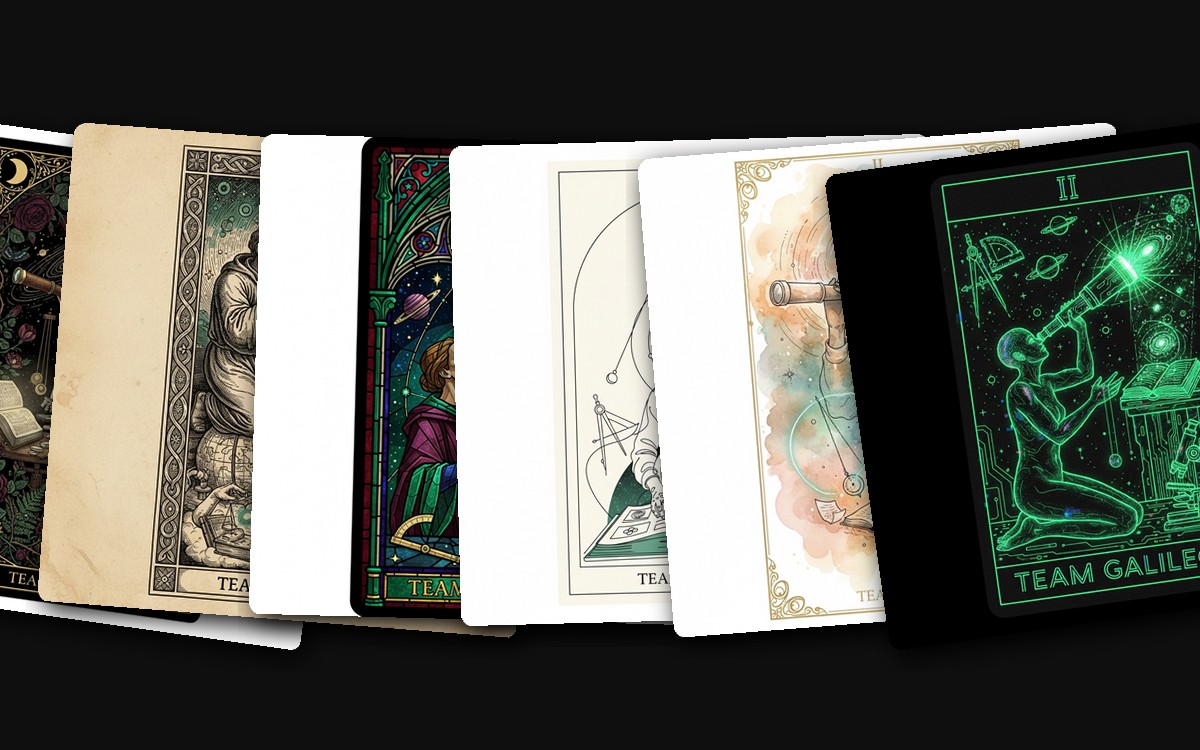
 Tarot Card Collection
$496 premium print-quality tarot cards in 6 stunning styles: Dark Botanical, Vintage Woodcut, Minimalist Line, Neon Mystic, Stained Glass, Watercolor Dream. Collector edition.
Pay what you want, starting at $1. Every contribution keeps this quiz free, ad-free, and accessible to everyone. Schools and NGOs get everything at no cost. This is self-knowledge for the people, not profit.