
Strengths & Weaknesses
Team Galileo - The Artisan Scholars
What Makes You Unique
You are the rare person who can both discover and communicate. Your Stoic core gives you the discipline to persist through years of unglamorous work. Your Empiricist wiring means every claim you make is backed by observation. Your Promethean drive pushes you toward the frontier. And your Agora instinct means you actually share what you find: you bring others along for the journey instead of hoarding insights in solitude.
The tension in your combination is between the lone discoverer and the public communicator. Your Stoic-Empiricist side wants to work quietly and let the evidence speak for itself. Your Agora side wants to teach, publish, debate, and convince. When this tension resolves well, you become the person who changes paradigms, not just by being right, but by making the truth accessible. When it resolves poorly, you become the provocateur who picks fights with established authority.
Your Strengths
Evidence-Based Persuasion
You don't just believe things: you prove them. And then you explain them in a way that changes minds. This combination of rigor and rhetoric is exceptionally rare.
Disciplined Innovation
Your Promethean drive creates new ideas; your Stoic discipline ensures they're tested and refined before you share them. You don't hype: you deliver.
Public Courage
You're willing to challenge established thinking and defend your position against the crowd. Your Stoic backbone means you don't fold under social pressure.
Collaborative Discovery
Unlike most inventors, you build with others. You invite scrutiny, welcome debate, and improve through dialogue. Your work gets better because you share it.
Persistent Focus
You can sustain multi-year projects that require both deep research and ongoing communication. Most people are good at one or the other: you handle both.
Accessible Expertise
You translate complex findings into language people can use. Your explanations are clear, specific, and grounded in evidence. People trust you because you show your work.
Honest Weaknesses
Stubbornness Under Fire
Your Stoic backbone combined with your evidence-based confidence can make you immovable when challenged. Even when new data emerges, you can hold your position too long because admitting error feels like weakness.
Over-Communication
Your Agora instinct can turn every finding into a lecture. Not every observation needs to be shared, and not every audience needs the full explanation. Learn when 'I'm still thinking about this' is the right answer.
Conflict with Authority
Your combination of empirical confidence and public communication can put you at odds with institutions that prefer obedience to evidence. You may be right and still end up fired.
Neglecting Rest
Your Stoic discipline keeps you working when you should be recovering. Your Agora side keeps you socially engaged when you need solitude. Learning to rest, truly rest, is your growth edge.
Your Shadow Side
The patterns you fall into when you're not at your best. Uncomfortable, but knowing them is the first step.
Ego Traps
You mistake emotional suppression for emotional strength. Your ego tells you that feeling nothing makes you superior to people who feel everything. It doesn't: it makes you a ticking bomb with excellent posture.
You believe that having evidence makes you right. Your ego tells you that data-backed opinions are inherently superior to intuition-backed ones. But evidence can be cherry-picked, and the most important truths are often the ones you can't measure.
You believe that creating something new makes you more valuable than maintaining something old. Your ego ranks inventors above operators, pioneers above farmers. But the world runs on maintenance, not just breakthroughs.
You believe that being liked means being good. Your ego is fed by social approval, and your instinct to please can override your commitment to truth. You'll soften a harsh but necessary message because delivering it would cost you popularity.
Toxic Patterns
You weaponize silence. When you're angry, you don't fight: you withdraw. You punish people by withholding your presence, your words, your engagement. You call it 'not being reactive.' They call it 'emotional abandonment.'
You dismiss people's feelings as irrational. When someone tells you how they feel, your instinct is to fact-check rather than empathize. 'But that's not what happened' may be true and still be the wrong response.
You leave a trail of abandoned projects and people. Each new thing feels like progress, but from the outside it looks like a pattern of broken promises. The people who relied on version 1.0 don't care about your excitement for version 2.0.
You create dependency. Your warmth and availability make people rely on you, and you subtly encourage that reliance because it makes you feel needed. Your generosity has a shadow: it keeps people close by keeping them dependent.
Self-Sabotage
You refuse help until you collapse. Your identity is so wrapped up in self-sufficiency that accepting support feels like failure. You'd rather burn out alone than admit you need someone.
You wait for certainty that never comes. You collect data until the deadline passes, the opportunity closes, or the relationship ends, all because you couldn't act without being sure. Certainty is a luxury; courage is a requirement.
You destroy things that are working because they bore you. A perfectly good career, relationship, or routine gets blown up not because it failed, but because it stopped being novel. You mistake boredom for a sign that something is wrong.
You outsource your judgment. You poll so many people before every decision that your own voice gets drowned out. You know what everyone else thinks but have lost track of what you think. Consensus becomes a substitute for conviction.
How You Think
You decide by asking 'what must be done?', duty and discipline override preference. You're comfortable with unpleasant decisions because you separate emotion from action.
You decide by asking 'what does the evidence show?': you gather data, test assumptions, and choose the option with the strongest track record. You're slow to decide but rarely wrong.
You decide by asking 'what's the biggest opportunity?': you optimize for upside and novelty. Safe choices bore you; you'd rather take a calculated risk on something new.
You decide through dialogue. You test your thinking against other people's perspectives, synthesize the best ideas, and emerge with a decision that's stronger than any individual input.
How You Decide
Faced with a decision between following orders and following evidence, you'd go with the evidence, publicly. You'd document your reasoning, present your findings to whoever will listen, and accept the consequences. You can't unknow what you've seen.
A team member proposes an exciting idea with no supporting data. You'd be supportive but insistent: 'I love the direction, let's test it before we bet on it.' Your enthusiasm is real, but it's gated by your empiricism.
Offered a position where you'd have a bigger platform but less research time. You'd negotiate for both, and if forced to choose, you'd pick the research. Your Agora side needs something real to communicate.
Keep exploring
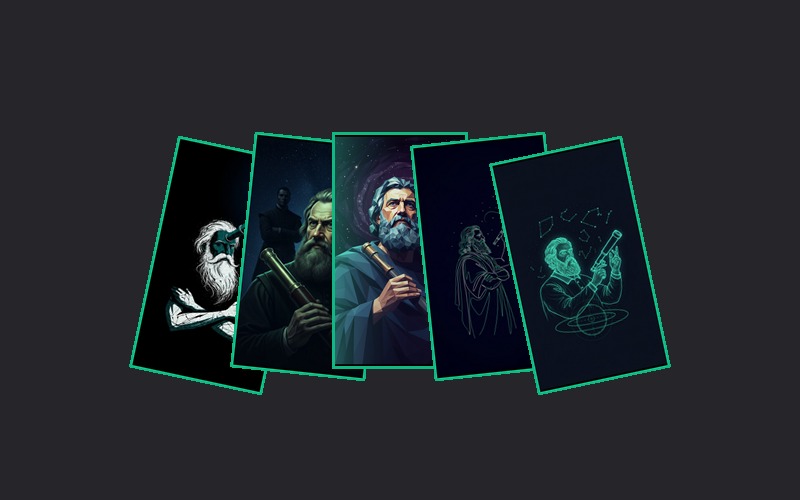 NEW
NEW Wallpaper Pack
$266 exclusive phone wallpapers, low-poly, neon blueprint, vintage engraving, minimalist, abstract, and cinematic.
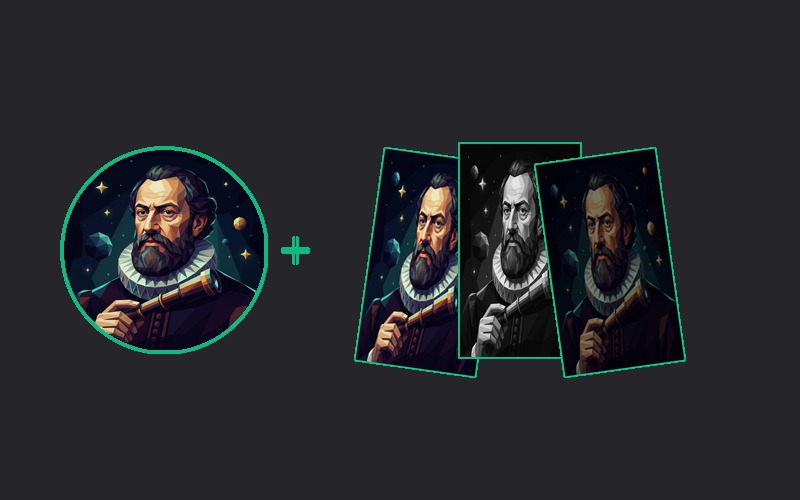 BEST VALUE
 Complete Bundle
$44Everything: the 24-chapter Deep Dive report + 6 exclusive wallpapers. Best value.
 EXCLUSIVE
 Tarot Card Collection
$496 premium print-quality tarot cards in 6 stunning styles: Dark Botanical, Vintage Woodcut, Minimalist Line, Neon Mystic, Stained Glass, Watercolor Dream. Collector edition.
Pay what you want, starting at $1. Every contribution keeps this quiz free, ad-free, and accessible to everyone. Schools and NGOs get everything at no cost. This is self-knowledge for the people, not profit.