
Under Stress
Team Marcus Aurelius - The Field Engineers
Your Stress Pattern
Under pressure, you go into 'just keep going' mode. You strip away everything non-essential, emotions, social obligations, personal needs, and focus entirely on the task. From the outside, this looks like superhuman composure. From the inside, it feels like slowly going numb. The longer the pressure lasts, the less you feel, until you can't distinguish genuine peace from emotional shutdown.
The danger isn't the stress itself: it's the delayed explosion. Stoics don't crack under pressure; they crack three months after the pressure ends, when they finally feel safe enough to process what they suppressed. Watch for the moment of relief: that's when the dam breaks. Build micro-processing habits during the stress, not after: a five-minute journal, a walk without a podcast, a honest answer to 'how are you actually doing?'
Under pressure, you default to data collection. When you don't know what to do, you gather more information, another analysis, another spreadsheet, another round of research. This feels productive, but past a certain point, you're not learning; you're stalling. The discomfort of acting on incomplete information is your biggest stress trigger, and the only cure is practice.
Your stress signal is overwork disguised as thoroughness. When you're staying late to 'double-check the numbers' for the third time, you're not being diligent: you're anxious. The fix: set decision deadlines before you start the research. 'I will decide by Friday with whatever I have.' Then actually do it. Your track record of good decisions on imperfect data is better than you think.
Under pressure, you tighten your grip. The standard goes up, the tolerance for imperfection goes down, and the pace slows to a crawl. You convince yourself that the problem is quality, 'if I just make this a little better, everything will be fine', when the real problem is that you're afraid of shipping something imperfect into a world that already feels too chaotic.
Your stress signal is control disguised as craft. When you start re-editing emails, reorganizing files that were already organized, or revising work that was already approved: you're not being thorough, you're managing anxiety through the illusion of control. The fix: name the fear. 'I'm afraid this isn't good enough' is honest. Once you say it, you can evaluate it. Usually, it's good enough. Ship it.
Under pressure, you talk more. You process by externalizing, calling friends, scheduling meetings, thinking out loud with anyone who'll listen. This feels productive because you're engaged, you're connecting, you're 'working on it.' But past a certain point, you're not processing; you're ruminating through other people's ears. The conversation becomes a loop, not a path.
Your stress signal is over-socializing. When you're scheduling your fourth coffee of the day to 'talk through' the same problem, you've crossed from processing into avoidance. The fix: one conversation, then one decision. Talk it through with one trusted person, write down the conclusion, and act on it. Your social instincts become your superpower again once they're directed toward action instead of repetition.
Under pressure, you double down on duty and community, more work, more check-ins, more responsibility. You're the leader who carries more and delegates less as the crisis deepens, because you trust your own standards more than anyone else's. This heroism has an expiry date. Your stress antidote is learning to lower the bar temporarily, not forever, just until the storm passes. Good enough today, excellent tomorrow.
Emotional Wellbeing
How your personality type experiences anxiety, burnout, and resilience.
Your Anxiety Signals
Your anxiety is invisible, even to you. You suppress worry so automatically that you don't recognize it until it manifests physically: tension headaches, jaw clenching, insomnia. Your nervous system is screaming; your face is calm.
Your anxiety manifests as over-research. You deal with uncertainty by gathering more data, reading one more article, running one more analysis, asking one more expert. The research feels productive, but it's actually anxiety wearing a lab coat.
Your anxiety becomes control. You organize, clean, refine, and perfect as a way to manage the chaos you feel inside. The external order is a proxy for internal peace, and it works, until it doesn't.
Your anxiety becomes social overdrive. You talk more, reach out more, schedule more, trying to find reassurance in other people's responses. The conversations feel productive but you're actually seeking validation, not solutions.
Burnout Warning Signs
You stop caring. Not in a dramatic way: you just feel nothing. The project that used to drive you becomes a checklist. The people who used to matter become obligations. When a Stoic goes flat, the burnout is already advanced.
You start making mistakes. Your trademark precision slips, typos in reports, errors in calculations, details missed. When an Empiricist's quality drops, it means they're running on empty but haven't given themselves permission to stop.
You become paralyzed by your own standards. Nothing is good enough to start, let alone finish. You sit in front of the work and can't move, not because you lack skill but because the gap between your standard and your capacity has become unbridgeable.
You withdraw. When the Agora type goes quiet, something is seriously wrong. You've exhausted your social battery so thoroughly that even connection, your primary fuel, feels draining.
Your Resilience Superpower
You endure. Where others crumble, you keep going, not because you don't feel the weight, but because quitting isn't in your operating system. This resilience is real, but it needs to be paired with recovery, not just endurance.
You ground yourself in facts. When everything feels chaotic, you return to what you can observe, measure, and verify. This empirical grounding is a genuine coping mechanism, reality is your anchor.
You persist. Your relationship with difficulty is different from other types: you don't expect it to be easy, so you're not surprised when it's hard. This realistic relationship with struggle is genuinely sustaining.
You co-regulate. Your ability to process difficulty through dialogue and connection is a genuine strength. You heal in community, and your community heals by helping you. This is reciprocal resilience.
Health & Energy
Exercise Style
Disciplined, structured, solitary. You thrive on routines: the 5am run, the daily gym session, the training plan followed to the letter. You don't exercise for fun: you exercise because it works. The danger: you push through pain signals that are trying to tell you something.
Data-driven. You track steps, heart rate, reps, sets, sleep quality. The numbers motivate you more than the feeling. Your fitness app has more data points than some clinical studies. The danger: optimizing metrics instead of optimizing health.
Mastery-oriented. You pick one discipline and go deep, yoga, distance running, martial arts, climbing. You're not trying to be well-rounded; you're trying to be excellent at one thing. Your form is probably better than your trainer's.
Social. Team sports, group classes, running clubs, gym buddies. You're more likely to show up if someone is expecting you. Accountability through community is your fitness superpower. Solo workouts feel like punishment.
Energy Patterns
Steady and sustainable. You don't spike and crash: you maintain a consistent level of output throughout the day. This is your strength, but it can mask exhaustion because you never feel dramatically tired. You just slowly erode.
Methodical and observable. You notice your energy patterns because you pay attention to them. You know which foods give you energy, which activities drain you, and what time of day you're sharpest. Use this self-awareness: it's a genuine advantage.
Slow and deep. You don't have explosive bursts, but you have extraordinary stamina. You can sustain moderate effort for hours when others would have stopped. This is your athletic advantage, endurance events, long practice sessions, multi-hour focus blocks.
Socially charged, isolation-depleted. Your energy rises through interaction and drops in isolation. Working from home drains you; a busy office energizes you. Design your environment accordingly, coworking spaces, café work sessions, social routines.
Wellness Tips
Schedule recovery with the same discipline you schedule work. Rest is not the absence of productivity: it's the investment that makes productivity possible. Put 'do nothing' in your calendar and treat it like a meeting you can't cancel.
Trust your body, not just your data. Some days you feel terrible and your metrics look fine. Some days you feel great and your metrics look bad. The body is the instrument; the data is just the description.
Add variety before your body forces you to. Repetitive strain injuries are the Sisyphean athlete's nemesis. One different movement pattern per week, a different sport, a new stretch routine, a playful activity, protects the body you've built.
Protect alone time even though it doesn't feel natural. Your social drive can override your recovery needs. Schedule solitary activities, a walk without headphones, a bath, a quiet meal, even if they feel boring. Your nervous system needs the silence.
How You Communicate Under Pressure
You say less than you think. Your communication style is economical: you don't waste words, you don't perform emotions, and you don't repeat yourself. When you speak, it carries weight because people know you don't do it for show. The gap between what you feel and what you express is the largest of any type, and it's both your signature strength and your core vulnerability.
In conflicts, you go quiet, which most people interpret as either agreement or hostility, neither of which is accurate. You're processing. The problem is that your silence gives the other person nothing to work with, so they fill it with assumptions. Learning to say 'I need time to think about this, but I hear you' is the single most useful communication upgrade you can make.
You communicate through evidence. 'Here's what happened,' 'Here's what I observed,' 'Let me show you the data.' Your communication style builds credibility through specificity: you don't make vague claims, you bring receipts. People who value precision love working with you. People who value feeling heard can find you frustrating.
In conflicts, you instinctively reach for facts, which works brilliantly when the conflict is about what happened, and terribly when the conflict is about how someone felt. Learning to say 'I understand why that upset you' before 'but here's what the data shows' will transform your most difficult conversations. Lead with acknowledgment, then bring the evidence.
You communicate through depth. Your explanations are thorough, nuanced, and complete. You cover edge cases, acknowledge exceptions, and give people everything they need to understand the full picture. People who value precision respect you enormously. People who need the headline first may lose patience waiting for it.
In conflicts, you can over-explain, presenting such a comprehensive case that the other person feels overwhelmed rather than persuaded. Your instinct to be thorough can become a weapon when deployed in a disagreement. Learning to lead with your conclusion and then support it, instead of building to it, will make your thoroughness an asset in every conversation, not just the technical ones.
You communicate through connection. Your natural mode is dialogue: you share ideas in progress, invite reactions, and refine in real-time. This makes you collaborative and easy to work with, but it can also make you hard to pin down. Your first statement on any topic is rarely your final one, because you're still thinking. People who understand this love brainstorming with you. People who don't can find you inconsistent.
In conflicts, your instinct is to talk it through, which is healthy until it becomes over-processing. You can hold the same conversation multiple times with different people, seeking the validation that one person couldn't give you. The Agora who learns to resolve conflicts in fewer, deeper conversations instead of many shallow ones becomes exceptional at both harmony and truth.
7-Day Growth Challenge
Small daily actions to build resilience and break your stress patterns.
Monday: Delegate one task you normally do yourself. Fully. No checking behind them.
Tuesday: Lower the standard on one deliverable, intentionally. Ship it at 80% and observe whether anyone notices.
Wednesday: Express one genuine feeling to someone you lead. Not a performance, an honest admission.
Thursday: Say 'no' to one request that you'd normally absorb out of duty. Protect your capacity.
Friday: Ask your team what they think should change, and actually implement one suggestion without editing it.
Saturday: Do something with zero productive value. No improvement, no mastery, no duty. Pure waste of time.
Sunday: Write down what you're carrying that isn't yours to carry. Consider putting one thing down.
Growth Path
Address: Over-Responsibility
This creates a bottleneck where everything runs through you, and eventually through your health.
Address: Rigid Standards
'Good enough' isn't in your vocabulary, even when it should be.
Address: Emotional Suppression
The result: nobody knows you're struggling until you collapse.
Address: Change Resistance
You can mistake loyalty to the old way for wisdom.
Keep exploring
 NEW
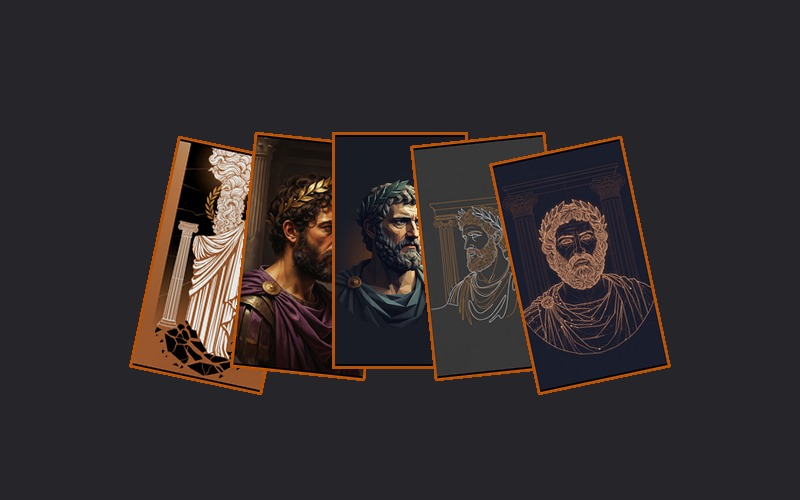
NEW Wallpaper Pack
$266 exclusive phone wallpapers, low-poly, neon blueprint, vintage engraving, minimalist, abstract, and cinematic.
 BEST VALUE
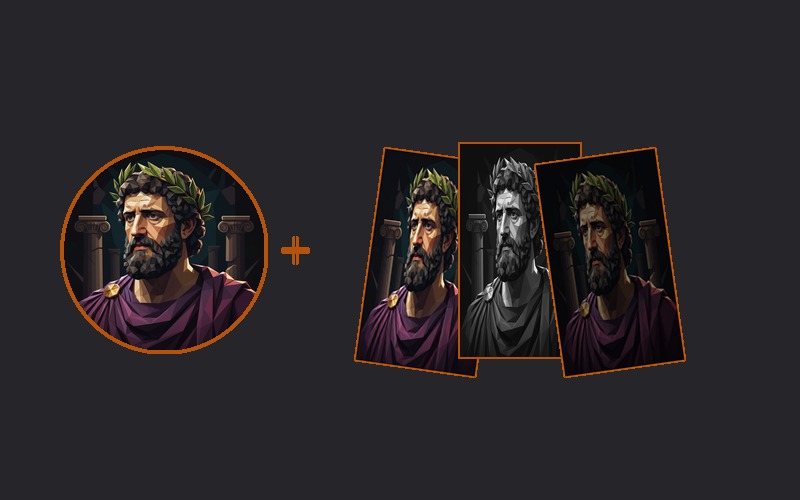
 Complete Bundle
$44Everything: the 24-chapter Deep Dive report + 6 exclusive wallpapers. Best value.
 EXCLUSIVE
 Tarot Card Collection
$496 premium print-quality tarot cards in 6 stunning styles: Dark Botanical, Vintage Woodcut, Minimalist Line, Neon Mystic, Stained Glass, Watercolor Dream. Collector edition.
Pay what you want, starting at $1. Every contribution keeps this quiz free, ad-free, and accessible to everyone. Schools and NGOs get everything at no cost. This is self-knowledge for the people, not profit.